Avatar photo About James Hendrickson

James Hendrickson is an internet entrepreneur, blogging junky, hunter and personal finance geek. When he’s not lurking in coffee shops in Portland, Oregon, you’ll find him in the Pacific Northwest’s great outdoors. James has a masters degree in Sociology from the University of Maryland at College Park and a Bachelors degree on Sociology from Earlham College. He loves individual stocks, bonds and precious metals.

December Net Worth, Drooping Assets and Living Off The Land

Okay, so I sat down and updated my net worth this week.

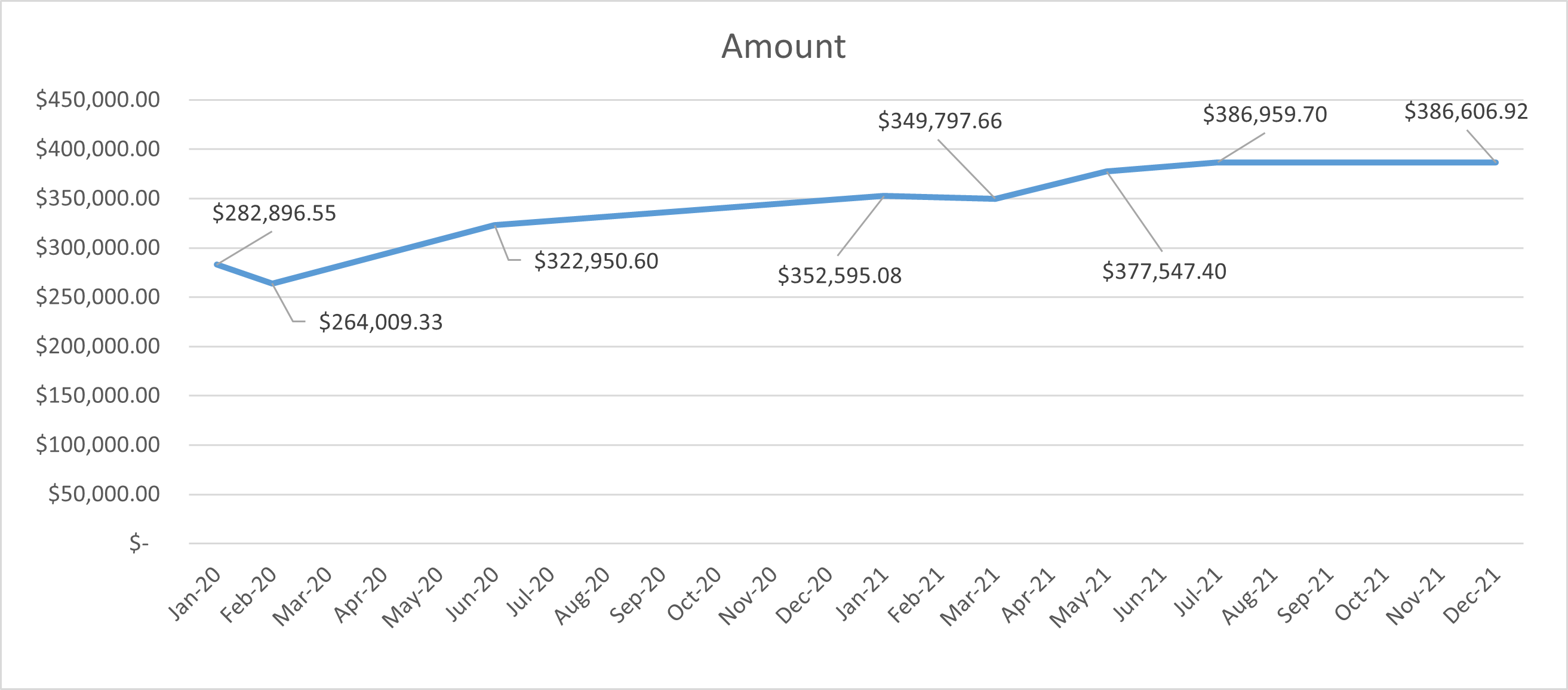
My total net worth for December 2021 sits at around $386,000.  The major components of this are my online business, home equity, some stock, and some other assets.

 

My wealth is pretty much like a drooping houseplant at this point.  It’s flatlined over the last few months. I’ve got more bonds, crypto and shares of stock than at the start of the year, but the markets have downturned. Also the value of my condo in Portland has declined a bit.

Here is the growth trajectory from January 2020 of last year until now.
Where To Go Next?

There are a couple of things I’m mulling over. The main thing is building up an emergency fund. Not having an emergency fund has cost me in the past when I’ve had vehicle trouble and haven’t had the cash to cover the expense.  Also, I’m planning on moving out of Portland. Crime in the city has frankly gotten a lot worse and the city is addicted to taxes. Also, Portlanders seem to prefer insane and self-destructive political policies. So, having a lot of cash on hand would help reduce my risk and get me someplace sane.

Inflation Is Here, Don’t Have A Good Solution

Inflation is becoming a problem. The Fed calculated that inflation for most of 2021 was 6.2% (here). It’s likely that the rest of this year won’t be much better.  Unfortunately, I’m not optimistic about 2022.  Bloomberg is reporting that the CPI is expected to increase between 2% and 5% in 2022, via Crainscleveland.com.  What this means is that dollars you were holding at the start of 2020 will likely be worth 10% less in 2022.

The dilemma I’m thinking through now is, current inflation levels mean that any cash I save is going to lose a substantial portion of it’s value. Options that keep pace with inflation like I-bonds (7%), or lending via crypto (8%) introduce liquidity and risk issues.

A smaller emergency fund – about $1,000 – makes sense, but keeping any kind of sizeable cash holding means that cash will take a substantial haircut. Most of the commercially available options, like Treasury Inflation Protected Securities (TIPs), TIPs funds or gold seem like they’d be illiquid or the real returns would be poor. There are some inflation protected bank accounts (per CNBC), but they seem gimmicky.

I don’t have a good solution to the inflation challenge at the moment.

Living Off The Financial Land

What has been going well are several things. These all fit under the category of “living off the financial land”.  So basically, doing more with less, living frugally, and learning to utilize available opportunities.

1. Cutting costs. I’ve cut way back on my discretionary spending. I’ve basically stopped eating out, haven’t been to a movie in ages and have pretty much obliterated my entertainment budget. The reality is I like not spending money.  My skill sets in terms of DIY problem solving has gotten a lot better and I’ve become a more skilled shopper.

2. Receipt Scanning. I’ve also started scanning all my receipts. I have like ten apps on my smartphone that I use to get cash back, scan my receipts for points or otherwise shave a percentage or two off my budget.

The apps are:

1. Ibotta
2. Fetch
3. Coinout
4. ReceiptJar
5. Pogo
6. ReceiptPal
7. ReceiptHog
8. Bitmo
9. The Amazon Shopper Panel
10. Drop

Using all of these together means I can effectively shave about 1% off my grocery bill or other expenses. Most of these pay points or a couple of cents back. However, I’ve been using them consistently for a few months and the results are starting to add up. I was able to get some of my Christmas shopping done without paying cash – I used Amazon credit from these apps.

I’m actively looking for more apps.  These are just what I’ve identified so far.

3. Passively selling my data.

Data has economic value.  Per Statistica, the value of the big data market is expected to grow to 103 Billion in 2027 (1).  A lot of the major social media companies – like Facebook, Google and Netflix derive a substantial amount of their revenue from data.  And major corporations like McDonalds, Unilever, Toyota, and Home Depot buy data to improve their marketing.  What this also means is that an increasing variety of companies will pay you for your data.  These companies typically buy geolocation data, spending history, social media activity, and demographic profiles.  Most of the time they pay you a small amount in return for your data – between $3 and $5 per month.

I’ve loaded up on all the legit data brokerage companies I could find.

These ones work:

Reklaim

Invisibly (Note: inactive as of 7/7/2022).

Nielson Opinion Rewards

Tapestri

Evidation

A lot of people are squeamish about selling their data, but big tech is already legally getting it from you, so you might as well get your share of the money. I’d sign up with all of these and start getting paid.

4. Hustling referrals. For a while I was working the free stock referral game pretty hard.  It got the point that my friends were tired of me asking.  Whats crazy is that a lot of people I asked didn’t want free stock. What? You don’t want appreciating assets? Or a stream of passive income?

The major barrier may be that people don’t understand the value of owning shares.  Or they don’t understand how stock markets work.  In any event, there are five decent brokerages that actually give you free shares of stock for signing up.

Robinhood

Public

Webull

Firstrade

SoFi

I’d work the list and sign up for ALL these brokerages. As an asset class, stock performs better than cash or bonds under almost all economic conditions. Having it is well worth any administrative hassles more than one account presents.

So, these are the four things I’ve been working on the past couple of months.  The thing I like about each of these is that they’re all easy.  So, if you’re looking to add some cash to your accounts, I’d work these options.

For more wealth updates, read these:

James’s July 2021 Wealth, Up $9,377 to $386,959

James’s March Net Worth Update

If you want to build your own wealth, here are some good basic reads.

Building Wealth On $600 Per Month

Nine More Ways To Make Extra Money

When Is The Best Time To Buy and Sell Mutual Funds To Make The Most Money

Here is an in depth review of a nice little bond market called SMBX. Do yourself a favor and buy some bonds.

SMBX: Bonds for Socially Conscious Investors With an Appetite for Risk

Disclaimer: Some of these links are referral links.  This means that if you sign up or buy through the link, Dinksfinance will get a commission.  I am disclosing this per applicable FTC regulation.
Coping With Inflation and Supply Chain Shortages

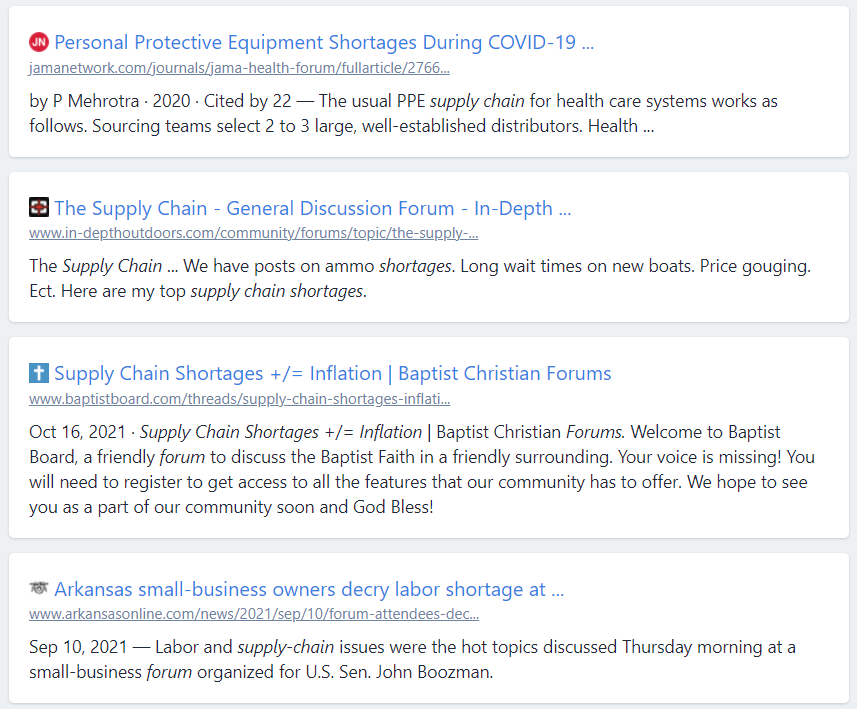
The writing is on the proverbial wall — inflation and supply chain shortages are here. The news is covering it, and there is a lot of chatter about it in online forums.

The media is reporting that we’re likely to have a few more months of shortages and price increases. At this point, the Federal government is doing its best, but it got a lot on its plate. A quick fix to these inflation/supply chain issues is likely not going to be forthcoming. Inflation and shortages are atypical in the recent American experience, and as a result, most people don’t really know what to do about it.

For DINKS, here are four pro-active suggestions that might be helpful:

1. Stock Up:

Inflationary cycles tend to take a while to settle out — in some cases a couple of years. This means it’s likely that there will be several months of inflation in the future. This will probably impact grocery and consumer staples prices. A rational response to this would be to buy a couple of weeks’ worth of consumer staples, such as toilet paper, dry food (rice, beans, etc.).

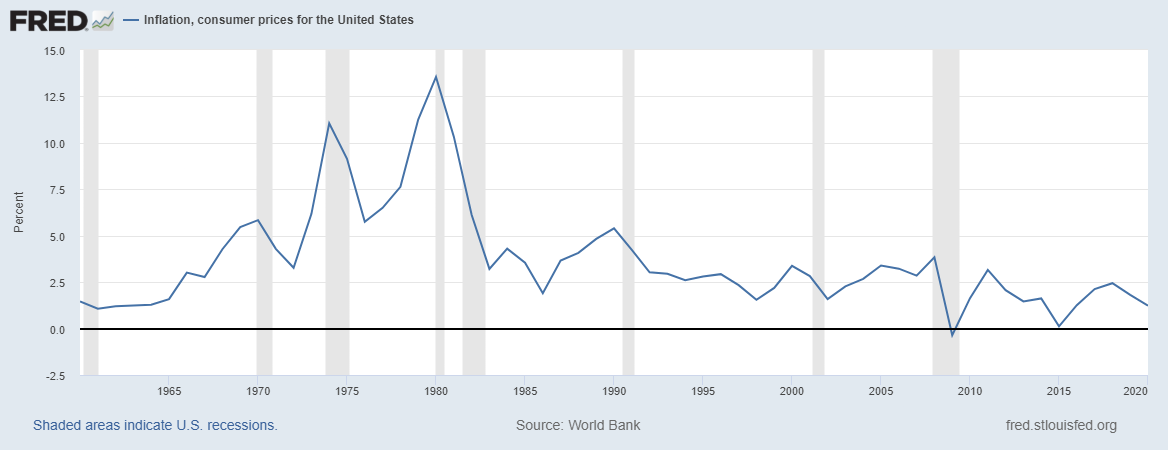
To illustrate, here are some U.S.-based inflation numbers from the last sixty years. The high inflation of the 1970s and 1980s didn’t recede for several months after their peak.

inflation and supply chain issues
Source: St Louis Fed.

An excellent write-up of inflation, and how long it takes to settle, is here.

2. Stay Positive and Build Community:

The country is in the digital age; however, people who are part of tight in-person supportive communities do better when times are hard. Strong mutually supportive social ties almost always help in the long run. So if you’re not part of a community, you should consider thinking about strengthening your ties. Get involved with a religious community or join some clubs or business associations. At the least, pick up the phone and make plans to meet friends.

The Mayo Clinic has some more solid advice on building resiliency.

3. Buy Inflation Resistant Assets:

Another way to deal with inflation and supply chain shortages is to buy assets that are inflation resistant. If this appeals to you, here are a couple of options you could consider:

  1. Buying stocks
  2. Buying TIPS or I-Bonds
  3. Buying precious metals.

If you’re going to buy stocks, be sure you’re buying quality companies that have competitive advantages, pricing power, and cash flow consistency. Treasury Inflation-Protected Securities (TIPS) and I-Bonds are bonds sold by the U.S. treasury that pay interest based on the Consumer Price Index. So if inflation is high, they pay more interest. Lastly, precious metals (gold and silver) usually hold their value over time.

4. Keep A Eye Out For Opportunity:

There are always opportunities to build wealth in environments with inflation and supply chain challenges, even in inflationary environments. For example, now would be an excellent time to start a California-compliant US-based trucking company. Short-term changes in interest rates can also present opportunities if you’re alert.

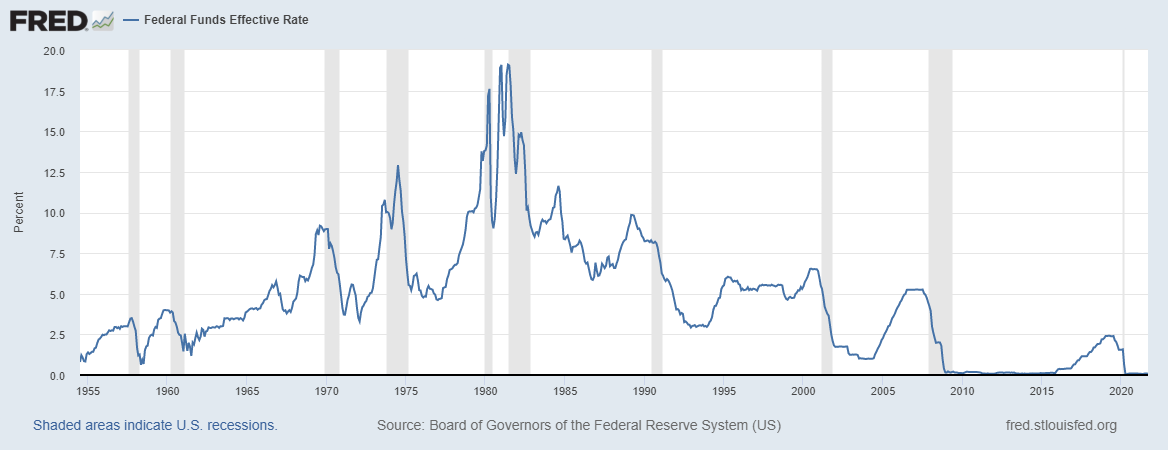
For example, during the 1980s, interest rates peaked at over 17 percent. That would have been an excellent time to purchase 30-year treasury bonds.


For more reading, consider the following:

This Saving Advice Forum’s Discussion on Supply Chains and Inflation.

The Equipped.org shortages thread.

Here is also a Bloomberg article on the global nature of the phenomenon.

Three Stories Of People Who Beat The Odds

People who beat the odds

People who beat the odds

Nothing in the world is worth having or worth doing unless it means effort, pain, difficulty… I have never in my life envied a human being who led an easy life. I have envied a great many people who led difficult lives and led them well.

Teddy Roosevelt

For a lot of you, life can be an uphill battle. Unemployment is something like 36% among millennials, nobody seems to want to take the coronavirus vaccine, including celebrities, inflation is back, your car just broke down, you just got fired, or you’ve gained 40 pounds during last years lockdowns. These are real problems, for sure. But, many of life’s greatest triumphs come from overcoming significant difficulty.

So, for today’s posting I wanted to share three inspirational stories of people who beat the odds, building up significant wealth or overcame significant hardship on their way to financial security:

First, Despite immigrating to Canada, not speaking English and possessing no formal education, Be Smart, Be Rich overcame a number of obstacles. He is now on track to achieving a net worth of $200,000 and retiring by the age of 45.

https://www.besmartrich.com/2016/06/23/how-to-save-200000-in-6-years-and-retire-before-45/

Second, Bolahan started with nothing, overcame layoffs and car accidents to achieve a net worth of $100,000 in his late 20s. Pretty impressive for your early 20s.

https://www.youngincome.com/the-first-100000-is-the-hardest/

Third, Cassanova Brooks got diagnosed with cancer at the age of 15, then two years later his only parent died. Shortly after that he lost is home and his job. He later went on to start a real estate businesses and closed 8 million dollars worth of deals.

https://nyweekly.com/business/overcoming-adversity-and-finding-success-against-all-odds-with-casanova-brooks/

So, if you’re running into trouble building wealth, paying off debt or setting your budget – take heart, you can overcome the problems you’re having.

For more great Dinks articles, read these:

Tip Of The Day: Don’t Forget To Exercise And Stay Positive

If You’re Saving, Don’t Give Up!

Building Wealth On $600 Per Month

Tip Of The Day: Don’t Forget To Exercise And Stay Positive.


Folks,

Don’t forget to exercise and stay positive.

Exercise has a number immediate and long term benefits. These include:

1. Increased focus
2. Reduced anxiety and depression
3. Improved sleep
4. Reduced risk of all cause mortality
5. Reduced risk of diabetes
6. Reduced obesity.

Source: CDC.

Thinking positive also has a number of benefits. Like:

1. Reduced stress
2. Greater resistance to disease
3. Better coping skills during times of hardship and distress
4. Better cardiovascular health.

Source: Mayo Clinic.

Interestingly enough, people who exercise more and think positive are also richer. According to data collected my researcher Tom Corley, the wealthy are far more likely to exercise than the poor, and are far more likely to use positive affirmations (Source: Tom Corley, via TheFinacialDiet.com).

So, don’t forget to get moving and think positive.

For more good reads, consider these:

Save Those Plastic Shopping Bags

Money Saving Tip: Go Generic

Money Saving Tip Of The Day: Use Cash

Daily Habits of Wealthy People

Yahoo finance used to be a powerhouse of great personal articles and videos. Their quality has declined as of late, but there are still some gems to be had if you’re digging through the archives.

Here is a quick video I like by Farnoosh Torabi. In it she details some of the habits of people making more than $150,000 annually with $3.2 million in investable assets.
(more…)

Tip Of The Day: Track Your Finances

tip of the day track your finances

Here is a pro tip for you: tracking your finances works.

This is because what gets measured, gets managed.

If you want to improve your investing returns, track how your investments are doing.

If you want to reduce your debts, write down how much you owe and track it.

If you want to improve your income, track your income.

This also works for the non-monetary aspects of you life. If you want to be a better partner, set some goals and track them. If you want to lose a few pounds, track your weight and exercise.

Tracking works.

For more great life and finance tips from the DINKS, read these:

Yes, Grocery Store Customer Service Desks May Redeem Your Coupons

Tip Of The Day: Save Those Plastic Shopping Bags

Saving Tip Of The Day: Use Generics

Tip Of The Day: Use Cash

Money Moves Monday

Like a lot of you, I’m full time employed, but I’m still cash constrained.  So, I’ve been looking for ways to that are truly passive to supplement my income.  Therefore, by way of a personal update, here are some things I’ve been working on:

First, selling my personal data to build up some passive income. 

I signed up for Nielsen Opinion Rewards and a company called Invisibly. Invisibly sells your data, but unlike big tech, they give you a chunk of the proceeds.  Nielsen is a older company that does radio and TV ratings – they also do internet ratings.

Nielsen generates about $10 per month and Invisibly is generating about $5 per month.

I think there are more opportunities to sell my data, I just have to find them.

Second, experimenting with cash back apps.

This month I also experimented with about six cash back apps, most of them require a good amount of time – scanning receipts, etc., but there was one winner that produced passive income – Pogo.  Pogo pretty much scans your credit card and online receipts and then awards you points. You can then cash out the points easily via PayPal.  That’s paying about $3 bucks per month.

None of this stuff is game changing, but its a nice supplement to my day job.

As the payments come through I’ve been buying as many shares of Coke as I can.  Coke pays a solid dividend and the price for it’s shares are reasonable, given current valuations.  However, since I’m moving small transactions I’ll likely need to buy fractional shares of Coke. This is fine, because my brokerage can handle it.

As an aside, if you don’t know what a fractional share is, my colleague Joao has a good write up here.

Earn Money Playing” app on the Google Play Store. PLAYTIME – This application allows users to play free mobile games and earn cash rewards or gift cards in return.

Third, reducing my housing costs.

My major expense at this point is housing – I’m paying something like $2,400 per month for my mortgage, and about $342 for my condo fees, that’s a total of $2,734 per month in expenses.  This is about half my budget.  So, I also contacted my lender to see about my options – I might end up refinancing.  However, at this point I’m going to see if my lender will modify my mortgage.

Fourth, more focus. 

I’m trying to build more focus into my finances. I’ve started addressing only one goal per month. Earlier this summer my goal was debt reduction, last month was building savings, and this month its passive income.  This seems to be working better than trying to do several things at once.

Readers, get Invisibly

Finally, if you’re looking to pick up some extra money yourself, the one thing I’d recommend is signing up with Invisibly and selling your personal data. Pretty much all you have to do is give Invisibly read access to your credit cards and social media, and then just login every couple of months and collect.

Here are some more great articles on the basics of building wealth and developing side income:

Building Wealth On $600 Per Month

Nine Ways To Make Extra Money

Get Paid To Live In Your House

Side Hustles For Couples

Dinks Sunday Round Up


Its Sunday – so it’s time for a round up.

Here are a couple of articles that struck me this week, and so here is our Sunday Round Up.

If you’re not familiar Nick Maggiulli’s blog, Of Dollars And Data it is well worth a read. His latest is “Go Big, then Stop”. Basically – early investments in a savings plan or nest egg have a far greater impact than later investments due to the effect of compound interest. You can read it here.

Another great article is Larry Ludwig’s “All Personal Finance Experts are Liars“. Ludwig basically attacks conventional personal finance advice dispensed by the likes of Suze Orman and Dave Ramsey. Ludwig says that conventional advice (save money, live below your means, etc.), in effect, doesn’t work because it doesn’t result in large amounts of wealth. Ludwig overstates the case, but it’s nice to see a fresh take on conventional personal finance advice. The article is here.

An up and coming new blogger is Cynquetta Dean over at girlinvestmentgroup.com. She’s got a lively writing style and for someone in their 30s, has a number of PF accomplishments under her belt – including paying off $90,000 worth of debt and saving $4,000 in a month. Her site is here, it’s worth a read.

And, to wrap up the Sunday Round Up, here is a video by Berkshire Hathaway’s Charlie Munger. In it he eviscerates the latest crop of internet money hustlers, including Tim Sykes, Grant Cardone and Dan Lok.

Readers, if you’ve read anything good recently, feel free to share it in the comments below.

Millennials Are Significantly Poorer Than The Prior Two Generations

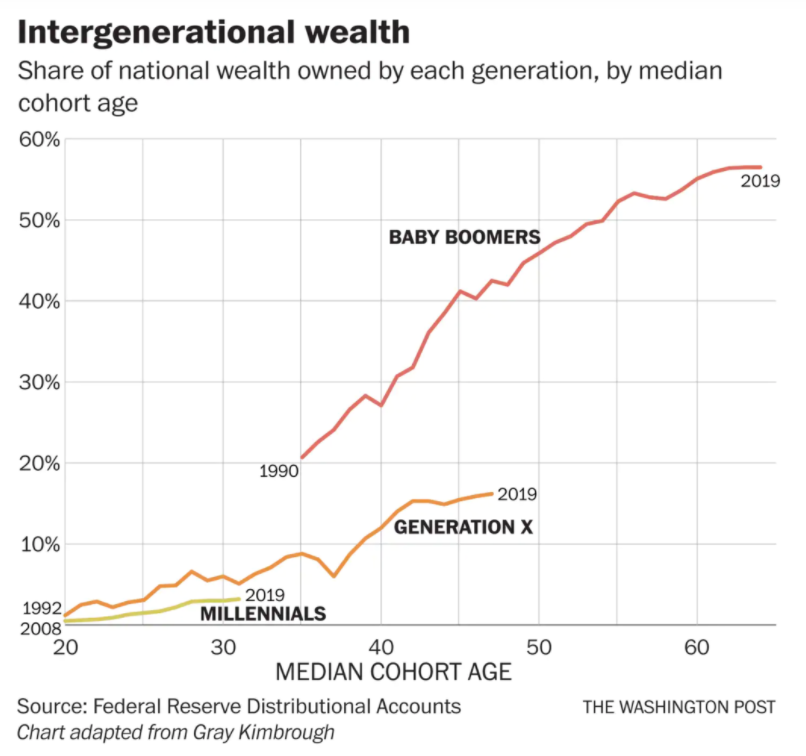
Intergenerational Wealth - Share of National Wealth Owned by Each Generation

I came across this story this morning and wanted to share it here on dinks.

According to data from the Federal Reserve, Millennials are significantly poorer than Generation X or Baby Boomers at this point in their lives. At their current age Millennials control about 3% of the nation’s wealth. At this age, Generation X controlled 6-7% and Baby Boomers controlled controlled about 20% of the national wealth.

Intergenerational Wealth - Share of National Wealth Owned by Each Generation

Why?

1. The Coronavirus pandemic. While Millennials are better educated then other generations, Millennial workers are more heavily concentrated in retail, education and hospitality, which have been disproportionately impacted by coronavirus related layoffs.

2. Millennials own less stock than other generations. The stock market has been on a tear recently. Just 2% of millennials hold stocks, mutual funds or index funds compared to 55% of Baby Boomers, per CNBC.  Because millennials don’t have stock, they’re missing out on these gains.

3. The Great Recession. Millennial households recovered far more slowly from The Great Recession – in particular African-American and Latino millennials were hit particularly hard (here).

4. Older Millennials have fewer assets, less income and more liabilities. Forty-four percent of older millennials own homes, which is 4% less than other age groups. Their median incomes are also lower than other generations. Older millennials have higher levels of debt, including car loans, student loans, and credit card debt (St. Louis Fed).  The lack of assets and higher debt levels mean its harder for Millennials to build wealth.

However, the news isn’t all doom and gloom for Millennials. The Millennial generation is set to inherit 68 Trillion from their Baby Boomer parents by 2030 (here).

Why It Matters That Millennials Are Poorer

There are lots of good reasons why the nation might want to share the wealth with Millennials. Having mortgages and high income means that, in general, people have a stake in their country doing well. Poverty is also associated with all sorts of unpleasantness, like domestic abuse, crime, substandard housing, inadequate nutrition and food insecurity, inadequate child care and lack of access to health care.  So, the lack of Millennial wealth means they’re prone to fuel things like the Gamestop Revolution or participate in riots.

There is a fun twitter thread on this topic => here.

Chart source: Washington Post.

For more great Dinks articles, read these:

Ten Factors Affecting Your Wealth

Eight Reasons Why Its Hard To Get Rich

If You Want To Be Rich, Get And Stay Married

Save, Invest and Reinvest To Build Wealth

Why Episcopalians and Jewish People are Richer

Why Episcopalians and Jewish people are richer

Why Episcopalians and Jewish people are richer

Religion is one of those topics that’s unexplored when it comes to personal finance. If you surf the web, you won’t find much discussion of it. If you read the Wall Street Journal or Investors Business Daily, you hardly see a mention of religion at all.

This is a shame. If you look at it, religion has played a defining role in much of human history. For example, religion was partly responsible for early European immigration to the United States, and historical differences between Christians and Muslims are an important subtext in our nation’s current efforts in the Middle East.

Why Episcopalians and Jewish People are Richer

But, what a lot of people don’t understand is the impact of religion on patterns of individual wealth building.

In this case, religion matters and it matters a lot. According to a great analysis of US data by Lisa A Keister, Jews and Episcopalians are way ahead of the curve when it comes to building wealth. According to Keister, about 18% of Jewish and 12% of Episcopalian families have over a million dollars in networth, compared to only 2% of Baptists and 4% of Catholics.

What accounts for the difference? Synergy between belief and action.

In the case of Jewish people the religion emphasizes the lack of an afterlife and places a high value on scholarship – resulting in higher education levels. For Episcopalians the thinking is the old fashioned protestant ethic encourages thrift and investment. In both religions, spiritual beliefs and forms of social organization result in higher levels of home ownership, possession of savings accounts and stock market investments.

Here is another taken on Judaism and wealth:


For more great articles on this topic:

Streams of Income Of The Wealthy

Eight Reasons Why Its Hard To Get Rich

The Best Time To Buy And Sell Mutual Funds To Make The Most Money

Ten Factors Affecting Your Wealth

You cannot copy content of this page