
Why do you even bother signing your credit card receipts? Nobody ever looks at it. You could write your name, Donald J. Trump, Samuel L. Jackson, or Bullwinkle J. Moose and nobody would care – would they? (more…)
Author Archives: Team Dinks
Credit Check Total Review
If you need to be completely sure of your credit score, you may want to pay to have it printed out. One company does exactly that — read on for a Credit Check Total review. (more…)
The Best Debt Forums

 Most Americans are plagued with some kind of debt. According to a report from WalletHub, in this year’s first quarter, the average American household owed $8,038 in credit card debt, which is a six percent increase from 2016’s Q1. In fact, we closed out last year with $89.4 billion in debt. A NerdWallet study found that the country owes $1.1 trillion in mortgage debt, which comes to around $172,806 per household. TransUnion, a credit protection service, estimates that by the end of 2017, the mortgage debt level will rise to $198,435. Student loan is another facet of the debt crisis, and NerdWallet found that education loans have grown 186 percent over the past ten years.
These statistics speak to massive and unmanageable national struggle. Although paying off student loans, credit cards, and mortgages is a constant hardship so many of us share, talking about debt remains a difficult topic of conversation. Here are some forums to check out that encourage an open dialogue on the hardships of debt and how to overcome them.
SavingAdvice Forums. There are thousands of members in the SavingAdvice Debt Forum talking about a whole spectrum of issues — from individual debt problems, to retirement, and budgeting. It’s free to join, and most topics consist of hundreds of threads on advice, anecdotal experience, and inklings of wisdom. At SavingAdvice, it’s easy to search for specific themes and questions, and there’s always a member eager lend a helping hand.
Your Debt Freedom Family. This Facebook group was started by Monic Louie of OurDebtFreeFamily.com, and it provides a safe space to talk about all matters on debt and family.
Frugal Village. Learn the ropes of wrangling debt with your fellow defaulters. The discussions range from managing bills to figuring out credit card forgiveness. The user interface is easy to use, and you can see who is active in which threads at any given moment.
The College Investor. The 44 million Americans paying back their student loans need a space to commiserate. The College Investor provides an outlet for youth and parents alike to swap loan payment tactics and tips. There’s an entire thread devoted to understanding the repayment systems, and which consolidation methods are best.
City-Data. This data organizing organization produces statistics on a myriad of urban living issues — from crime rates to school districts — so you can understand your neighborhood better or plan a move. They also have forums for discussing debt in specific regions and cities, so that you can brainstorm with fellow locals on how to decrease your debt.
Debt Consolidation Care. This is a community for people who are looking for strategic and simple ways to lower their debt. Unlike the other forums, the threads are organized by individualized questions and not by specific topics. There’s also the option to chat with a personal finance expert via phone or online chat.
Read more of our informative articles:
- How To Make Money As An Amateur Photographer
- How to Buy an Oil Well
- The Pros and Cons of Investing in Mutual Funds

Motif Review

 Back in the day, people used to call up their investor to let them know what stocks to buy, and then floor brokers would shout out trades in the trading pit. The dawn of internet has put the old-school investment practices to rest, and now everyone trades by the light of their glowing screens. Within this throng of innovative technology has emerged Motif Investing, a unique tool that allows investors to build and trade “motifs” — collections of 30 stocks or ETFs that pertain to a specific theme or industry.
Motif has an unusual approach to investment. Instead of trading by the share quantity, investors trade stocks in dollar amounts. This makes it easier for people to visualize their investments, especially those who are just banking on small amounts. The motifs are divided into two categories: professional motifs and community motifs. The professional motifs are curated by Motif’s staff, and the latter are developed by existing investors.
You can use filters to sift through the different kinds of motifs, such as green investing, social causes, current events, health care, real estate, social causes, financial services, and natural resources.
For example, doing a query for real estate could pull up a series of professionally-built stock baskets including housing recovery, office space, home improvement, renter nation, and millennials. The housing recover basket includes a run-down describing the historical trajectory of the housing market, a one-year index return graph, and stocks from homebuilder companies, real estate brokerage services, mortgage service providers, and building products. Currently, baskets runs at $9.95.
The motif catalog is organized according to performance, most purchased, and highest dividend yield. There is also a compiled list of 30-day winners and 30-day losers.
If you want to build your own motif, explore the stocks and ETFs and collect the ones you want. You can adjust their weighting through editing each individual selection or through market capitalization. The platform automatically shows you how your motif performed over the last year through benchmarking against the S&P 500.
Motif is perfect for investors who want to prioritize their interests, morals, and values when pooling their money into stocks and ETFs. For those with their focus zeroed in on specific industries, Motif also gives access to select public offerings with no commission or fee. Investors must shell out a minimum of $250 to take part in an IPO, and just like stocks, IPO orders are measured in dollar amounts and not by share.
Every Monday morning, Motif rebalances professional motif portfolios, allowing users to only reinvest in professional motifs or ones they have built themselves. That means if you’re an investor who practices dollar-cost averaging by routinely depositing cash into the same investment, you could save on commissions by using Motif.
For die-hard trading nerds, Motif is the trading platform of your dreams. The freedom to customize a portfolio by focusing on specific missions and industries is seldom prioritized in the robo-advisor market. That being said, it’s hard to say what’s in store for the future of high-tech investing.
Read more of our informative articles:
- How To Make Money As An Amateur Photographer
- How to Buy an Oil Well
- The Pros and Cons of Investing in Mutual Funds
Digit.co Review
 Saving money is a chore that no one wants to do. It requires scheduling, discipline, and careful monitoring of your finances. Digit.co is an app that aims to eliminate the stress, time, and effort that goes into building a nest egg. Unlike other savings apps like Qapital, Acorns, and Unsplurge, Digit’s algorithm is designed to adjust to your personal spending style, so that you’re not setting aside more than you can afford to.
So, how does Digit work? After linking Digit to your checking account, it will analyze your spending and income history, so it can assess your financial habits and come up with a realistic savings goal. Every few days, Digit then sets aside small amounts of cash that won’t interfere with your typical spending tendencies, that way you won’t have to worry about potential overdrafts. In fact, Digit has a no-overdraft guarantee, so if there’s a fluke and you go in the red, Digit will cover your overdraft fee.
Out of all the savings programs and apps, Digit stands out from the pack because it squirrels away an amount that works with your day-to-day spending and earning. Over the course of two or three days, it typically stores away $5 to $50, and according to Digit’s help page, the average transfer is $18. You can also set goals and savings plans, like the “Rainy Day Fund,” which will never save more than $150 at a time. You can also program the app to save away money for specific bills.
The app will ping you with texts letting your current savings rate, and you can adjust the settings on the notifications to receive less-regular updates. Simply texting the app “savings” will send over a report of your saving activity. If you ever need some or all of those funds back, just text Digit and they’ll send it back to you in one business day — for no charge. You can also set up a minimum balance limit so that the app won’t retrieve funds when your bank account balance is at a specific amount.
Although interest doesn’t accrue in Digit’s account, the Savings Bonuses feature deposits 5 cents into your account for every $100 you save. The app is FDIC insured up to $250,000, and uses “state of the art security measures” for those wary keeping their data safe, the app promises to keep all user info “anonymized, encrypted, and securely stored.” Just like with Venmo, Digit makes money through the interest on your funds.
Digit it ideal for anyone who has a fluctuating income; i.e. a freelancer, restaurant server or bartender, seasonal worker, or someone who runs their own business who can’t predict their spending levels and revenue from one month to the next. It’s geared towards folks who are serious about building a savings, as using Digit is a slight financial commitment within itself.
Digit is only free for the first 100 days, and then after that you pay $2.99 a month afterwards. Our consensus: well worth the price.
Read more of our informative articles:
- How To Make Money As An Amateur Photographer
- How to Buy an Oil Well
- The Pros and Cons of Investing in Mutual Funds
How to Earn Money Online from Home Without an Investment

 In 1975, Steve Jobs and Steve Wozniak started building computers in Jobs’ parents’ garage. They had no money, and they were creating products for a nearly non-existent market. Yet, despite the adversity, they persevered. Two years they released the Apple II, which became the prototype for the personal computer. By 1979, their sales had reached $200 million.
Like Apple, some of the biggest household names got their start from nothing. No investments, no savings, and no rich grandparent to fork over the initial capital. With the internet streamlining nearly every aspect of business operations, it’s become much easier to start a business from home. Working remotely has become a norm, and more and more people have found effective ways to establish and run a sustainable business from the comfort of their kitchen table. The notion of setting up shop without a nest egg to boot sounds scary – if not impossible to most people. However, history has demonstrated that it’s been done before. Even if you’re not a computer genius, there are some sound ways to earn money online from home without an investment.
No product? No problem. One of the best ways to make a living online remotely is to sell your services. Are you a wiz with numbers? An ace developer? A wordsmith? Or just an amazing scheduler? Businesses are always on the hunt for freelance accountants, coders, writers, and personal assistants. Some of these skills require degrees, certifications, or other official training programs. Being a personal assistant and scheduler are professions that just involve an innate talent for organization.
Successfully selling your services means you have to market yourself. Be sure to create profiles on Fiverr, UpWork, Creative Circle, Taskrabbit, and Skillshare to let the world know about your qualifications. You’ll also want to get a website to showcase your skills. Tumblr and Wix are easy and free platforms for creating your own website.
The barter system. Launching your own business without a penny is a tricky endeavor. Even Steve Jobs had to sell his Volkswagon and Wozniak traded in his then-novel Hewlett-Packard calculator to make ends meet. If you need training in bookkeeping, ask a local accountant if they’re interested in giving you a tutorial in exchange for a few nights of babysitting. If you’re a developer who needs a few samples in your portfolio to get started, reach out to a local non-profit and ask if they need help creating online newsletters or redesigning their website.
Get creative. The gig economy has expanded the freelance market. There are now hundreds of routes to sell your services on the internet. Here’s a list of some fields that are always in need of more entrepreneurs:
Online English teacher. All you need is an internet connection and Skype to make a living as a virtual English teacher.
Translator. If you know another language, you can market your skills to different corporations looking to translate product copy.
High school and college essay editor. If you have a Ph.D. or a master’s in literature or English, you can start a business helping students edit and improve their academic papers. Students look for professional writer online by searching for who can write my paper.
Read more of our informative articles:
Make Some Extra Money As An Amateur Photographer
Yes, You Can Buy An Oil Well!
The Pros and Cons Of Investing In Mutual Funds
What is Eben Pagan’s Net Worth?
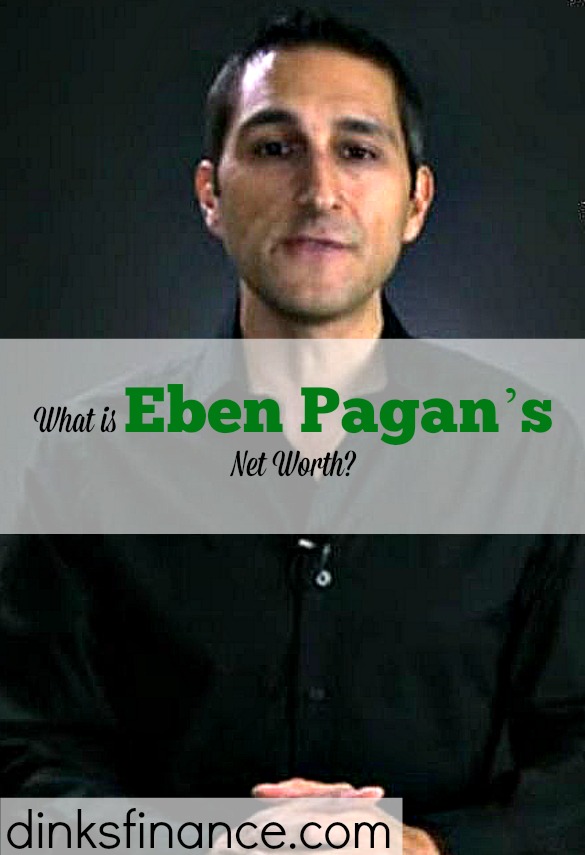
 “Seduction Expert” isn’t a common job title you’ll find on LinkedIn, but it’s the career that has made Eben Pagan a millionaire. The entrepreneur, author, and speaker is best known for his book “Double Your Dating,” a how-to guide that helps men become “rejection-proof”. Aside from giving dating advice, he also heads up a consortium of DIY business guides, that include “Wake Up Productive” and “Self-Made Wealth”. He also goes by the name David DeAngelo, and various sources have different versions as to which is his real name. Google either one of his names, and hundreds of pages about his tactics and teachings are bound to pop up. Like other self-made marketing gurus, Pagan has a compelling life story detailing how he landed where he is today. So what is Pagan’s net worth?
Pagan grew up poor in rural Oregon. In his early 20s, he moved to San Diego and tried his hand at real estate. After eight unsuccessful years as a mortgage broker and agent, he discovered marketing, and realized that he had strong interpersonal skills, and excelled at “communicating value.” He eventually started a consulting business, where he helped real estate and mortgage companies strengthen their marketing and sales departments. In 2001, he jumped on the early internet craze and published an e-book, “Double Your Dating” which soon evolved into a newsletter with hundreds of thousands of subscribers. According to a Digital Marketing Revealed interview, he charges recipients $20 a month.
Thousands of people have published dating self-help books, but Pagan’s book spoke to a unique niche. “Double Your Dating” is a self-help book for men who have a hard time meeting women. For years, Pagan struggled with his romantic pursuits, and had no luck scoring a date. Out of desperation, he started eating up all the dating advice he could get — from lectures, motivational tapes, and books. His real “aha!” moment came when he found a group of guys who he considered to be “naturally good with women.” Just like in “Hitch”, the early-oughts classic starring Will Smith, Pagan was mentored by these men on how to approach women with confidence. These lessons became the inspiration for his book, which put him on the map as a leading expert in the dating industry. “Double Your Dating” continues to be a success, and allegedly rakes in over $20 million in sales every year. It soon spawned a series of related products including a coaching business, CDs, DVDs, and seminars.
Several different publications have extremely varying estimates of Pagan’s worth. According to Celebrity Net Worth, as of 2007, his ventures earned him $20 million annually. The Richest claims his net worth to be $1.25 million. The Entrepreneurs-Journey Insider states that Pagan rarely does interviews, and therefore few can surmise Pagan’s actual net worth. Another source claims that his dating advice business generates between $25 million and $30 million a year. Despite the broad-spanning estimates, it’s clear that Pagan’s net worth hovers in the millions. However, with the dating app industry constantly evolving, it’s difficult to evaluate how much he might be making now.
Read more of our thought-provoking stories:
- Make money as an amateur photographer
- When buying an Oil Well
- The Pros and Cons of investing in Mutual Funds
- Tearra Maris Net Worth
- Jodie Sweetins Net Worth
How to Sell Used Books Online for Extra Money
 Any book lover has a growing collection of fiction books they’ve already read and probably won’t ever read again. Piles of unwanted novels and memoirs only take up space and gather dust. De-cluttering your home of neglected books is not only a way to organize your living space, but it’s also a creative alternative to making easy cash. Ebay is no longer the only venue for selling fiction books online. Now, there are several online marketplaces that make book selling fast and easy. Here’s our guide:
Powell’s Books. Portland’s most beloved and famous bookstore, Powell’s takes used books with open arms. Even if you’re not near the hipster capital of the Pacific Northwest, you can sell your fiction books to Powell’s online. Just punch in the book’s ISBN (International Standard Book Number, usually found on the back cover near the bar code) and get an immediate quote. Powell’s pays for the shipping and gives you store credit or a PayPal deposit.
Sell Back Your Book. Powered by Ez Book Recycle, Sellbackyourbook.com are veterans in the book selling business. They buy virtually any kind of book — except encyclopedia sets, books without ISBNs, teacher’s editions, and instructor edition textbooks. They also only buy one copy per title policy. They also offer free shipping and guarantee payment in three days of arrival.
Cash4books. For those who are looking to get cash for their old textbooks, fiction, and non-fiction, Cash4books is a one-stop-shop. Specifically geared towards readers of modern classics, they only purchase books that were published in the last three years. Books with any severe wear and tear won’t be accepted along with books that feature your personal highlighting or any other kind of writing. Just like any respectable book buyer, Cash4books pays for shipping and pays via check or PayPal.
Facebook Marketplace. If you’re not satisfied with the bids that online book buyers are offering, you can always post your own rate on Facebook. More than 450 million Facebook users use the social media platform to buy and exchange furniture, clothing, cars, and books. It was only a matter of time that Facebook decided to roll out its own marketplace. Just like Craigslist, Facebook Marketplace regional feature only lets people in your area view what you have to sell. Currently, Facebook Marketplace is only available on your iPhone or Android. But, it’s easy to just snap a photo and upload it to the store.
Book Scouter. You want to get the most amount of money for your used books. It can be time consuming and frustrating to check out each individual vendor’s rates for your books. That’s why there’s Book Scouter. This platform queries your book’s ISBN to nearly 50 book buyers — including the major players like Half.com and Amazon — to find you best offer. They have a curated list of preferred merchants that are considered dependable and trustworthy. Sellers are also invited to leave ratings and reviews about their experience with a vendor. For people who have no time to waste, Book Scouter can also be found in the Apple App Store, so you can sell your book while on the go.
For more of our great articles, read these:
How to Make Money as a YouTuber: Michelle Phan

 Nearly 90 percent of women turn to YouTube thought leaders over celebrity promoters. That’s according to Michelle Phan, but she might be on to something. The beauty guru’s YouTube channel has accrued nearly 9 million subscribers and her videos have over 650 million views and counting. Phan posted her first makeup tutorial in 2007, which garnered 70,000 views in just its first 14 days. Wearing a casual white tank top and using her living room as a backdrop, Phan had no idea that years later she would become a top YouTube star. Yet, here she is. At first, her channel was making 25 cents a day, which soon turned into $50 a week, and then $3 million a year. So how much money does this YouTuber make today? The 30-year-old’s fortune is at an estimated $50 million. Here’s how she does it:
Partnerships. In 2010, Lancôme brought Phan on as the makeup company’s first official video makeup artist. According to The Independent, Phan’s application to work as a salesperson at one of the French makeup brand’s department store counters was rejected three years before. Phan created videos for Lancôme several years, while also turning out her classic videos such as the Seductive Vampire and Lady Gaga tutorials.
In 2013, Phan joined forces with L’Oreal to create Em Cosmetics, a line of skin products that fell flat quickly after receiving sub-par reviews and complaints about price points. Its failure threw Phan into depression. But she bounced back, and in 2015, she purchased the 200-product line from L’Oreal.
Phan also brought her innate entrepreneurial skills to Cutting Edge Group, a music financing organization. Together, they created Shift Music Group, a venture that aims to recruit and sign rising musicians.
Phan and Endemol Shine Group, a digital television production company, partnered in 2015 to start a lifestyle network that showcases other notable YouTube beauty icons like Charis Lincoln and Cassey Ho. It’s not clear how much this YouTuber makes from these ventures, but they’re vital to her success.

Book. Phan’s book Make Up: Your Life Guide to Beauty, Style, and Success – Online and Off, was heavily marketed on every realm of social media. Although, there’s no data that demonstrates how much revenue the book made, it’s a critical facet of Phan’s branding strategy.
Ipsy. Perhaps Phan’s biggest money making resource is Ipsy, a beauty box service that made up 62 percent of all beauty box sales of 2016. It’s also one of the fastest growing beauty delivery services out there — with sales jumping 11 percent from 2015 to 2016. Ipsy’s main product, the Glam Bag sells for $10 a pop, and with 1.5 million subscribers, Phan’s new project will likely continue to thrive. The Santa Monica-based brand has made an alleged $800 million, and took in $150 million in revenue in 2016.
Should You Invest in Gold?

With the price of gold hovering around a five-year low, industry analysts and investors are wondering whether this precious metal will ever generate the kind of demand that pushed its price to all-time highs in 2011. In spite of such doubts, gold is unlike other types of assets and is in most cases the first port of call for investors fleeing turbulent stock markets or worried about political uncertainty. Here is some information to help you decide whether you should trade gold or not:
Two Key Gold Demand and Supply Dynamics
In order to determine the viability of investing in gold, one must evaluate and understand two key demand and supply forces. According to data from the IMF, much of the world’s gold is in the custody of central banks. This includes central banks in developed as well as emerging markets. For central banks in advanced economies, the expectation, according to Barron’s magazine is maintaining the status quo. This translates to a market stance that economists call “net purchasing” from the official sector. However, the opposite is true across emerging economies with their central banks expected to increase physical gold holdings significantly in coming years. A survey carried out by ANZ in 2014 with participants drawn from central banks and sovereign wealth funds found that majority trust gold as a long-term asset safe haven. Moreover, 60% of respondents believe gold will account for large portions of central bank reserves in the next two years. Given such a strong vote of confidence from the largest block of gold buyers (demand-side), only a brave soul can bet that prices will not rise in the near future.

On the supply side, the available data paints a picture of dwindling gold reserves. Figures published by Fortune magazine show that the average grade of gold ore has dipped to 1.5 grams per ton. In comparison, average gold ore grades stood at 12 grams per ton in 1950. Even as recently as 2009, gold mines in countries such as the US, Australia, and Canada registered ore grades of 3 grams per ton. These statistics show a steady decline in commercially viable gold ore. Barring the discovery of new gold ore deposits, supply constraints will lead to high gold prices at some point in the future.
Gold Price Outlook
The future of gold’s price depends on several key factors including:
- The Chinese economy
In recent weeks, financial and stock markets in China have been struggling to maintain a semblance of normality as investors who had been drawn by the country’s seemingly unstoppable economic juggernaut withdraw their investments. Moreover, scenes of angry Chinese investors demanding back their money from diverse investment vehicles do not instill confidence in panic-stricken foreign investors. As most risk-averse investors do, many of those exiting the Chinese stock and financial markets will use gold to protect their portfolios from value erosion.
- US presidency change
In the US, the looming presidency change is also likely to create uncertainty as investors try to evaluate the economic policies of whichever new government will take over. At this point, take note hiring of immigrants especially in the tech sector is already a major talking point among US presidential candidates. With this in mind, an incoming government could spook tech industry investors if it leans towards anti-immigrant hiring policies. Such investors would look for safer assets, such as gold, to invest their money.

- Chinese gold futures
China is both the world’s leading importer and producer of gold. In spite of this, China has been a relatively minor player in the trading of metals, commodities, as well as price discovery. However, this is set to change with the Chinese government working hard to become a major player in the gold market. To achieve this goal, it is opening the Chinese gold market to foreign investors who are expected to embrace this investment opportunity. In particular, Barron’s reckons that Chinese gold futures are competitively priced compared to similar contracts elsewhere.

Conclusion
Although recent gold price moves have been worrying, this downturn does not warrant divesting from the yellow metal. This is because central banks across emerging markets are bullish about gold’s viability as a hedge against wealth erosion. In addition, the Chinese are setting up the stage to become a major player in the gold market. Dwindling gold reserves are also likely to lead to higher global spot prices.