Avatar photo About James Hendrickson

James Hendrickson is an internet entrepreneur, blogging junky, hunter and personal finance geek. When he’s not lurking in coffee shops in Portland, Oregon, you’ll find him in the Pacific Northwest’s great outdoors. James has a masters degree in Sociology from the University of Maryland at College Park and a Bachelors degree on Sociology from Earlham College. He loves individual stocks, bonds and precious metals.

5 Habits That Are Costing You Money

smoking-918884_640

Today we have a guest post for you from fellow personal finance blogger, Anum Yoon.

It was payday last Friday, but you already spent your entertainment budget for the week. Or maybe you’ve had to adjust your budget to account for the rising heating costs this winter. No matter how you add it up, your paycheck isn’t stretching far enough.

How can you make it last longer? Consider cutting back on some of your unexpected, hidden and wasteful habits.

Convenience Fees

You probably know that when you use an ATM at a bank other than your own, you’re charged a $2 to $3 fee. You’re also hit with an ATM fee from your own bank.

Stopping at a convenience store ATM to for a quick $20 for the movies could cost you $5.50 or more. If you do that every weekend, you lose more in fees than you spent to see a movie one weekend a month. Next time you need cash for a night out, plan ahead and stop at an ATM where you bank, or stop in and make a withdrawal.

Chilly Decisions

Contemplating what to snack on while standing in front of the open refrigerator door can quickly add up to higher electric bills. It may not seem like much time while you choose between the salsa verde or the French onion dip, but in one year it can add up to as much wasted electricity as running your dishwasher 20 times. Instead of taking inventory of your refrigerator’s contents several times a night trying to make a decision, snack on something that isn’t refrigerated or make one quick decision.

Smoke Costs

Cigarette prices don’t fluctuate like gas prices. Depending where you live, a pack-a-day habit can cost you as much as $70 a week or more. You might as well light your money on fire and throw it away.

There is no denying that quitting smoking will be hard, but it will save you more than money: your life. Apart from the cost of cigarettes, the increased costs of health insurance and medical bills for associated illnesses can add up, too.

Liquid Gold

Your daily gourmet coffee drink, plus bottled water, soda or tea from the deli at lunch, plus a quick drink with friends at the corner bar after work equals $12 to $30 or more a day.

Calculate the savings: If you make your coffee at home, bring a soda or reusable aluminum bottle of water or tea for lunch, and purchase a six-pack or bottle of wine, you could probably save money.

Shopping Temptations

Stores strategically place items beside register aisles, such as candy or toys to catch your child’s attention — they call it an impulse buy. It really should be called a “bribe buy” because you might buy them to keep your child from creating a scene.

If you’ve ever shopped while you were hungry, you probably arrived home with your groceries and realized you didn’t buy anything that you needed, only food that looked delicious.

BOGO buys, or buy one get one free items, are another temptation buy. Sometimes it’s a good deal, but if it wasn’t something you would normally buy it becomes an impulse buy.

You can reduce some expenses if you look for ways to cut your monthly bills. For example, if you spend a lot on pay-per-view movies, compare the monthly amount you spend on them to one month of Netflix. You could consider dropping some of premium channels, such as HBO or Showtime.

Another way to recognize where you’re spending unnecessary money is to track your spending for a month, including cash purchases. You will quickly locate the leak in your wallet.

Anum Yoon is the blogger behind Current on Currency. She writes about personal finance in a way that is more approachable and inclusive to fellow millennials.

How to Start Investing When You Don’t Know What You’re Doing

organizer-791939_640

Today we have a guest post for you about how to get started investing.

For many years people have used the quote, “There’s a first time for everything,” to justify their behavior anytime it is different or shocking but done for the first time.

However, the saying is actually quite true. No one does anything and starts in the middle, end, or anywhere else in between except at the beginning, or “for the first time.” The same can be said of investing. If you’ve been thinking about investing but you’re wondering how to start investing when you don’t know what you’re doing, read on.

 Get Your Finances in Order

Most financial advisors will tell you the first thing you should do is to pay off debt and build a cash reserve, before you even think about investing. Whether or not you should pay off all debt before you invest is up to you, but it may depend also on how much interest you are paying on your debt as well as compared to the amount of money you could potentially make by investing that same money. Once you have your finances in order and have built an emergency savings, it’s a good time to start investing.

Consider Simple Options

Does the idea of risking your money in an investment scare you? You are not alone. One of the reasons many people decide not to invest is because of the fear of losing their money. But there are investment choices that offer less risk just as there are others that promise a higher return but have more risk involved. Another major fear that stops people from investing is feeling like they don’t know what they are doing. But you shouldn’t let that stop you as there are some options out there to simplify the process.

  • 401K: When you are just dipping your toe in the water for the first time, and are not self-employed, consider investing in an employer sponsored 401(k) plan. Many employers that offer this type of retirement plan will also match contributions into it up to a certain percentage. Don’t make the mistake of turning away free money. This may be the best return on your money that you’ll ever see.
  • Stocks: There are many different brokerage firms out there to choose from. Your investment goals may help you narrow the list down and determine which firm you want to place your money in. You might also consider hiring a financial planner, or going with a robo-advisor to help you if you aren’t sure what steps to take. Financial planners and robo-advisors can help you choose investments that are neither too risky or too conservative for your age and liking.
  • Target Date Funds: This might be a good place to start if you are unsure which investment option to choose. These funds are diversified automatically by fund managers who have pre-determined how to allocate those funds based on your age and the date when you want to retire and start using your invested money. Your investment is in a mixture of funds with some having more risk and others less so. As you near your retirement date the mixture changes transferring your money into investments with lower risk.

Monitor Your Investments

There are plenty of investment options out there depending on the amount of risk you are willing to take and what your goals are. No matter what you choose to invest in you will want to keep an eye on your money to ensure your investments continue to grow. Just remember not to watch your retirement investments too closely or you’ll start micro-managing them and potentially loose out on future earnings by pulling money out whenever there’s a loss in one of your funds.

If you don’t know what to do when it comes to investing, the best thing you can do is just get started with a simple option, like one of the ones listed above. The longer you put it off, the more future money you are losing out on.

Kayla is a personal finance blogger in her mid-20s who loves to write about money topics of all kinds.

5 Ways to Save Money on Car Repairs

car-repairs

Owning a car may be really take you places, but it can be a financial nightmare at times.

A brand new car starts losing value the minute it rolls off the showroom floor and keeps losing value, until it’s sold for scrap a decade or two later.

The problem is wear and tear (or ‘depreciation’). Cars tend to break down after a while, but most people fail to account for the money they’ll need to repair it.

But owning a car is often essential for most people, which means repairs are unavoidable. It is, however, possible to cut repair costs. Here’s five ways to save money on car repairs:


  • Preventive maintenance is cheaper


Prevention is not just better than cure, it’s actually cheaper. Keeping an eye on car essentials such as the tyres and batteries will pay off in the long run.

Regularly maintain these by doing what’s suggested in the manual or learning how to replace them yourself.

All these moving parts will wear out over time so it’s best to form a habit of repairing them before they eventually cause trouble.


  • Pay Attention To Warnings


Modern cars have all these neat features that are designed to warn you when things don’t look right.

There are now sensors available for inside tyres for tyre pressure and in newer cars, your car engine will often warn you, well before things break down.

These red flags need to be taken seriously. Go down to the repair shop right away after an alert.


  • DIY occasionally


The easiest way to save money on any repair is to do it yourself. Learn to replace the air filter or change wiper blades. Small parts like these are really simple and it’s easy to learn how to repair them.

Here’s a checklist of things you can probably learn to repair yourself.  Any expert mechanic would be happy to demonstrate but most drivers simply learn these basics off of YouTube.


  • Avoid duplicate labor charges


A simple repair could take longer than expected because the mechanic has to remove a lot of parts to get to the issue. This could be an opportunity to save on repairs costs.

Ask the mechanic to inspect the parts carefully and see if there’s any other, unrelated repairs that they can do right away. This saves you money on labor and the trouble of having to come down to the garage again.


  • Find an expert you trust


Some repairs are just too complex to handle yourself, which is why it’s essential to find the most trustworthy mechanic in your area. Compare prices and reviews of all the local auto repair shops with sites like RepairPal and AutoMD.

If a repair shop delivers great service at affordable prices, stick to them loyally. Get to know the staff and mechanics. Building a relationship will help you get better deals in the future and avoid hidden costs.

A trustworthy expert will help you get quality parts for lower prices and honestly admit if a repair is unnecessary.  

To sum up, check the manual, pay attention to your car, maintain it yourself regularly and have someone you trust repair it.

These five simple tips could save you more money on your car repairs than you would imagine.

How to Save Money on Your Utility Bills

lightbulb-1246589_640There are a lot of inexpensive ways to keep costs low in your home and you don’t have to go through extreme measures to achieve that.

It is common for the average family to have several hundreds of dollars of utility bills to pay every month and sometimes it can be quite challenging, especially nowadays that gas prices and consumer products are continuously on the rise.

You can definitely reduce your utility bills without being forced to move since majority of the energy we use at home goes toward heating, cooling and water.

So if you’re looking for ways to save money on your utility bills, you can save even thousands of dollars with these easy and simple tips:

  1. Insulate your attic and exterior walls. This can reduce your heating and cooling costs significantly. Insulation can be bought at an affordable price in hardware stores and you can install them yourself even if you don’t have home improvement skills. It can make a difference and adding insulation is quite easy to do.
  2. Install a gadget that will improve energy efficiency. This list of energy efficient gadgets from Powershop has some great pointers for products that can make an instant impact in reducing your utility bills.
  3. Inquire at your utility company to see about other pricing plans. If you’re in an area that allows you to choose a utility provider, that particular provider might offer different pricing plans. Always read the fine print and make sure that when you plan to cancel your services with them, you won’t need to pay a termination fee.
  4. Switch light bulbs. Switching from incandescent to LED bulbs can also save a substantial amount on lighting costs.
  5. Insulate your water heater. If you have an old water heater, you can save on your water heating costs by simply insulating it and this is another simple project that can pay off big in the long run.
  6. Do your laundry in cold water. Almost 90% of the energy your washer uses goes to heat up the water and switching to cold water can really add up on lowering down the cost of your utility bill.
  7. Pack up the dishwasher. Don’t run just a half load – make sure it’s packed to the brim and even turn off the “heat dry” to let your dishes air dry. Consider also hand washing pots, pans or even hand wash dishes if it’s just a few pieces. If you use the dishwasher less and air dry these items yourself, you can definitely save up on your energy bill.
  8. Apply weather stripping. Weather stripping is actually easy to install and it will make a lot of difference to keep out drafts. It can also help keep out rain and prevent the inside air from escaping. This is another inexpensive and an easy project that will have a big impact in your home energy bill.

When you want to save money on your utility bills, first identify the items in your house that uses energy and water. Also, there are other major appliance models that are energy-efficient and water-efficient. Consider switching to these and you’ll see how much money you can save in the future.

Do you have any other money saving tips or strategies to lower your utility bills?

How to Live on One Income without Killing Each Other

argument-238529_640This is a guest post from Pauline of InvestmentZen.com

When it comes to earning, spending and investing money, I am fiercely independent. I don’t want to report to anyone, justify my spending or share too much about my financial life. However, I am also aware that if there are two of you, you are much stronger together than alone. It can be complicated, and probably will be, until you have a strong enough relationship to trust each other, support each other, and consider all your efforts are made for the greater common good.

Living on one income requires a sacrifice on both parts. But if you are able to save 50% (or more, if you live on the smallest income) of your joint income, you can retire as a couple in less than 17 years. That is assuming a 50% savings rate, 5% returns on the market, and a 4% withdrawal rate in retirement. First, you need to make sure you are both on board. You can’t make it work if one of you is dragging their feet. Then, you must define your financial priorities. Where will the savings go? Will you invest the money? Will you pay off your mortgage early? Will you keep six months worth of expenses in case an emergency arises, or just three? How much will each person be entitled to as a no questions asked allowance?

And since you are now living on half what you were before, you will need to cut on some stuff. What do you start with? It can’t be just one person’s hobbies, even if there is usually a spender and a saver in a relationship, you can’t deprive just one party. It has to be a joint effort.

Again, because money is often the cause for tensions and even divorces, communication is key. You have to gently encourage your other half to drop their coffee habit, or their gym membership if they haven’t gone in a year. You can’t point fingers and say they are the cause of your financial ruin. For everything you cut on, try to find a satisfying alternative. Think of it as a financial diet. You must stay off the chocolate, but you can have as many strawberries as you like.

So if you cut on expensive nights out, try to find frugal ideas to keep having fun. A picnic with your friends, a camping trip at a nearby state park instead of a hotel getaway, and so on. The easiest things to cut on will be the ones you share as a couple. Date night at your neighborhood restaurant can easily be substituted by a gourmet diner at home. It might be a little trickier to get your friends and family on board, but from personal experience, I have found out that if you suggest something equally entertaining for half the price, most people will happily come along. Once in a while, they’ll still suggest expensive outings, and that is when, as a couple, you will have to decide whether there is room in your budget for that or not.

There are so many ways to save money if you are a little resourceful, that even if you live on one income, there should still be enough left for the occasional treat. But it has to remain just that, occasional. You can quantify it from the start. For example, you both get $100 a month to do whatever you please with it, and then you get $100 as a couple, to either spend now, or save and grow for a bigger treat. That way, no one feels deprived. And if your $100 are gone by the 10th, that’s it for the month.

But globally, living together should be saving you money compared to single life. You share living expenses, you don’t go out as much as you used to, etc. So if you are aware of that, you might find out that living on one expense isn’t that much of a stretch. And it can definitely help you build a solid financial future.

How to Save Money on Custom Writing

office-620817_640Very often there are situations that make student’s life unbearable. Academic paper writing is one of them. Young people are always busy at school and they have numerous additional duties and activities. They work, entertain and study the world around. When they need to prepare an essay or research paper, they are frustrated inasmuch as they understand that these assignments consume much time. What is more, academic papers require responsibility and deep analysis of the chosen topics. Some students cannot cope with this challenge. Scientific writing is too complicated for them. Thus, the most reasonable way out is custom writing. It is smart to hire a professional writer who will complete your essay or term paper effectively. In addition, the problem of custom writing touches upon public figures and businessmen who need to prepare persuasive speeches and PowerPoint presentations. Such people also run out of time and they agree to pay for this assistance. Therefore, if you have decided to take advantage of online custom paper writing service, you want to save money. No one wants to pay much for this service. We will teach you how to reduce the price of your customized paper.

The choice of a writing service is the most difficult step in the entire procedure. This choice will determine the quality of your paper and its price. The easiest way to save money is to hire a cheap writer. There are thousands of amateur freelance writers who are ready to make your high school, college or university essay or research paper. They do not ask a lot. An average paper written by an amateur will cost twice or even thrice less than the one designed at a professional writing service. However, the quality of this paper is questioned. You cannot check the academic degree of your freelance ‘expert’; therefore, you do not know whether he can cope with your paper successfully. There is a possibility of plagiarism and cheating. When one writes a cheap dissertation, he will not think about its content, concepts and innovative ideas. He can find several similar papers in the Internet and mix them into a conjugate text. Without question, your teacher will never accept this paper. As a result, you pay little but you do not reach the desired goal. You waste your money.

The best decision is to devote your academic assignment to a professional custom writing service and ‘struggle’ for the reduction of price there. Although you pay more, you receive a deliberately organized and fresh paper. You ought to know about several factors that influence the price of your paper.

The foremost factor is writing terms. If you recall about your assignment in advance, you will save solid sum of money. Bear in mind that instant papers are very expensive whereas an expert has only several hours at his disposal to prepare your gripping and indigenous text. This titanic work requires a reward. No wonder, such orders cost twice more than ordinary papers. If you place your order two or three weeks earlier, you will be able to receive a completely affordable and uncommon essay or term paper. An expert will have enough time to analyze and construct the best paper for you. Moreover, he will not be stressed because of the deadline.

Secondly, nearly every reliable writing company provides its clients with the personal discounts that bind them. For instance, if you enjoy the quality of your customized paper, you believe that this service will be able to help you in future. And it will. The company obtains your credit and you become a returning customer who can order all kinds of papers anytime. Furthermore, you can purchase these papers for cheap due to your loyalty. Every returning customer has his personal discount that enables him to buy further papers, for example, 25% cheaper. Doubtless, this method of saving money is brilliant. You gain a completely authentic and grand text and pay little money for it.

Professional online writing companies are very affordable for high school and undergraduate students. The price of high school and undergraduate papers is always low because they are simpler. Professional MA and PhD writers will not take many efforts to complete the texts of this kind. Master’s and Doctoral assignments are much more expensive whereas they are treated like scientific papers, which require profound research and scrupulous analysis. Thus, you can make your first undergraduate years of education cloudless and relaxed. You will be able to buy cheap papers and maintain your academic progress easily.

You can see that you are able to save money if you take advantage of online writing companies wisely. When you plan your order smartly, you will not need to risk hiring a freelance writer who can spoil your paper. You should have a look at PapersMart.net custom writing service which produces high-quality original academic papers.

5 Tips On How To Dress Business Casual For Women

wristwatch-1149669_640

A workplace that has instituted a strict business dress code is easy enough to prepare for, isn’t it? All you have to do is grab a few suits and you are good to go. But what about a workplace with a business casual dress code? This can be a bit more tricky. If you’d like some tips on how to purchase the right business casual wear and find clothes that you can save money on too, for example by using Discountrue coupons to such shops as Nordstrom, then you have definitely come to the right place!

  1. Fabrics and Colors

To know what to wear, you must first know how to wear it. When it comes to business casual, there are certain colors and fabrics that are frowned upon. You do not want to come to work draped in shimmering, loud fabrics that are more suited for happy hour. Pick more conservative colors, like beige and khaki and try to keep your outfits limited to silk, cotton or blends.

  1. Selecting Shirts

In most instances, button down shirts and long sleeved tops are your best friends. A polo shirt might be allowable in some cases, but you should check with your superiors before deciding to wear one, since they are best worn during occasions that are not overly dressy. Sweaters work well, too, as long as they are worn in a way that is not meant to emphasize your shape. On a related note, your cleavage must remain out of sight and out of mind.

  1. Skirts and Pants

Business casual work pants are neatly pressed, while skirts must reach below the knee. A skirt that is showing thigh is much too high for a business casual environment. A business casual skirt also continues to cover your thighs when you are sitting down. Skirts that are knee length are best accompanied by a pair of pantyhose.

  1. Shoes and Accessories

Bags and shoes look best when they match one another. The bag should not be massive and floppy, but rather small and more understated. If the shoes you’ve chosen wouldn’t be out of place at a nightclub, ditch them for flats. Any jewelry that is worn in a business casual workplace is not ostentatious, so be sure to avoid outlandish pieces. Your best bet is to keep it simple, with a plain watch.

  1. Additional Tips

The look is meant to be neat, as well as classic. Everything should match, without any items being too tight or too loose fitting. The outfits are meant to leave everything to the imagination and be in very good shape. If an item is overly worn or missing buttons, you should give up on it. All pants should be creased, with absolutely no loose threads.

Investing in Gold vs. Stocks

investing, stock options, investment options

investing, stock options, investment options

Today we have a guest post from Mathew Bojerski at RCW Financial. Enjoy!

Equities and precious metals, like gold, represent two of the more common portfolio allocations for individual investors in today’s world. And with so much uncertainty existing today both economically and politically, many investors have begun to expand their precious metals positions out of fear. Indeed, everywhere you turn right now a gold advertisement or commercial seems to be popping up.

So looking beyond what the advertisers and marketers are saying – how has gold really performed as an investment vehicle versus a more traditional equities portfolio? Let’s take a look at some of the real data.

St Louis Fed

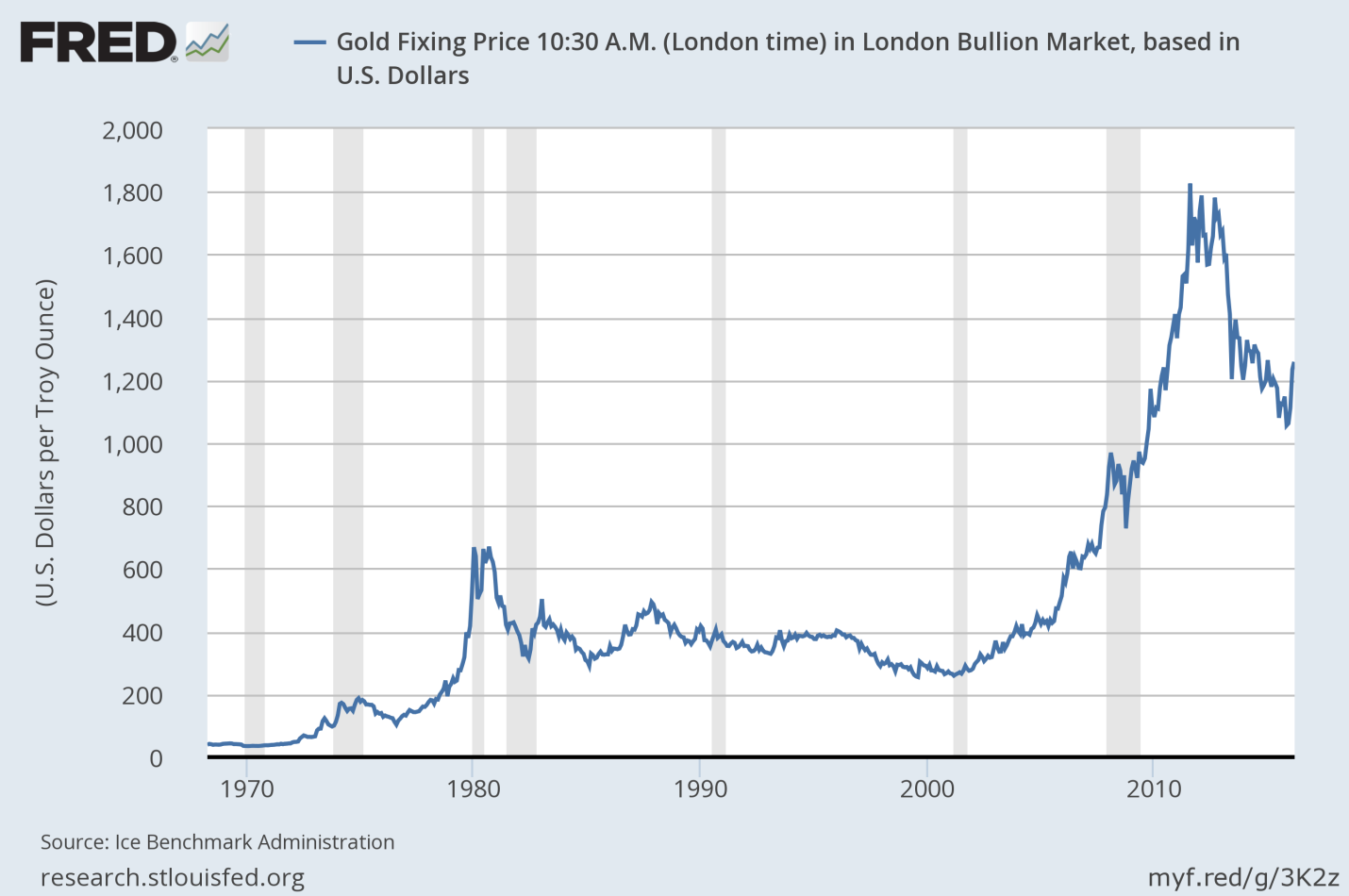
According to data taken from the St. Louis Fed, the total return for gold from January 1976 through December 2015 was 664% for an annualized return of 5.2%. Once you adjust this for inflation using the CPI you are looking at an annualized return of 1.475%.

That being said, there have certainly been opportunities to make money and capitalize on cycles within the gold market. You know the old adage – buy low, sell high. This typically involves buying precious metals during a good economic environment when the dollar is strong, is strengthening against foreign currencies, inflation is low, people are positive on economic growth, and real interest rates are rising. You can see my analysis of gold and interest rates here on RCW Financial.

Selling high is the second part of the equation. Gold tends to rise quickly in environments where real interest rates are falling, there are lots of economic uncertainty, the dollar is weak, and we are seeing signs of inflation OR people are afraid of potential inflation. An example would be in 2011 gold climbed to over $1,900 an ounce as interest rates had been falling and people were terrified that quantitative easing would lead to massive amounts of inflation. This created a perfect environment for rising gold prices and many investors were able to capitalize on this opportunity to sell and generate very strong returns.

However, most of the gold investors I know tend to look at the gold market more conservatively by viewing it as a quasi “economic insurance policy.” And in that respect, the investment has successfully preserved value for investors assuming they did not purchase during the high periods of 1980 and 2010-2012. Those that have purchased purely for a return on investment have likely only had success by timing the market as mentioned above.

In contrast to precious metals, over that same 40 year time period the S&P 500 generated returns of roughly 1880%, 7.75% annualized (or 10.8% annualized with dividends reinvested). Once you account for inflation you are still looking at adjusted annualized returns of 3.9% (or 6.9% with dividends reinvested).

Equities have always been the go-to choice for long-term growth and this data shows you why. They have simply performed better over time. Granted, you can take data from a number of 5 or 10 year periods that would show gold being a stronger performer. But when you look at the bigger picture, equities have had stronger long-term performance. Gold does have advantages though and depending on your investment goals it may make more (or less) sense for you individually. And for that reason, I am never going to flat-out tell a client to buy one thing without knowing about their personal investment goals. Even reasons like “peace of mind” can impact portfolio construction.

All that being said, it’s doubtful gold will be your top performer over the long haul, though certainly there will be opportunities to profit as the economy goes through its cycles. As always, try to keep a balanced and diversified portfolio designed to meet your personal financial needs whatever they may be.


3 Easy Ways for Millennials to Get Started Investing

millenial money tips, start investing, investing advice

office-620822_640

Today we have a guest post for you from Listen Money Matters about how you can get started investing as a millennial.

On the surface, the idea of entering into the investment world for the first time as a young millennial can make you feel as though you are trying to learn a foreign language:  You know you can reach your goal, but you have a lot to learn before you get there. However, one of the best ways to get started is to get started. How simple was that? If you want more specific tips about how you can get started investing, read on.

1 Start With a Budget

This seams easy enough and it also seems like the right place to start. So, gather your bills, invoices, paystubs, and a computer and get started. You don’t need a fancy software package when a simple spreadsheet will most likely do the trick. Also, putting a virtual pen to paper is a great way to see just where your money is going each month. You might be able to make some changes to your spending to enable you to free up a little more money to invest than you originally thought.

2 What Are Some of Your Choices?

Again, while there are different ways to invest your money, it’s a good idea to consider more than one before you do a cannonball into the deep end of the investment pool and begin flailing around shouting for someone to rescue you. But don’t fret. If you enter slowly and wisely, you won’t drown.

That being said, putting your money into a regular savings account or keeping cash isn’t entering slowly, it’s more like standing by the side of the pool watching everyone else in the water having a good time. Does that mean having a savings account is a bad idea? No, but if you can, at least put a portion of your money to work on a small scale by investing it in an interest bearing account. But keep in mind, some lending institutions have a minimum amount you can deposit to open the account and a slightly higher interest rate than others with no minimum requirement. In addition, there could be other requirements such as maintaining that minimum balance to avoid penalties such as service charges. The annual interest earned on these accounts is usually pretty low due in part to the small amount of risk in this investment. Low risk usually means low return in the investment world.

Another way to invest might be through real estate. If you think you don’t have enough money for this type of investment, maybe you need to think outside the box. Partner with someone you trust and invest together in property you can flip or rent. Overall, real estate values go up over time making this an opportunity to start a nest egg you can count on.

3 Get Money from Your Employer

Did your company offer a 401K when you were hired? If so, did you sign up for it? If you did, good for you! You’ve already dipped your toes into investing! If you didn’t take advantage of this, or even if you did but only partially, you might want to check with the human resources department to find out how and when you can get this started. Often, an employer will match moneys invested by the employee up to a certain percentage.

Choosing funds for your retirement account can seem like a difficult thing. However, keep in mind that high returns usually mean higher risk and, conversely, lower returns equate to a lower risk. Luckily there are a lot of investment tools that can help you evaluate these risks and potential rewards so you know what you are getting yourself into. Plus, as a millennial, you have time to grow your investments over time and you could potentially have a tidy sum upon retirement if you get started right away.

Kayla is a personal finance blogger in her mid-20s who loves to write about money topics of all kinds.


Disease Called Debt

Retire Rich by Choosing the Right Real Estate Investments

hands-981400_640Old age and retirement are parts that influence the economics of life. However, these should not be distractions to the fact that you should not live well during your golden years. Therefore, sound investment decisions should be done early on to ensure that when it comes to the time of retirement, you should be able to maintain your current or a better lifestyle. But where will you place your hard earned money, so that it generates stable income for you? The answer is real estate. Real estate is now one of the most rising sectors of the economy; thus, it will continue to grow in the coming years to ensure that it will be a good investment in the future.

With any good investment come greater risks. Here are some ways to ensure that the money you invest in real estate will come back in bigger numbers.

• Work with a professional real estate advisor. You might need to pay extra for the advice, but it will be worth more in the long run if you manage to make lots of returns due to the advice given.

• Talk about taxation plans. When you get returns on your investment, you also need to consider that such is subject to taxation. This might eat up on your returns. When investing, someone should ensure that the investment decisions will yield a return that is under low taxation rates. With scrutiny and foresight, returns are more as compared to the depreciation that has happened during the period.

• Protect your principal. This can be done by investing in real estate mutual funds and investment funds that offer cash returns regularly e.g. high rate dividends. This, in turn, ensures that your principal is secure and able to offer returns as well.

So with that knowledge, where would you put your money in the broad sector of real estate? Here are some of the high ranking sectors that are booming at the moment:

Rental income

Rental property is one of the best things to invest in. This is because the returns are always regular, good quantity and the return on investment is always fast. This, however, should be done in an area with good rental rates, demand for housing, less crime and regular inexpensive repairs. You can also buy a house on the internet through careful searching e.g. you can snag your dream condominium for sale on Zipmatch easily. Then you can rent out your condo for a regular income.

Commercial buildings

With the current demand for commercial buildings, there is a definite need for a good office space. The financing means that the interest rates will be lower than the expected returns; thus, there is always good profit in the end.

Investment funds

Real estate investment funds have been a good deal in the past even more than stocks. Investing in a good deal, therefore means that the rate of return will keep increasing as the real estate market booms.

The advantages of having income from real estate mean that the cash will always be higher than the other investments. You get to diversify your portfolio and ensure that you have the money to fund a luxurious retirement, while your family can enjoy the steady stream of income from your real estate investments down the line.

You cannot copy content of this page