Avatar photo About James Hendrickson

James Hendrickson is an internet entrepreneur, blogging junky, hunter and personal finance geek. When he’s not lurking in coffee shops in Portland, Oregon, you’ll find him in the Pacific Northwest’s great outdoors. James has a masters degree in Sociology from the University of Maryland at College Park and a Bachelors degree on Sociology from Earlham College. He loves individual stocks, bonds and precious metals.

7 Things You Need To Know About Money In Your 20s

money advice, money management, money matters

taxes-740202_1280

This is a guest post from fellow blogger, James from PersonalFinanceGenius.com.

Too many investors say they wish they could go back in time and change the way they handled their money. You can make sure you don’t make those mistakes in the first place! My biggest inspiration for launching this site was seeing how clueless my peers were about finances, so by knowing these seven things, you will have a major edge over all those other 20-somethings.

1. Find your passion. Here’s the cold, hard truth. You can find a career or business that pays well, but you will always lose out to the person who is more passionate. You should choose a career that will let you reach your full potential based on the gifts you want to share with the world. If you’re doing something that you enjoy, you’ll stick it out when the going gets tough, and that’s when the real money starts rolling in.

2. Focus on saving first, then your income. Your primary wealth building tool is your income. However, you can’t build any wealth if you’re squandering every penny. Here at Personal Finance Genius, I recommend saving at least 20% of your income. If this will be too sudden of a change for you, I recommend that you read “The Easy, Painless Way to Save More Money Each Month”.

3. Start early! Compound interest works miracles. If your company offers a 401(k), sign up ASAP. If there’s no 401(k) then funnel some of your paycheck into an IRA. If you invest $200 per month starting at age 25, you’ll have over $500,000 at age 65, provided a 7% return. If you wait until age 35, you’ll end up with less than half that amount.

4. Choose your partner carefully. If you decide to get married or settle down, be sure to do so with someone whose money values match your own. If you’re a thrifty saver, your life will be a living hell if you’re married to someone blowing up your credit card statements. Speaking of credit cards…

5. Understand how credit works and use it responsibly. Some financial gurus will advise you to abolish credit cards completely – to cut them up and never use them again. I respectfully disagree. Be sure to comparison shop for your credit card and pay off the balance in full each month. Although a credit score is just an indicator of how well you repay debt, it’s a critical tool for areas like securing a mortgage. A higher credit score can save you thousands upon thousands of dollars over the life of your mortgage. Although if you can just pay for your dream home in cash, that’s cool too.

6. Develop a budget and constantly improve it. A budget is a plan for your money where you dictate where every dollar will be used before you get it. Sticking to a budget requires discipline, but planning ahead virtually guarantees that you’ll hit your financial goals. Once you have a budget, you should always look for ways to improve it. Do you qualify for lower insurance rates? Get them! Don’t watch TV anymore? Cut your cable! You’ll have more money to put in savings.

7.  If you have student loan debt, enroll in automatic monthly payments. This is helpful advice to avoid getting hit with interest and other fees by the monstrous loan companies. It’s also a “set-it-and-forget-it” type deal. You don’t have to worry about making the actual payments – you just have to worry about keeping money in your checking account.

JPOLLARDJames Pollard is an avid personal finance/investing writer, touching on topics from buying stocks to saving for retirement. When he’s not chowing down on Mexican food, he gives insights into various topics through PersonalFinanceGenius.com.

Marriage and Merging Money

marriage, couples, couples finances

marriage, couples, couples finances

Money is often an issue that tends to cause the most friction between a newlywed couple. In a world where the majority of people are concerned with their own personal well being, it is easy to forget that marriage is a mutual arrangement, not a solitary effort. Trust is a vital component in establishing a strong commitment in this shared life with your new spouse. A couple’s financial situation can be the source from which a newly forged partnership flourishes or the one thing that can sabotage a relationship.

As you begin your journey and build a future together, carefully consider the following do’s and dont’s of money management in marriage.

Do

Set Boundaries

Establish an understanding that you and your spouse have made a commitment to each other and that the majority of monies should be shared. Create a household budget and manage the mutually held funds accordingly. All should be considered “ours, not mine.”

Create Bank Accounts

Create three separate bank accounts. One individual account for each spouse and a joint account where an agreed upon amount will be deposited monthly based on a percentage of earnings. The joint account will function as the expense account for the household from which all monthly bills are satisfied.

Pay Off Debt

There are very few investment decisions a couple can make that have a greater return than eliminating debt. Paying off credit cards or loans with exorbitant interest rates of say 15-20% or more is the economic equivalent of an investment with the same return. Incorporate debt payments into the monthly budget and always strive to pay more than the minimum payment. The balance of remaining money should be used for an emergency fund; even $20 a week compounds quickly and can help in the event of an unexpected surprise.

Don’t

Overlook Retirement

Retirement years appear to be far off and are oftentimes overlooked in the financial planning process as you have more pressing issues to deal with after recently being married. However, it is imperative that you set aside a predefined amount each month for retirement, regardless of what you earn. Utilize your employer’s retirement savings plans especially if they offer a matching contribution as this is free money at no charge to you while providing significant tax benefits. According to the New York Times, odds are strongly against you in saving enough money to support your retirement.

Lie

According to Forbes, 31% of Americans polled attest to having lied to their spouse about money. Newlyweds can circumvent the frustration and stress that comes along with deception by formulating a set of rules and talking openly about finances. Create a budgeting plan and stick to it.

Take On Additional Debt

Living within your means is easier said than done, but it is important to not overspend and ensure your financial future. Budgeting to live slightly below your means is ideal, as you then have the ability to save something and get one step closer to financial freedom. Debt acquired prior to a marriage and how it is handled can become quite complicated. Nothing can substitute the time spent consulting with a professional such as an attorney or accountant to determine how this type of debt is managed in accordance with state laws and other regulations.

Final Thoughts

This list is by no means exhaustive but discussing these “do’s and dont’s” is an enormous stride in the right direction. As these discussions commence, additional concerns are sure to arise and keeping an open and honest discourse about money will pay off in numerous ways.

Author Bio – This article was written by Joshua Rodriguez, owner and founder of CNA Finance.


‘Robo-advisor’ growth hits Wall Street

Hi All,

You may not have seen this but AFP has a great story on how automatic investing is changing the wealth management landscape.  More and more dollars, especially wealth owned by millennials, is going towards so called “Robo-advising” companies.  These firms use automated algorithms to make asset allocation decisions based on their client’s preferences. They are becoming increasing popular because these firms tend to have lower fees and accept lower dollar amounts than traditional firms.  From the AFP story:

When it comes to investment advice, would you trust a financial professional or a robot?

A growing number of people are choosing the latter, on the belief that algorithms can provide rational and dispassionate advice at a cost well below that of traditional advisers.

A handful of automated investment startups created in the past few years now have more than $4 billion in assets under management, according to Forrester Research.

It’s a small segment of a trillion-dollar wealth management industry but growing at a red-hot pace, Forrester analyst Bill Doyle said.

“This is a more meaningful crop of disruptors than we’ve seen for many years, really since the Internet brokerages emerged,” he told AFP.

The rest of the story is here.

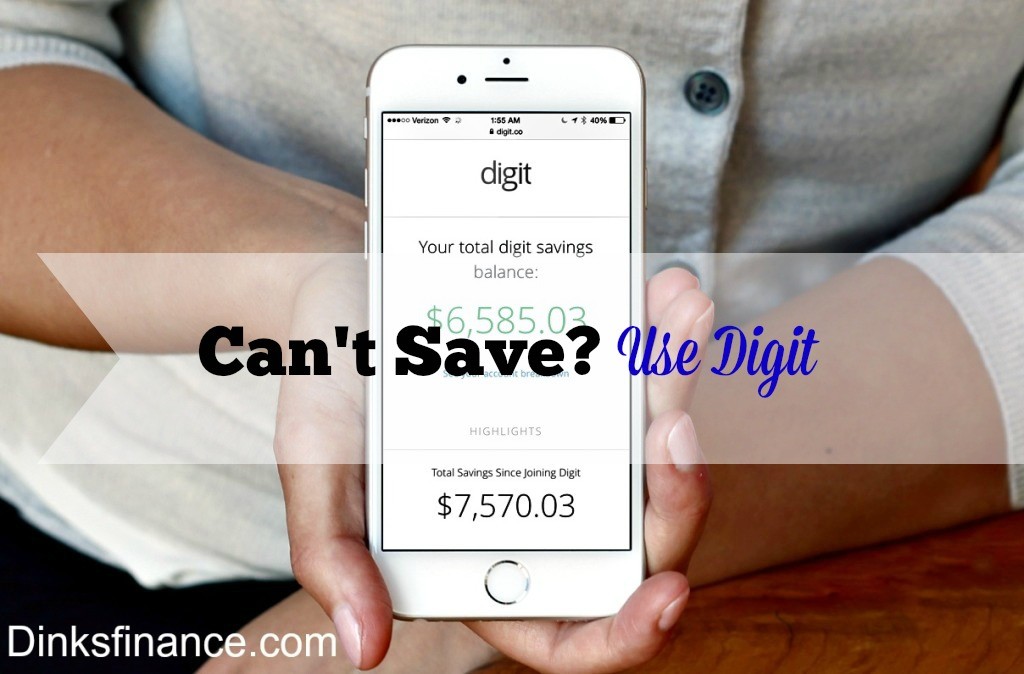
Can’t Save? Use Digit

saving money, saving money effortlessly, saving money automatically, save money, use digit

cant save use digit
Can’t Save? Use Digit.

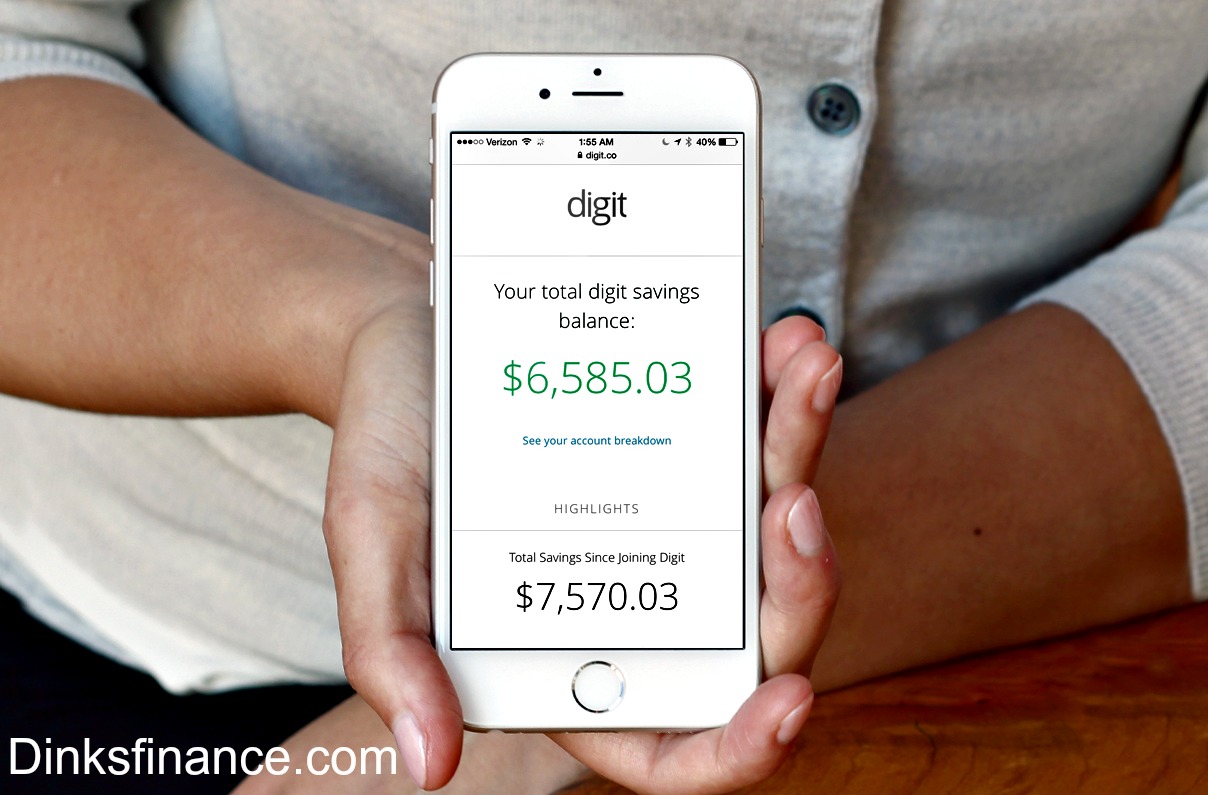
One thing I love about being a personal finance blogger is the chance to review new and exciting technology. The latest innovative product to come out of Silicon Valley is something called Digit. Digit is a web based application which identified and saves any surplus you have in your bank account.

The software is generating a lot of buzz on the internet – Digit has the potential to help people who aren’t great at saving money more efficiently manage their cash flow thus allowing them to save any excess cash without a lot of effort.

About Digit

The Digit process is pretty simple. Digit works on a passive model – all you do is attach your checking account and their robots do the rest – analyzing your income and spending patterns to figure out what amounts you won’t miss, and then transferring these amounts right into a savings account it creates for you.

1. You link your checking account to Digit’s secure Website. It takes 5-10 minutes and you’ll need your account and routing numbers plus answers to any security questions.

2. You confirm your account via text message.

3. Over the first couple of days, nothing happens. With their proprietary algorithm, Digit analyzes your historical spending and checking account balances.

4. Then, Digit makes small periodic savings transfers from your checking account to your Digit account. The transfers are small (a few bucks) and will be timed not to interfere with bills or other expenses.

It’s all really easy.  The setup is pretty much idiot proof, you just need to follow the prompts from Digit on your smartphone.

Digit Gives You a Mental Boost

One great thing about Digit is that checking your account is usually a psychological boost. Often when you’re looking at your checking or brokerage accounts, you sometimes have an unpleasant surprise. You could be overdrawn or your stocks or bonds could decline in value. A lot of the time people know they need to save, but the process is stressful. But with Digit every time you check your Digit account, you should see more money in it! Thus using Digit is just fun.

How Does Digit Work?

These answers come paraphrased off Digits Frequently Asked Questions:

Is it free? Yes. There are no fees.

How does it work again? Every few days Digit checks your income/spending patterns and moves a few dollars from your checking account into its savings account. This is only if you can afford it.

What if it transfers over too much? Digit has a “no overdraft” guarantee which means they’ll cover all costs incurred if this ever happen. Digit believes in their technology so this will happen very often.

Do you need to set up a new savings account? No. When you sign up you automatically get one through Digit.
Is it insured like all other banks? Yes. All money saved is FDIC insured up to $250,000.

Can you withdraw your money anytime you want? Yes. All you have to do is text them “withdraw” and you can send your money back to your checking account as often as you need or want. Just like any other bank account.

Digit works using text messaging. The whole system is set up around a text based system to make it incredibly easy. You can text in for a bunch of things like “savings” to see the amount saved so far, “balance” to check your checking balance, “pause” to stop the savings, and “bills” to see upcoming bills they know you’re about to get.

What Problems Could Digit Have?

There are at least four potential downsides to Digit

1. What about Digits’ information security? Do they have a mechanism for stopping hackers or their employees from stealing or selling your bank account information? A review of their webpage suggests they have are a startup, with a staff of 5 to 6, it’s not entirely clear if they have the organizational capacity to prevent theft or resist hard core hacking attacks. Also Digit’s privacy policies seem to indicate that they will sell your personal information to a 3rd party if business needs require it.

That said, Digit doesn’t store any bank logins or passwords on our system. They also encrypt sensitive data using asymmetric cryptography and they store sensitive data anonymously.

2. Digit is a startup. This means that its business model is promising, but doesn’t have a long term track record of sustained profitability. While any funds you are holding with them are FDIC insured, there is no guarantee that the service they offer is going to be around in the long term. If they can’t grow the amount of funds they have under management, it’s not clear if they’ll have long term survivability. For example, as of the end of 2014 Digit had about $600,000 under management. They may have obtained more since then, but the interest on $600,000 isn’t enough to sustain 5 salaries and the IT equipment needed to run a company like Digit.

3. Digit gets to use your money while they are holding onto it for you. This is fine if the amounts are small, like 50 or 100 dollars, but if they hold 500-1,000 or larger amounts of your money, you might be better off having the cash in an interest bearing account.

4. Digit also doesn’t have coverage for a lot of the smaller credit unions. The weight of the last 15 or years has shows that Credit unions are a better deal for consumers, so if you bank with a local credit union, Digit might not be able to help you out.
But even after you’ve connected, some banks have security features that make it more difficult to maintain that connection. Doing this level of data entry for some people can be a hassle. Unless this gets remedied it could lead some people to avoid the service.

Our Review of Digit – The Bottom Line

So here is our bottom line assessment of Digit. Use Digit if you have can’t save and need help. Don’t keep a balance in their service. To build your networth aggressively, you’ll need every dollar working for you as hard as possible. Once something like $500 or a $1,000 builds up in your Digit account, its probably best to transfer it somewhere where you’ll get a better return.

So Called Bad Financial Advice

Bad Financial Advice, financial tips, bad financial tips, financial advisor, investments, personal finance

Bad Financial Advice, financial tips, bad financial tips, financial advisor, investments, personal finance6 Pieces of Bad Financial Advice You Shouldn’t Follow

Selena Maranjian – April 29, 2013

Financial advisors can be good or bad, and there are ways of zeroing in on the better folks among them. That’s well worth doing, but it’s also good to remember that we need to be wary of bad financial advice — because it may be coming at us not only from professional advisors, but also from well-meaning friends, neighbors, and relatives, or from financial books or gurus on TV.

Here are a few examples of bad financial advice. The list is far from comprehensive, though, so be sure to keep your critical thinking cap on when you tend to financial matters.

1. In addition to the home you live in, buy another and rent it out to collect income and build home equity. This can work well for some people, but it’s far easier said than done, and is not a good idea for many. Being a landlord involves a lot more than you may have imagined, such as dealing with empty and income-less properties at times, dealing with troublesome tenants, having to make expensive repairs, and not always being able to sell when you want to for a price you want.

2. Don’t borrow money for college. This is bad financial advice because in general, folks with college degrees earn more, and in these recent days of high unemployment, more educated workers were less likely to be unemployed. Yes, being saddled with a lot of student debt can make life difficult, but many schools are quite generous with financial aid and there’s a good chance you won’t be paying or even borrowing the full sticker cost.

3. Pay off all your debt before  you start saving for retirement. It’s easy to see the logic here, if you’re looking at hefty interest rates. The stock market has averaged roughly 10% annually over many years, while some credit cards have charged more than 20% annually. Tackling debt first can actually make sense, but only if you do the job quickly, such as in a year or two. If it’s going to take you many years to pay off your debt, then you’ll be forgoing many years when your retirement account could have enjoyed compounded growth. Procrastination can be deadly to your retirement. Perhaps work on both goals at the same time — that’s better financial advice.

4. If you can borrow money for, say, 8% and then invest it and earn 10% or 15%, go ahead. This is the logic used by many who invest using margin — in other words, borrowing from their brokerage. It looks like a compelling proposition, but for most of us, it’s bad financial advice. After all, you’ll be on the hook for that 8%, guaranteed. But the gain you hope to get via your investments is not so guaranteed. Even great stocks can fall for a short or long while, as can the entire market. And fat dividends can be reduced or eliminated. This is usually a risky thing to do. Also a bad idea: if you’re already saddled with debt and you want to try to pay it off by investing with borrowed money.

5. Go ahead and make the most of your assets — perhaps start a business by borrowing against your home, or borrow from your 401(k) account, or cash out that 401(k) account when you change jobs. These arrangements have turned out well on occasion, but they’re risky. Most of us will not be able to live comfortably on Social Security. We’ll need a nest egg of our own. If you cash yours in, you might end up without one. If you borrow from it, even if you pay that sum back in a few years, you’ll have lost out on some valuable compounding years. If you put your home up as collateral, you might lose your home. This is risky financial advice.

6. Buy a lot of gold. It may be surprising to see buying gold among pieces of bad financial advice, but gold has just not been a great long-term performer at all. Sure, it’s had some great runs, and has delivered a lot of value to those who timed it well. And even now, many smart people think it’s a buy. But many others think alternatives such as stocks make more sense.

There are lots of other pieces of bad financial advice. Taking time to read up on financial topics and to learn more will help you recognize and avoid many of them. But there are some quick and easy red flags that will help, too: Beware of outrageous claims and promises, steer clear of high fees, avoid investments with rules that are too restrictive, and don’t expect to get rich quickly.

Promo Codes and Sears Promotions

promos,discounts,sales,promo codes, sears promotions, sale

promos,discounts,sales,promo codes, sears promotions, saleWhen it comes to saving with online shopping every little thing helps. The review websites are full of best buy offers, top recommendations for us all. How often do we really check prices for any of the products recommended in this way see if we are paying too much? My guess is this doesn’t happen too often or not as often as it should. With sears 20 coupon you’ll have an opportunity to save some real money on many things that are widely recommended, if you don’t believe me check their website and see for yourself when you get the time. Meanwhile here are a few things on which you can save right now.

Appliance Sale

Regardless on the brand and the type of home appliances you’re looking to buy, if you have a coupon you could be saving more than just the regular discount that comes with the product. Anything that you have seen as recommended, with best buy tag, or similar somewhere while browsing can be bought with a $50 back as long as it fits into an appliances category. Brand, model or already owned discounts don’t matter as long as you are spending more than 300 dollars.

Super Buys

On items that are carrying this type of tag in Sears store you will be able to save up to 30% off their original or discount price. Is it better to get 50 bucks back or 30%? Well to be completely honest those things that are declared to be extra valued rarely cost less than 300 dollars and the same Sears coupon can be used with your purchase. As far as math goes 30% out of item that cost over 300 is at least a $100 back to your pocket which isn’t small matter at all.

Home Delivery Option

Most things you can buy with Sears promo codes do have an option of home delivery with no extra charge at all. You may not exactly be someone who respects this option, mainly because almost all purchases we make can fit onto a back seat of our car. But things might change first time you walk into the store and buy a dishwasher for example. Sears store offers delivery for almost all items you purchase with coupons, why would you even want to think about transporting 1500dollars’ worth HDTV at your own if you can have it “dropped” at your doorstep for free?

How Much Really Can be Saved

Well if you just take off the savings that are connected with delivery services, with just one coupon you could be saving anywhere between 50 and 500 dollars – depending on what did you use your coupon on. It is good thing to keep on your mind that discounts attached to coupons will give you some more money back even for items that already have discounts.

Is it all worth your time? Guess this is up to you. Best advice here could be – don’t click on buy button straight away next time you find a super review somewhere, find one of the Sears coupons and come to their web store first.

Six Unique Ways to Save On Groceries

grocery shopping, food budget, save money on groceries, groceries

grocery shopping, food budget, save money on groceries, groceriesHi All,

Its been a while since I last read up about how to save money on groceries.  In fact, the last time I clipped coupons it was literally sitting in front of the newspaper with a pair of scissors cutting out the ones that you wanted to use.  Well, that’s become old school.  Evidently, its all about getting your coupons online and via your smartphone now.  In fact, here are six more modern ways that consumer save a few pennies at the grocery store.


1. Scan Your Grocery Bar Codes

If you don’t mind being part of a research study, then becoming a Nielsen Homescan family may be right up your alley for a money-saving option. If you’re accepted to participate, the Nielsen company will send a free scanner to your home. After you’re done grocery shopping, just scan the bar codes on each of your grocery items. You’ll earn gift points for various types of merchandise and even earn entries into sweepstakes.   This might not be worth the time and hassle though, so other options are available.

2. Take Photos of Your Receipts
It sounds simple, right? That’s why it’s such a good idea! Taking photos of your receipts to earn cash back is so ridiculously easy that everyone should be doing it. Applications like Checkout 51 or Ibotta allow you to do just that. With options like Ibotta, all you have to do is sign up for an account and scan your grocery receipts with your device’s camera, and then you’ll earn cash back (which you can get through Paypal or Venmo) based on the items you bought that week. Plus, it’s free to download on iOS and Android products.  Be careful though as these models are still new and it remains to be seen if they have staying power.

3. Go Mobile With Your Coupons
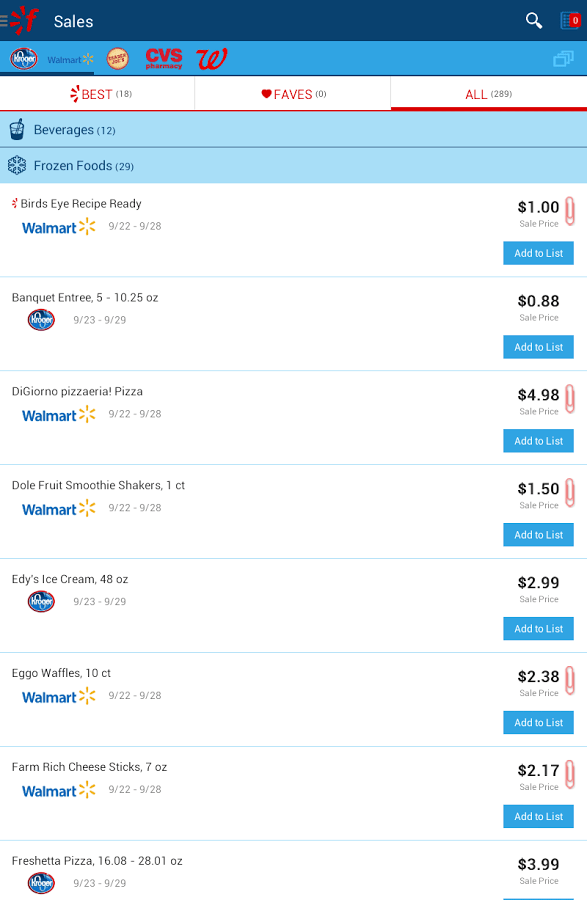
Favado is another popular and practical money-saving app that gets rid of all the coupon cutting. This particular app helps you save by showing you what’s on sale and where to find coupons. This can be a better alternative to the abovementioned apps for people who don’t have the extra cash or the time for cash back offers. You’ll get alerts to most of your frequented stores like Walmart, Target, Walgreens, Save-A-Lot, and more. Download the app free on devices like your tablet or phone.  The trick at this point would then be finding coupons on something that you actually want to eat or use.

coupon savings
Image via Play.Google.com

 4. Get Your Bulk Stuff Delivered
Online shopping can end up saving you big. With options like Boxed.com, there are several ways you can save. First of all, you can drop your annual membership to stores like Costco and Sam’s Club. Plus, you don’t have to spend the gas money to get to and from the grocery store, not to mention that you’ll save time roaming the aisles. Oh, and don’t forget all the money savings you’ll get by avoiding impulse buys. Plus, most products at Boxed.com come in bulk packaging so that you can save money per unit. Best of all, shipping is free!  This is also an interesting business model if you’re looking for potential investments.

5. Shop Smarter With Pirc
Another nifty money-saving tool is found at Pirc.com. With it, you can create your own “circulars.” After you sign up for your free account, add your favorite products to your account, or as the site likes to call it, your “Pircular.” The website will then send you updates when your favorite and most frequented items are on sale. You’ll even get access to product coupons and can create your own shopping list. Print coupons straight from the site, and even keep track of external coupons, such as the ones from your Sunday paper, so that you can keep track of when to use them. Coupons are available for tons of major retailers like Walmart, Target, and the CVS Pharmacy.

6. Earn Cash With Coupons
You’re probably thinking that saving money with coupons is not very unique. But we’re not talking about saving money. We’re talking about earning money. If you’re already an avid couponer, then this money-saving trick shouldn’t come with any extra effort. Just sign up for a free account with InboxDollars (where you’ll even get a $5 sign-up bonus). When you print off and use coupons from their website, they’ll pay you $0.10 per coupon you use. While it doesn’t seem like a lot now, that savings and earnings can definitely add up.  This model does sound kind of bogus to me, but if you’re serious about saving money on groceries, feel free to give it a try.

Wealthfront Taking Off

Wealthfront, financial services, stockbroker services, financial advisors, stock market, investments, investment advisors

Wealthfront, financial services, stockbroker services, financial advisors, stock market, investments, investment advisorsHi Guys,

File this under “good to know if you’re shopping for a stockbroker”…but internet based financial services firm Wealthfront has recently surpassed a billion dollars in assets. Since financial services firms don’t magically make money, it means that a lot of young millenials have forked over their cash for Wealthfront to manage. This suggests maybe their business model is doing a good job helping people build wealth.

BuzzFeed news has the story:

Two and a half years after its launch, Wealthfront, the algorithm-based financial advisory service marketed toward the “millennial” investor, has hit $1 billion in assets. The milestone comes less than four months after the Silicon Valley startup that had the traditional wealth management industry questioning its sustainability hit the $700 million mark, topping competitors like Betterment and Personal Capital in the automated investment management space.

The company, which has been called the “Uber of wealth management,” has undergone two rounds of venture capital funding, the first of which which was led by investing powerhouse Andreessen Horowitz, and targets young people, hoping to capture a large chunk of what Wealthfront estimates is 90 million people in the U.S. with a net worth of $2 trillion. The goal is to hook early investors in their twenties and keep them for life.

Check out the rest of the story here.

Extreme Early Retirement

Extreme Early Retirement, early retirement, retirement, nest egg, retirement plans

Extreme Early Retirement, early retirement, retirement, nest egg, retirement plansFolks,

I don’t know how many of you are big followers of personal finance blogs – however if you haven’t heard about the extreme early retirement movement, it’s worth reading up on. The main idea is to maintain your lifestyle while minimizing your input of efforts and money. People who are really into the lifestyle often manage to generate large amounts of resources over time so there may be something to the philosophy.

More generally if you’re looking to find ways to save money, the extreme early retirement literature is full of great resources on frugality, money management and generally hacking your life to make things less expensive.

A couple of good sites to get you started are:

1. The Early Retirement Extreme Wiki
2. www.earlyretirementextreme.com

From what I can tell the extreme early retirement movement may have some limitations. None of the major players seem to be multimillionaires, and to get to early retirement you’ll have to give up a lot of luxury. That said, not everyone can be a multimillionare so check it out if you get a chance.

James Altuchier’s Ideas Out of Balance

Hi All,

I got turned onto James Altuchier on LinkedIn a while back. If you haven’t heard of Altucher, he’s well worth checking out. He’s a crazy hedge fund manager from New York. The guy has published something like 11 books, runs ones of Apple’s most popular podcasts and has made something like a billion dollars over the course of his career. He’s also funny, insightful and irreverent yet eminently sensible.

If you get a chance, feel free to check out his blog, The Altuchier Confidential: Ideas For A Life Out of Balance.

You cannot copy content of this page