You’ve Sunk My Costs

Economists tend to think about decisions in a different way than non-Economists. Sometimes our ideas make theoretical sense but are hard to put into practice. For instance, we’ll typically argue against pre-paying on a mortgage (given a reasonable interest rate, say less than 9%) because most American households hold unbalanced portfolios that are made up far too much of a primary real estate asset and not enough equities (for an example of this discussion, see this recent article Carl at Behavior Gap in the New York Times. Carl doesn’t discussion portfolio allocation, and herein lies a difference between the economist and non-economist.

While I wanted to highlight something about the stock market given the roller-coaster last week (mainly, to reiterate that short-term behavior in the stock market is entirely unpredictable and clearly not efficient, and those two things put together make any short-term trading strategy a gamble Vegas would love), I really wanted to talk about how we deal with sunk costs.

We face sunk costs each day. How we handle sunk costs tends to be, well, less than optimal. For an economist, a sunk cost is something that can’t be recovered. It is gone. Kaput. Thus, the economist would claim that the best thing to do with a decision (let’s say you already purchased movie tickets but then wonder if wine on your porch with friends would make a better night, and you can’t refund the tickets). Our psychological inclination biases us toward going ahead with our plans for the movie even if the wine/dine would be much more pleasing, because we already spent the money.

But, what economists would argue is that the sunk cost of the ticket shouldn’t impact your decision. But how often is this true in reality? Can we really ignore sunk costs?

Going back to the first paragraph, my advice to active investors (those who do short-term trades, or mess around with stocks outside a 401K or IRA) is to treat their investments as sunk costs. Once we buy, we really can’t do anything, it’s like fishing, either the fish bite or they don’t, and we hope we picked a good spot and bait. If we view these kinds of risks more like sunk costs, we might be less apt to rashly buy high and sell low, a mistake many made last Thursday due to the apparent trading glitch.

Sunk Costs are everywhere around us. They should not stop you from changing plans.

The Loss of Personal Finance

If you live in the Washington D.C. area you may have noticed that many employment opportunities are either with the government, or with government contracting companies. Chances are if you are applying for a position in the government sector, including government contracting companies, you will have to undergo a background check. And often that means undergoing a credit check.

I recently interviewed with a government contracting company, and they asked me if I could pass a background check. “Certainly,” I said.
“How’s your credit?” they asked.
“None of your business,” I wanted to say, “but thanks for asking.”

Are your PERSONAL finances any business of a potential employer? Hawaii and Washington State do not believe so. Hawaii and Washington have a law in place which prohibits the use of credit information in most employment decisions. In July 2009, Representative Steve Cohen from Tennessee introduced a bill which would extend this law on a national level. Chances are, however, that this bill is dead where it sits.

Some will argue that there is justification for credit checks in certain areas, such as national security or supervisory, managerial, professional or executive positions at financial institutions. I find that a little ironic. I would argue that the job seekers in the financial and government sector should be the ones requesting credit checks from the government and financial institutions for which they are applying? It is hard to imagine any individual with a worse credit score than the Federal Government, or today’s financial institutions.

Ask Donald Trump what he thinks about credit reports. Mr. Trump files bankruptcy every three years. Can you imagine someone at Trump Industries asking you for your credit report? Mr. Trump, “you’re fired!”

Perhaps you have already deduced that my credit is less than perfect—would I be making such a fuss over it, otherwise? Maybe not. Yet the fact remains that individuals continue to be turned away from employment opportunities due to poor credit scores. So until Mr. Cohen from Tennessee pushes his bill through (don’t hold your breath), many will be faced with the task of cleaning up their credit; myself included. I’d like to know what you think. Are credit checks by employers an invasion of our privacy?

Please note that all comments are subject to credit score approval.

——–
For more information on improving your credit score, I have provided two links below:
How to improve your credit score via Dinks
Facts for consumers via Federal Trade Commission

And a few good reads:

Using Credit Cards (and Friends) to Save

friends, food and beer

If you’re like me, a lot of times when going out with friends to your favorite local bars and restaurants hefty bills can easily be racked up, only to be paid for in cash after the final check arrives.  Personally, I see these as missed opportunities…

What if you pay the bill?? I’m not saying right then and there you fork over $100+ in cash.  What I’m saying is to collect cash from your friends (who were already planning on paying cash) in the amount they owe and throw the total on your credit card.  It’s a small example of Time Value of Money…“a dollar today is worth more than a dollar tomorrow”.  Either way you would have had to pay your share, but now you’re able to immediately input that cash into your savings account or invest it elsewhere, while earning interest.  By the time you pay the credit card company your monthly bill total, you have already been able to earn interest on money that wasn’t even yours in the first place!

Obviously it’s not going to save you loads and loads of money if you only do this once a month, but even then it helps, and every little bit does!

And nowadays, with the benefits of certain credit cards (via fly miles, hotel stays, etc.) the fun doesn’t have to stop there.  Take the American Express Starwood Preferred Guest Credit as an example.  This is my go-to card that I swear by.  For every dollar I spend on this card I receive at least a point, and just for signing up for the card receive thousands.  Once I have accumulated enough points, I’m able to use them toward different hotels.  All the hotels/resorts I have stayed at are VERY NICE, and they’re all also rated by Starwood on a five star scale (more stars costs more points).  And some hotels even have specials, for instance allowing you to have your fifth night free (aka not pay points).  And I haven’t done this, but if I plan a vacation through Starwood with my friends and want to get really greedy, I could book the hotel room with my points while having my friends pay me (I hope none of my friends read this haha).  Or could just have my friends cover food/travel expenses.

So to recap:  Get a credit card that has some sort of benefit package included, pay with your card when possible, use your card in large groups and collect the cash, and deposit/invest that cash.

Things to look out for:

  • Credit card maximum (DO NOT exceed!)
  • Pay attention to how much you’re spending
  • Don’t feel obligated to buy goods/services you normally would not
  • Not all businesses accept all credit cards (AMEX charges businesses larger percentages)
  • Deposit the cash you receive (don’t think of it as “extra loot”)

Playing off the same concept, my next arbitrage target is renting.  My goal is to find a two or more bedroom apartment in a complex that accepts my credit card (not an easy task).  Then, I plan on paying the entire monthly rent on my credit card, while receiving my roommates’ monthly checks at the beginning of each month…earning myself extra interest and an exuberant amount of points.

Arbitrage is fun.

(photo by colros)

10 Tips to Raise Your Credit Score

bank of america bankA question that seems to come up more often these days is how to increase your credit score. Especially how to do it fast! Maybe you and a partner or a spouse want to buy a home that you think is a great deal. Or maybe you want to refinance a loan or get a rewards credit card, but you’re not thrilled with your credit score. You’re secretly afraid that your application will be denied or that you’ll end up paying a much higher interest rate than someone with squeaky clean credit.

Credit scores range from 300 to 850. Consider this: Someone with a credit score of 550 might be charged an interest rate that’s three to four percentage points higher than someone who scores over 750. That could translate into paying several thousand more dollars in interest for a $20,000 car loan or over $100,000 extra bucks in interest over the life of a 30-year $200,000 mortgage! That’s serious money you could invest for your retirement instead.

How to Get Your Credit Score

You can get your credit report from each of the three major reporting agencies–Equifax, Experian, and TransUnion – for free once a year at annualcreditreport.com. A good strategy is to pull a different free report every four months. For example, get Equifax in January, Experian in May, and TransUnion in September. Just put a reminder on your calendar.

Even though credit reports don’t include your actual credit score, don’t let that keep you from checking your reports once a year. Carefully reviewing your credit reports is how you could nab an identity thief or correct a silly error that’s crushing your score. You can purchase your credit score for about $15 from each of the credit agencies or from myfico.com. However, I recently joined Credit Karma, where you can get a credit score estimate for free.

10 Tips to Raise Your Credit Score

Try out these 10 tips to increase your credit score fast:

  1. Clear up any errors on your credit report. Incorrect credit limits, late payments, or collection items that aren’t yours may be silently wreaking havoc on your credit score.
  2. Always pay your bills on time. Delinquencies have the biggest negative effect on your credit score.
  3. Reduce your overall debt. If you don’t have the funds to pay down debt, consider taking a loan from a family member or friend. That doesn’t reduce what you owe, but it does move debt off your credit report and give your credit score a quick boost.
  4. Don’t close unused credit cards accounts. Canceling a card can actually lower your score because it leaves you with less available credit relative to your total debt. It may also shorten your credit history, which will ding your score.
  5. Never max out your credit cards. A good rule of thumb is to keep your balances below 30% of your credit limit – even if you pay your accounts off in full each month.
  6. Do your loan shopping quickly. Having lots of credit inquiries can decrease your score. But the system won’t treat a cluster of credit inquires (for a car or home loan, for example) within a short time period – like a week or two – unfavorably.
  7. Get a secured credit card. You’ll have to dish out an upfront security deposit of at least a couple hundred dollars, which the card issuer holds as collateral. Check out the Public Savings Bank Visa and more secured offers on Creditcards.com.
  8. Get a gas or retail store card. Even though you may want to buy more than gas and clothes on credit, making small monthly charges that you pay off in full and on time each month will work wonders for boosting your credit score. Check out cards offered by BP, ExxonMobil, Kohl’s, or your favorite retailer.
  9. Get a subprime credit card. If you have bad credit, a subprime card can help you build up a strong payment history if you use it wisely. They come with sky-high interest rates – some as high as 30%! So, use subprime cards with extreme caution and pay them off in full each month. You’re never charged interest when you don’t carry a balance from month to month. Find subprime offers on sites like Bankrate.com and Creditcardguide.com.
  10. If it ain’t broke, don’t fix it. If you already have good credit, why would you want to risk doing something radically different? A score over 750 is excellent and means that you’ve been doing everything right when it comes to your credit.

Unless you have a serious black mark on your credit, like a foreclosure or bankruptcy, putting these tips into practice is the fastest way to pump up your credit score.

(photo by joellevand)

Socioeconomic Standing, Age & Where We Live

The other week, I talked about asset diversification involving our biggest physical asset (our house).   I felt that how we treat our house in our investment portfolio and what kind of house we buy is not properly understood, so I brought in an economics toolkit and went to town. This week, I’ll be focusing my efforts on correcting an article that the big man himself,Mr. BudgetsareSexy, wrote on his blog: Are you middle class? (and should you care?)

Rather than answer how “middle class” or “upper class” are defined, I’d instead like to point to the New York Times’ online piece “How Class Works“. It is a nifty little tool and shows a few dimensions of social class.  Class is broken down into 4 categories:  occupation, education, income, and wealth.

What exactly is middle class income?  Median income for a household of 4 in the United States is 81,000 according to the US Census.  And normally, we evaluate our standing by looking at how our income compares to that of the median. But the median is misleading for many reasons. (Median Income = what the person right in the middle of the distribution of incomes makes.  This is not an average, as averages can be distorted by lows or highs on the extremes)

However well the New York Times did their research, they make two critical mistakes that I want to highlight this week because these mistakes are important in how WE evaluate how well we are tracking towards our goals – and are important if WE are deciding between various job offers.

First up is the idea that the average or median is a poor metric because of geographical diversity in the costs of living.  Running a Cost of Living tool from CNN Money I find that that if I earned the “average” $81,000 in Washington DC, I would be just as well off living in Atlanta, GA as someone making $55,000.  This is a difference of $26,000 or 32%!  And this is one example among millions.  Failure to account for cost of living creates a bias in the whole notion of whether you have middle class income or not.  Sadly, there are very few location-based adjustments in taxes so that the 81K earner in DC is taxed liked their twin 55K earner counterpart in Atlanta.  So maybe, all things being equal, you’d be better off living in Atlanta and earning 55K.

Additionally, the New York Times survey doesn’t include differentiation by age. If we’re talking class, or how we’re doing relative to our parents, we’d want to know :

  1. Where were my parents when they were X?
  2. Where am I now that I am age X?

And yet, this important distinguishing characteristic is noticeably absent from the calculators on NYT and on BudgetsareSexy.  The “tests” that allow us to check where we are in terms of socioeconomic standing are ignorant of our age or where we live. That doesn’t make much sense.

If you really want to see where you are in the world, head over to GlobalRichList.com.

Dinks is now on WordPress

Many thanks goes out to Blog Crafted for hooking us up! Most of the site here looks pretty identical to how it was yesterday, but there are a few changes that you might notice at some point:

  • Commenting will be much easier now – no more Blogger snafus.
  • The Dinks Team profiles will also be more prominent so you can tell who’s actually doing the blogging that day ;)
  • We now have a proper Archives page! It’s up there in the nav bar.

Those are the main differences for now. I’m sure we’ll be tweaking here and there as time goes on, but just wanted to give you the heads up.  Oh!  If you follow Dinks on RSS you may notice a surge of “latest posts” the next time you log in – sorry about that. It’ll be be back to normal in no time.

Hope everyone’s having a great weekend so far!  Reach out anytime my friends,

-Jay

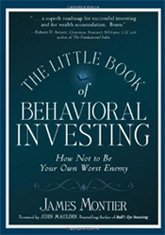
Book Giveaway! "The Little Book of Behavioral Investing"

The Little Book of Behavioral InvestingLet’s give away a couple free books, shall we? Got an email about this newish one that just came out back in Feb, and from a quick glance over it seems pretty promising.

Here’s a little more about this book by James Montier, followed by the directions on how to enter today’s contest:

The Little Book of Behavioral Investing: How not to be your own worst enemy


Here’s a clip from Amazon:
“Ben Graham, the father of value investing, once said: “The investor’s chief problem-and even his worst enemy-is likely to be himself.” Sadly, Graham’s words are still true today. Bias, emotion, and overconfidence are just three of the many behavioral traits that can lead investors to lose money or achieve lower returns. Fortunately, behavioral finance, which recognizes that there is a psychological element to all investor decision making, is now firmly embedded in the mainstream of finance. Applying behavioral principles to an investment portfolio can help investors avoid some of the mental pitfalls that so often cost them, and financial institutions, billions.

In The Little Book of Behavioral Investing, behavioral finance expert James Montier takes you on a guided tour of the most common behavioral challenges and mental pitfalls that investors encounter, and provides you with strategies to eliminate these traits. Along the way, he shows how some of the world’s best investors have tackled the behavioral biases that drag down investment returns, so that you might be able to learn from their experiences.”

Look good? Tell us a time when emotions played a big part in one of your financial decisions – either for the good or bad. Or just tell us why you want the book, that’ll work too. We’ll Random.org the winner this Sunday, and we’ve got 2 to give away so your odds are good!

————–
More from Amazon: The Little Book of Behavioral Investing: How not to be your own worst enemy (Little Book, Big Profits)

————-
*GIVEAWAY NOW OVER* Winners are… Jennifer & Leilani – Congrats!

IRAs, Home Theaters, and Sicilian Graveyards

Are you like me? Do you experience night terrors about your parents moving in with you because they have failed to set up any kind of retirement plan? Does your spouse have to wake you in the middle of the night to assure you that your father-in-law is not in the kitchen scrambling eggs in his underwear at three in the morning? That it has all just been a bad dream? While they may be nightmares now, if I don’t get my parents hooked up with an IRA soon, these nightmares could easily become reality. I cannot bear the thought of living with my old, exasperating parents. Are you like me? Are you horrible like me?

But really, my parents are idiots. Hopeless imbeciles. How they have made it this far is beyond me. They recently purchased three brand new flat screen TV’s, and yet they have no retirement plan. My parents-in-law, however, are a different story. While they have a retirement plan in place, they’re Sicilian – tiny little Sicilians. They’re kind of cute really; but beneath – beneath they’re scary. Italian scary. They have crazy ideas about family. For Sicilians, family is FOREVER. They’re not only convinced that they’re moving in, but they’re plotting an area in our backyard for their burial. I’ve come to accept that I am powerless against their eventual take-over. Yet, if I can get MY parents to start an IRA, I can at least feel comfortable when I pack my bags and head for the hills once HER parents move in. Let HER bury them in the backyard. They’re not MY responsibility. Are you like me? Are you horrible and scared like me?

So I’ve been doing a lot of reading on IRA’s lately. Initially, I included two pages worth of basic, boring information on IRAs, Roth IRAs, SEPs and Simple IRAs. As a favor to the DINK audience, I chose “select all” and “delete.” I could not bear to bore the DINK audience with all the information that everyone but my parents, and myself included, already know. It appears that no “insider” or groundbreaking IRA information exists out there. It appears that putting away for retirement is all about discipline. It appears that I need help. I feel horrible and scared; and I can’t sleep.

My parents are in their late 60’s. They run their own business. They make about $80K/year. They have NO retirement plan in place, but they do have a great home theater system. Please, I need advice. How do I convince my parents to put their money towards an IRA, and where do I start? Am I really horrible for feeling this way, or should I just embrace the arrival of a new home theater system, and a Sicilian graveyard outside of my living room window?

AmEx Gold Card Promo: 25,000 pts!

American Express Gold CardAmerican Express is running a special promotion right now for anyone looking. The details are below, but if you spend $1,000 in 3 months (not hard to to do if you use your credit card for everything), you’ll be handsomely rewarded 25,000 membership rewards points. You can then turn them into either $250 worth of gift cards, or a plane ticket! More info:

American Express(R) Premier Rewards Gold Card

  • For a limited time – earn 25,000 Membership Rewards bonus points when you spend $1,000 in 3 months, redeemable toward one domestic coach-class ticket. Offer expires 04/27/2010.
  • Earn Membership Rewards points up to three times as fast: You can earn 3X points on airfare, 2X points on gas and groceries, and 1X points on everything else
  • Earn 15,000 bonus points when you spend $30,000 per calendar year. (are you big ballin’?)
  • No annual fee for your first year, a savings of $175
If you’re interested, you’ve only got 6 days!
*sign up here*
[THIS PROMO IS NOW OVER — BUT YOU CAN STILL SIGN UP TO WHATEVER CURRENT PROMO IS IF YOU’D LIKE ]

American Express Disclaimer: “This content is not provided or commissioned by American Express. Opinions expressed here are author’s alone, not those of American Express, and have not been reviewed, approved or otherwise endorsed by American Express. This site may be compensated through American Express Affiliate Program.”

Changes Coming for Health Savings Accounts

Piggy Bank
If you have a Health Savings Account (HSA), you might be wondering what changes are coming down the pipe due to health care reform. But first, let’s backup and review what an HSA is in the first place.

What’s a Heath Savings Account?

An HSA is a tax-exempt account you can open to pay (or reimburse yourself) for certain medical expenses. You’re eligible to have an HSA if you meet these requirements:

  • You’re covered by a high deductible health plan (HDHP) and have no other general health care coverage
  • You’re not enrolled in Medicare
  • You can’t be claimed as someone’s dependent on their tax return

What Are the Benefits of a Health Savings Account?

Here are nine reasons why I’m always the first to tell people how much I love my HSA:

  1. You get a tax deduction for money you put in the account – even if you don’t itemize deductions on your tax return.
  2. Interest you earn on the account grows tax free.
  3. Money you withdraw to pay for qualified medical expenses is tax free.
  4. There’s no deadline to spend the money – balances rollover from year to year.
  5. You can do a tax-free rollover from an IRA (Individual Retirement Arrangement) to fund an HSA once during your lifetime.
  6. For 2010 you can contribute up to $3,050 if your HDHP covers just you. If it also covers a spouse or dependents, you can contribute up to $6,150. If you’re age 55 or older, add $1,000 to both those limits.
  7. After age 65, funds that remain in the account can be use for non-medical expenses without penalty, similar to a traditional retirement account.
  8. You own and control the account – not an employer.
  9. They usually come with a debit card and checks, which makes paying for qualified expenses very easy.

Changes Heath Care Reform Will Make to Heath Savings Accounts

I used to be able to say that my HSA money could even be used to pay for over-the-counter medications – such as cough syrup, aspirin, bandages, and Neosporin – on a tax-free basis. But according to the new health care legislation, beginning in 2011 the only medications you’ll be able to purchase with HSA funds are prescription drugs and insulin.

Another change that’s coming next year is the penalty for spending HSA money on something that isn’t allowed – that’s called a nonqualified distribution. Right now the penalty is 10% plus ordinary income tax on the amount. If you slip up and use HSA funds for a nonqualified distribution in 2011, the penalty will be doubled to 20% plus ordinary income tax.

Where to Find the Best Health Savings Accounts

So, where can you find a Health Savings Account that earns the highest rate of return? Interest rates depend on where you live and how much you have in the account (higher balances earn more). Credit unions tend to have some of the most competitive HSA rates – so if you belong to one, check there first.

Here are some of the best HSAs that I’ve found:

  • American Chartered Bank offers up to 1% APY (annual percentage yield) with no fees.
  • HSAbank.com offers up to 2% APY with monthly fees of $2.25.
  • Bank of America offers up to 1.5% APY with monthly fees of $4.50.
  • State Farm Bank offers up to 1.39% APY with annual fees of $25

Where to Find a High Deductible Health Plan

Even though health care reform will reduce the overall tax break you get from an HSA, it will still be a great benefit. If you have a high deductible health plan or are considering getting one to lower your insurance costs, don’t miss out on also having an HSA. You can shop for a high deductible health plan at sites like GoldenRule.com and eHealthInsurance.com.

—————–
Laura Adams is the author of Money Girl’s 10 Steps to a Debt Free Life. It’s available as an audiobook at Audible.com or as a short e-book in the Amazon Kindle Store, the Sony Reader Store, and the Fictionwise E-bookstore. Learn how easy it is to get out of debt and stay out of debt for good. Take control of your finances today and create a more secure future.

(Photo by Alan Cleaver)

You cannot copy content of this page