
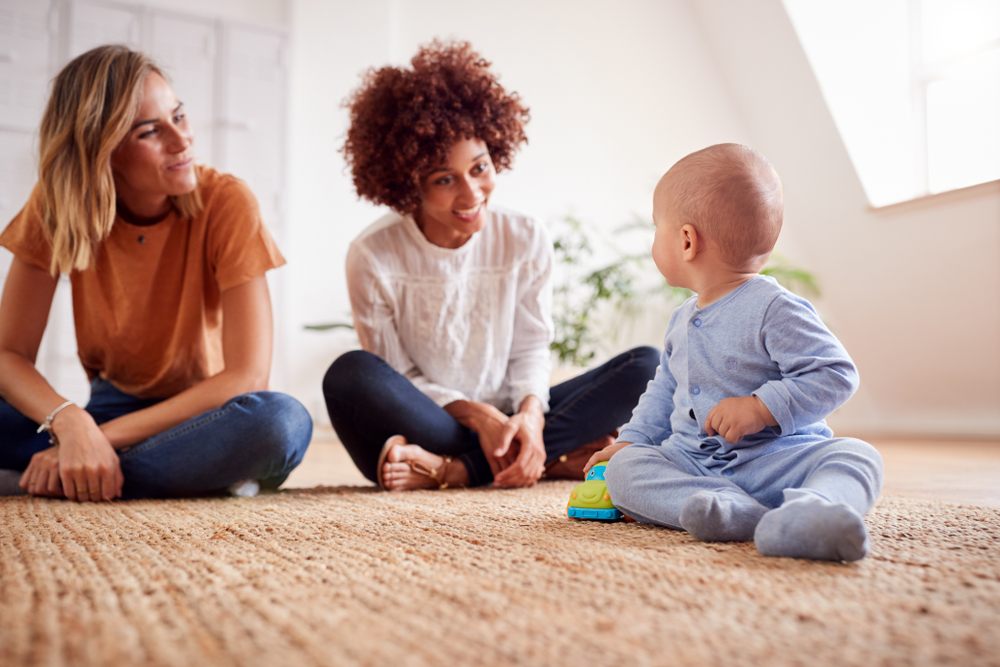
It’s a moment that can quietly redefine your social world: your best friend announces they’re having a baby. At first, you’re thrilled—until you realize how much their new role changes everything. While they dive into diaper duty and sleepless nights, your weekends, routines, and conversations begin to drift apart. For couples without kids, this transition often exposes cracks that were easy to ignore before. Here are six reasons your relationship won’t last past your best friend’s first child—and what these shifts reveal about emotional maturity, priorities, and connection.
1. You’re Living in Different Worlds Now
When your best friend becomes a parent, your lives start to move at completely different speeds. Their world revolves around feeding schedules, baby milestones, and nap times, while yours may still be about work, travel, and spontaneous plans. If your partner isn’t comfortable navigating this change, resentment can build as your social circle shifts toward family-oriented gatherings. The contrast highlights whether your relationship can adapt to evolving priorities or not. If you and your partner can’t find new ways to connect socially, this may be the first sign your relationship won’t last.
2. Emotional Depth Becomes Harder to Match
Parenthood changes people on an emotional level, often deepening their sense of empathy and responsibility. If you and your partner aren’t on the same wavelength emotionally, it can make those interactions feel increasingly awkward. Watching your best friend’s emotional growth might highlight how shallow or stagnant your own connection feels. A strong partnership requires shared growth—even if your paths look different. When one couple evolves while another stays stuck in old patterns, it’s a warning that your relationship won’t last in the long run.
3. Lifestyle Incompatibility Starts Showing
Your best friend’s priorities will quickly pivot toward family-friendly routines, and that shift can make you reexamine your own relationship dynamics. Late-night outings, expensive vacations, and carefree spending may start to feel trivial when compared to your friend’s new responsibilities. If your partner resists adapting or struggles to find value in quieter, more meaningful experiences, tension can arise. Lifestyle compatibility becomes even more important as peers settle down and your social environment changes. When one of you clings to old habits while the other craves growth, it’s another sign your relationship won’t last.
4. The Comparison Game Wreaks Havoc
Seeing your best friend and their partner step into parenthood can unintentionally trigger comparisons. You might start wondering about your future, your partner’s commitment, or whether you’re aligned on long-term goals. If your relationship already lacks clarity, this moment magnifies those uncertainties. One partner may feel pressured to “catch up,” while the other feels suffocated by the expectations. Left unaddressed, these comparisons can create cracks in trust and communication, revealing why your relationship won’t last under the weight of unspoken doubts.
5. Social Circles Drift Apart
Your best friend’s new life will naturally introduce new people—parents, teachers, and family-focused friends. If your relationship thrives on shared social experiences, losing that connection can make things feel lonelier. Suddenly, your weekends look different, and the sense of community you once shared starts fading. How you and your partner respond to this shift says a lot about your foundation. Couples who can’t fill that social gap with mutual interests or a deeper connection often realize too late that their relationship won’t last once external distractions disappear.
6. The Future No Longer Feels Shared
Parenthood tends to bring clarity about life goals, and your best friend’s transition might make you reflect on your own. Conversations about marriage, children, or financial priorities can suddenly feel unavoidable. If you and your partner aren’t aligned on what you want—or worse, are avoiding the topic entirely—the emotional distance will grow. These moments expose whether you’re genuinely building a shared future or just coasting together. When one person wants more commitment and the other resists, it often confirms why your relationship won’t last once life’s bigger questions come into play.
Growth Doesn’t Always Mean Growing Together
Watching your best friend start a family can be bittersweet—it’s both a joy and a wake-up call. It forces couples to look inward and ask whether their relationship is built to evolve with life’s inevitable changes. Some relationships rise to the challenge and grow stronger through adaptation and honesty. Others simply run their course, revealing mismatched values or priorities that were easy to overlook before. The truth is, growth doesn’t always mean growing together—but recognizing that early can free you to build the kind of connection that does last.
Have you noticed a friendship or relationship shift after your best friend had a child? How did it change your perspective? Share your thoughts in the comments below!
What to Read Next…
- How Your Single Friends Might Be Sabotaging Your Finances
- Stop Borrowing Money: 15 Reasons Your Friends Aren’t Willing To Lend You Another Cent
- Here’s Why Couples Without Kids Don’t Want to Babysit Yours
- What Happens When Your Parents Leave Everything to Your Sibling With Kids?
- Why the “No Kids” Choice Still Makes People Uncomfortable in 2025
No Comments yet!