Tahnya is a Certified Financial Planner and former Investment Advisor turned marketing and communications professional She holds a degree from Concordia University, is debt free and currently works in the field of digital marketing.
Happy Friday DINKS. Today we are discussing the connection between our Personal Fitness and our Personal Finances. When our finances are in order everything else in our lives is usually also in order. Keeping control of and actively managing our personal finances is a personality trait that usually applies to all other aspects in our lives.
If we like to learn about different things this usually applies to everything else in our life from personal finance to personal fitness. This is why many Personal Finance bloggers often write posts about their Personal Fitness goals and routine or about losing weight. It is a common goal for people to want to save money and lose weight.
Here are some great posts from around the web about Personal Finance and Personal Fitness:
Young and Thrifty talks about the link between her money and her health in the post “What Yoga Taught Me About Personal Finance”
Money Pincher discusses her decision making process and the benefits of exercise in her post “Fitness Dilemma: Yoga versus the Treadmill”
Amber at Blonde and Balanced is known for trying to find a balance in her life between everything she loves from her new husband and her family to her money and her personal fitness. She talks about setting fitness goals and tracking her progress in the post “Workin on My Fitness Weekly”
Krystal at Give Me Back My Five Bucks is an avid runner. She lives in on the West where their winters are not as harsh as the ones over here on the East Coast. A milder climate allows Krystal to get outside and be active. She sets personal monthly fitness and finance goals in her post “August 2011 Goals”
The Girl With The Red Balloon is a self proclaimed Gym Rat. She discusses her obsessive compulsive personality, her dedication, and her need to find balanced in the post “Change in Focus”
Credit is very important to our financial sustainability. Our credit report is a measurement of our financial responsibility and our credit worthiness. A good credit report can have a huge impact on our financial lives. Our mortgage, our car loan, our home insurance and even our bank account being approved can all depend on our Credit Report. Non financial aspects of our lives such as renting an apartment and getting a job can also depend on our Credit History and our Credit Report.
Our Credit Report is a history of our credit products and how we used them over the years. Every single credit product that we have ever owned is listed on our credit report including Personal Loans, Student Loans, Lines of Credit, Mortgages, and Overdraft Protection. Even if we have never used one of our approved credit product it will still be listed on our Credit Report.
Every product listed on Our Credit Report has specific details such as the Total Credit Limit, Our Current Balance, and The Highest Balance that we have ever held. This shows potential creditors how we have used our credit in the past. In general creditors like to see our Current Balance below half of the Total Credit Limit amount.
Not everyone who checks our Credit History wants to approve us for a credit product. Many companies such as insurance companies and potential landlords or potential employers use our Credit Bureau as a way to confirm our identity. Companies can cross check the information that we provide to them with the information on our Credit Bureau to confirm our legitimacy and our identity. This type of Credit Bureau check is for information purposes only; it does not impact our Credit Score in any way.
Our Credit Score
There are 3 Credit Bureaus in the United States which collect and maintain our credit information from financial institutions, finance companies, and other corporations. Our credit information is sent on a monthly basis to Equifax, Experian, and Trans Union. They determine our Credit Score based on the amount of total credit we have open, our past credit usage and history, how often we apply for credit, as well as the current balances on our credit products.
Our Credit Score will be a fixed number between 300 and 850, with 300 being not so great and 850 being the best score possible.
How to Improve Our Credit Score
Keep our Personal Information Up To Date. It is very important to update the Credit Bureaus every time we move or change employers. This allows our personal information to be confirmed if ever it is checked by a company or corporation.
When we order a copy of our Personal Credit Bureau file it comes complete with our Credit History, our Current Credit Products, as well as tips on how to Improve Our Credit Score. The two major activities that negatively affect our Credit Score are late payments, and high balances on our Credit Cards and other Credit Products. It is important to ensure that we always make at least the minimum monthly payment on each of our Credit Products. FICO offers great tips on how to understand and improve our credit score.
Equifax allows users to receive their Credit Report from all 3 Credit Bureaus for Free. Our Credit Report includes our personal information, our current and closed Credit Products, as well as who has checked our Credit Bureau in the Past. Our Credit Report does not show our Personal Credit Score. We can purchase our individual Credit Score for $15.95.
Prevent Identity Theft and Fraud
I order a Copy of my Credit Report once a year to make sure the information is up to date and to make sure that my credit history is being reported properly.
If you find incorrect personal information on your Credit Report I suggest that you contact Equifax immediately. If some financial information is not showing correctly on your credit report I suggest that you contact the corresponding financial institution or finance company as soon as possible to correct the mistake. They will then report the correct information to the Credit Bureaus next month.
I have also signed up for a Credit Alert service that advises me every time someone checks my Credit Bureau and every time someone applies for credit in my name. Equifax contacts me and I must confirm the Credit Check or Credit Application is legitimate before they proceed and release my personal information. This Credit Alert service definitely helps to detect and prevent Identity Theft and Fraud.
Hello Everyone. Today we are discussing and learning about everyday financial terms. We may hear these words and phrases everyday in our financial lives, but we may not fully understand what they mean or what they mean for us.
Before we enter into a contract or an agreement we should definitely understand what we are signing. Hopefully this information will be helpful.
Here are 6 Financial Terms That We Should Know:
APR – Also known as Annual Percentage Rate. This financial term is expressed as a number that indicates the annual (or yearly) interest rate that is charged on our Credit Cards, Loans, Lines of Credit, or Mortgages. It is also sometimes used to express our annual investment rate of return. As an example the APR on my VISA card is 19.99%. The Annual Percentage Rate is a useful tool when we are comparing the prices, costs, and fees of Loans, Lines of Credit, and Mortgages between Financial Institutions.
Average Cost Base – Also known as ACB. This term indicates the average price that we paid for our investments which are purchased in units such as Stocks and Mutual Funds. The average cost is the average price we have paid for each individual investment unit plus any dividends that have been reinvested to buy more units. Investors often compare the ACB to the Current Market Value to determine our Capital Gain or Capital Loss.
Average Daily Balance – This financial term usually applies to Credit Cards. Our monthly interest charges are calculated on our Average Daily Balance, not on the current balance as of our last monthly statement. If we have a $100 balance for 3 days of the month and a $500 balance for 2 days of the month our Average Daily Balance will be calculated as $100+$100+$100+$500+$500=$1300/30 days of the month. Our monthly interest charges will be calculated on $43.33 which is our Average Daily Balance.
Dollar Cost Averaging – Is an investment strategy used to buy into the market on a regular basis. When we buy into the market in regular intervals such as weekly, biweekly, or monthly we are purchasing our investments when the daily price is both high and low. This helps lower the cost of our investments, when we have a lower average cost our gains will be bigger when the market rises. Dollar Cost Averaging is the absolute opposite of trying to time the market.
MSRP – Also known as the Manufacturer’s Suggested Retail Price. This financial term is often used on discounted items or negotiable goods. When we compare the MSRP with the price that we actually paid for an item we can calculate our savings. MSRP is often displayed on New Car Commercials because the price is negotiable in the dealership. MSRP is also displayed in discount stores such as Burlington Coat Factory, TJ Maxx, and Century 21 (or Winners for our Canadian friends). The next time you go shopping look at the price tag on your item to find the MSRP; how much are you saving?
Pay Yourself First – This financial term refers to Pre Authorized Contributions into our Savings Accounts, Retirement Accounts, or Investment Plans. We should think of our self as a bill payment and set up regular weekly, biweekly, or monthly automatic transfers into our Investment or Savings Accounts. When we pay bills we are paying for a service already used, when we Pay Our Self First we are securing our financial future. The expense of Paying Our Self now will be worth it (and pay off) in the future.
Till Debt Do Us Part is a TV series with money coach Gail Vaz Oxlade that chronicles the lives of couples who are drowning in debt. If couples successfully complete financial tasks they will earn $5000 towards paying down their debt. Couples will learn to have a positive attitude towards money as Gail Vaz Oxlade gives them a financial makeover.
People get into debt over dumb purchases and excessive spending on things they want but do not need. Gail Vaz Oxlade helps couples realize that their relationship is more important than their money. Couples often argue about money and even break up over money. Gail Vaz Oxlade comes in to save the couple’s relationship and get their finances in order.
A recent episode of Till Debt Do Us Part featured Mark and Jeanna who are on the verge of breaking up over Mark’s personal spending habits. Mark makes $40,000 a year and Jeanna earns $50,000 per year. Mark loves his man toys and Jeanna loves to be pampered. He buys camping equipment and she frequently visits the hair and nail salon. Mark spends the couple’s money on his personal needs, so to get even so does Jeanna. It’s a classic case of He Spends, She Spends.
Before they met Jeanna was debt free and Mark had $18,000 of debt. Now only a couple years later the couple is $29,000 in debt. If they continue spending money that they don’t have Gail Vaz Oxlade estimates that the couple will have $400,000 of debt in only 5 years. The couple says that their biggest financial mistake was buying their $229,000 condo.
Mark and Jeanna blame each other for their debt. Jeanna agrees that she would be financially better off without Mark, but she doesn’t want to be without him. Gail Vaz Oxlade asked them if their relationship was worth their debt. Mark and Jeanna focus on what they don’t have instead of what they do have. Gail advised the couple that they should see their condo as an investment and not as a financial mistake.
Jeanna and Mark are talking about getting married and talking about breaking up at the same time. They definitely lack communication in their relationship. Gail advised the couple that they jumped into a lot of big financial decisions without talking about them before hand. This leads to regret and arguments. Jeanna wants a wedding but Mark wants to buy camping gear.
Every single month the couple makes several financial mistakes such as taking cash advances on their credit cards and spending excessively on electronics, hardware, and in beauty salons. As a couple they perform 150 transactions per month, and they are overspending by $1500 per month, which they are accumulating in debt.
Get Your Finances In Order with Gail Vaz Oxlade.
Prioritize Your Goals. Financial goals can be to focus on short term savings, long term savings, and paying down debt.
Make a Payment Plan to pay off debts by a target date.
Budget Your Monthly Expenses to be Less Than Your Income.
Till Debt Do Us Part Financial Missions:
Research and Make a Financial Plan for a Major Goal.
Find a Second Income or Supplementary Income. Negotiate your current salary.
Have a $5 date night. Couples can have fun without money. Moneyless gifts include love coupons and baking homemade heart shaped cookies. We don’t have to spend money in our couple to make each other happy.
Good Morning DINKS. Today we are discussing the ever important question of merging our single money into our joint bank accounts.
I overheard a co-worker talking about her upcoming nuptials in the lunch room this week and I feel the need to share her story. I couldn’t believe what my ears were hearing and I want to know what you think about her money management skills. As DINKS we are all in couples and we all have to manage our budgets with dual incomes, but would you use your individual income to pay off someone elses debt?
My co-worker Julie is about to get married in a few weeks. She is currently house hunting with her fiancé. They both came into our branch for their mortgage pre approval, but now I overheard Julie saying that their future family home will only be in her future husbands name. Does this sound crazy to anyone else?
My co-worker will be contributing money towards the down payment for the home and she will be paying half of all the monthly house related expenses, including the mortgage payments. However, the house will only be under her fiancés name. Julie will be paying off debts that are attached to her fiancés asset. Julie says that she fully trusts her finance and when he becomes her husband he will take care of her.
The one thing that Julie is forgetting is that when people get divorced they (usually) hate each other. If Julie and her fiance do get divorced in the future I am not convinced that Julies (then) husband will still want to take care of his soon to be ex wife. I have to ask myself (and all of you) does Julies future husband really love her and want to take care of her, or is he just really a huge con-artist?
As you may remember I am all in favour of joint debts but not joint assets. My boyfriend Nick and I have joint credit cards but our bank accounts, savings accounts, and retirement accounts are all held separately. He actually has his own Personal Financial Advisor, I don’t even give Nick financial advice or review his investment strategies and goals. This may not work for everyone, but it works for us as a couple. The only time that Nick and I share joint assets is if there is a joint debt attached to them, such as our (former) car and our (former) car loan.
Does marriage automatically imply that we should share everything with our spouse? Money is money and love is love, but does love automatically mean that we have to share our money? I understand that marriage should imply that we fully trust our spouse, but do you trust your spouse 100% with your own money?
Money may not be the most important thing to everyone, and therefore not everyone actively manages their own money and their own assets. However, money is a necessity for everyone to live. Without money we couldn’t eat and we couldn’t sleep in our comfy beds every night. Without money we couldn’t stay warm in the winter and we couldn’t stay cool in the summer (if you are lucky enough to have air conditioning). Without money we couldn’t look forward to coming home every night and spending quality time with our spouse.
Would you prioritize the love in your relationship before the management of your own money?
Happy Friday DINKS. Today we are discussing our personal financial goals. What is our point in life without goals? If you didn’t wake up everyday for a purpose then what would your purpose be?
Check out these great posts from around the web about our personal financial goals:
Get Rich Slowly writes an inspiring post for people who are working hard and saving now to retire early later. If your goal is to retire early you should read this post titled “Extreme Early Retirement in Practice: How Two People Did It”
Man vs Debt‘s Adam Baker is known for doing what he loves. In the post “You Only Have One Shot, So Ultimately, What Do You Want To Do?” he asks about our dreams and our goals. Achieving dreams is about living in the moment and Adam never misses an opportunity, even if it is unplanned.
Brooklyn B on a Budget discusses her weekend plans in the post “Weekend Wish List” She lists all of the things she wants to do and all of the things that she wants to buy over the weekend. It’s a wish list of things that she may or may not do. Some goals are dreams, and some goals are things that need to be done; there is a big difference.
Financial Samurai writes an interesting post titled “How Long Does It Take To Become a Millionaire?” Minus the Obama bashing, this is a good post to read if your financial goal is to become a millionaire. I personally think that setting a dollar amount as an overall goal is ridiculous. It is ok to save $1 million for retirement if your quality of life in retirement calls for $1 million. It is ok to want to save $5000 in our emergency fund if $5000 is equal to 3 months of our salary and/or monthly expenses, depending on our personal goal. Why people are so obsessed with numbers and dollar amounts is beyond me.
The Financial Blogger says that plans many not always work out in the post “The Funny Thing About Plans Is…” The Financial Blogger says that it’s always good to have goals but it’s also good to have a Plan B, just in case things don’t go exactly as planned. I am all for setting goals and having a plan but we have to be flexible in case our Plan doesn’t go as planned. Achieving our goals is our priority, how we achieve them is not important.
With all this being said DINKS, I ask you:
Is one of your financial goals to retire before 65? If so at what age?
What is the one thing in the whole world that you have always wanted to do?
What is on your Wish List this Weekend?
Do you have a Net Worth Goal?
Do you have a back up plan for your personal and financial goals? (maybe failure is not an option for you, but it may be for reality)
Good Morning DINKS! Today we are discussing the crisis and famine in East Africa. Before you all bombard this post with nasty comments asking what the Famine in East Africa has to do with DINKS Finance let me explain how the two are linked. The less fortunate people in East Africa are dying of starvation and they need donations. Fortunately there are people in this world such as us DINKS who have the financial means to help out. There lies the link between DINKS and the Famine in East Africa. Just in case that was not clear the link between The Famine in East Africa and DINKS Finance is that Africa needs money and DINKS have money.
What is the Problem in East Africa?
East African countries such as Somalia and Ethiopia are currently facing a major drought. Approximately 11 million people are starving for food and dying of hunger. I personally don’t understand how local and international governments could let the famine situation escalate out of control, but nevertheless the United Nations recently declared famine in East Africa.
Unfortunately this is not the first time People in East Africa have been devastated by famine. In 1985 hundreds of thousands of people died because of starvation. This is when several great musical minds such as Michael Jackson and Lionel Richie came together to create the original “We Are The World” song and music video. This song features many musical talents such as Bruce Springsteen, Tina Turner, and Stevie Wonder. Could you eat your next meal knowing that someone in East Africa is dying of hunger?
World Vision TV commercials advertise the fact that we can feed a child for only $0.30 per day. If I can spend $100 per week on groceries and up to $5 per day on coffee and snacks then I can afford to donate $0.30 per day to help people who are less fortunate and literally starving to death.
How Can We Help People in East Africa?
I am happy to say that many different companies and communities from cell phone providers to financial institutions are accepting donations in support of East Africa. Next time you visit the pharmacy or you make an online purchase check to see if the company is accepting donations.
Many local and national charities are currently accepting donations for East Africa. We can even make our donation via PayPal.
Here are some charities that are currently supporting efforts and accepting donations for East Africa:
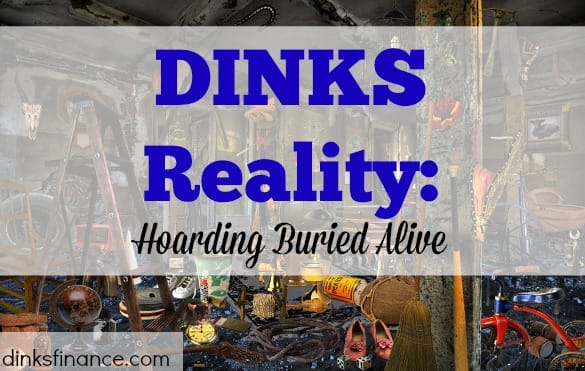
All I have to say about hoarding is YIKES! For an obsessive compulsive hypochondriac like myself, Hoarding is beyond my comprehension. I do not understand why people don’t get rid of unused items. I also don’t understand how someone can go from being a pack rat who prefers not throw out unused items to becoming a hoarder who never throws out anything.
Why didn’t a family member step in to do an intervention when the items first started piling up? I don’t live near any of my family, but if I did I feel that it would be my duty as a family member to step in and intervene when something is going wrong.
Hoarding is not only a waste of space it is also a waste of money. I couldn’t imagine spending money on something that I already have, or on something that I already have 25 of.
David is a husband with two kids. He hoards so much stuff that if his house ever caught on fire his family would never make it out of the house alive. David risks losing his wife, his kids, and his house but he doesn’t even think that anything is wrong with his hoarding.
David’s kids have nowhere to play, and David has no money to buy new toys for his kids. I know that I am not a parent; I actually don’t even have a dog, I don’t even have a goldfish. However, I do know that parents shouldn’t raise their kids in a pile of messy junk. I would imagine that it may be heart breaking for a parent to tell their kid that they can’t afford to participate in after school activities or buy new toys because all of the family’s money was spent on hoarding unused items.
The impact that one single member can have on the finances of an entire family can be catastrophic. David and his wife were always fighting over money and the kids were very unhappy living in a home where their parents fought all the time. David was holding on to items that he may use one day or might need one day; but the fact of the matter is that he doesn’t have any space for activities or hobbies.
Normally when one aspect of a personal life is out of control so is everything else. If someone is in the middle of a Financial Free Fall the odds are that other aspects of their life are also chaotic. This is exactly the case for Kaylie.
Kaylie did not have a happy childhood as a child and she is currently living as an adult who is still working try and find her happy childhood. Kaylie is an unemployed artist who spends her monthly Welfare cheque on her s and stuffed animals.
Kaylie calls her toys a collection of things that make her happy. She collects penguins and frogs. Kaylie says that her collections are her financial nest egg and if they ever become popular enough to be worth some money Kaylie will be financially set for life.
When Kaylie looks at her home she doesn’t see junk or a mess, she sees her art. Her live in boyfriend moved out because there was no room for him. She never has to clean or do housework because there was no room for dust or dirt. For the time being Kaylie is happy not paying her bills and spending all of her Welfare checks on collecting children’s toys.
People hoard for different reasons, some people (like David) may use hoarding as a way to control his environment, and some people (like Kaylie) hoard items to fill a void in their lives. Regardless of the reason why people choose to hoard, the fact of the matter is that buying and storing unused items is a waste of money.
Maybe people who hoard unused items should hoard their money, maybe they would be much better off.
As a personal banker every single day I hear stories about the old banking system and (what I consider) ridiculous comments about the new banking system. I don’t remember a lot about the old banking system before I started working in a bank but I do remember going to the bank with my parents. I remember that while we waited in line for a bank teller to serve us my parents would manually fill out a deposit or withdrawal slip. I remember that their signature always had to be verified with an original signature card. Those were the days before we invented debit cards and personal identification numbers.
Here are some urban bank myths, money myths, as well as some common money mistakes:
3 Bank Myths from a Personal Banker
Our bank account is not a box in the back of the bank. When clients come to the bank we do not go into the back and deposit or withdraw money from your “account.” Many older clients believe that their account is a physical box in the back of the branch where we keep their individual money. Once I even had a client who asked for the exact $20 bill that she deposited the week before.
There is no person who works behind the ABMs. More often than you would think people come into our bank branch claiming that the man behind the bank machine stole their debit or credit card. When people leave their card in the bank machine it is automatically retracted for security purposes, there is no man who lives inside an ABM.
Bankers Have Magical Powers. We try to do our best for our clients however Bankers can’t work magic. We cannot magically approve a mortgage application if someone doesn’t qualify. Some clients ask us to “call in a favour” to someone with the authority to approve mortgages. I have heard that this is how banking was conducted many years ago but nowadays we have rules, regulations, and procedures that we must follow. Bankers can make suggestions on how clients can improve our personal financial situation, but it has to be collaboration between bankers and clients.
Renting is Throwing Away Money. I am a renter and I love it. Renting is not throwing away money because we receive security, luxury living, convenience, and no responsibility in return for our monthly rent.
You Get What You Pay For. In most cases I believe that this is true when it comes to quality and service. However, there is always an exception to the rule. More than once I have bought an expensive item and had it break or malfunction within a short period of time. I also once bought an extremely expensive pair of designer shoes and they were extremely uncomfortable.
Home Ownership is a Good Investment. I am sure that many people who were forced to give up their homes and who currently have negative equity in the value of their homes would disagree.
3 Money Mistakes (and Regrets) from Everyday People
Last week on Twitter we asked about your biggest financial mistakes or regrets. Here are some of the answers we received from our Twitter Friends.
I Don’t Have Enough Money to Invest. This is not always true because even $25 per month can add up to a lot of savings over time. We can make small changes in our daily spending and monthly budgets to free up some money to invest. We may always be paying off some form of debt so if we are waiting to be debt free before we save we may be waiting forever.
Carrying a Credit Card Balance will Improve Our Credit Score. This is not true because carrying a balance may actually negatively affect our credit score. When banks check our credit history they compare our credit limit with our current balance to determine if we are financially responsible. Using our credit card and making payments on time ensures a solid credit history. We should never carry a balance on our credit card that exceeds half of the credit limit.
Paying Cash for Everything. My bank manager once told me that “Cash Never Happened” when I declared a cash gift that a client gave me as a birthday present. Usually we have to declare all gifts from clients but my manager didn’t want to hear anything about me receiving cash because cash never happened. The reason is that there is no trace. If we pay with cash it’s as if the transaction didn’t exist. There is no proof of our payment and there is no financial trace. We aren’t establishing a good credit history if we pay cash for everything
Good Morning DINKS. Today we are discussing the one habit that can bite into our net worth and our savings… shopping and spending money.
There are two things that I always want to spend on, new clothes and takeout food. The state of shopping is the mind set to always want new things. Many money mistakes involve spending money on things that we don’t need, but on items that we want. If we are sad we may shop to feel better. If we had a good day we may buy our self something nice to celebrate. Shopping may be the route of all evil for our bank account, but it can be a form of self relief for our soul.
Have you ever bought something just because it was on sale? So many times I have bought new clothes because they were on sale or because they were a really good deal. It seems that I always need something when it is on sale. I have spent over $50 on items at the pharmacy that I didn’t need just to earn member rewards points. Those are bad financial habits. Regardless of the reason why we shop it is a bad habit that can easily get out control and seriously hurt us (and our bank accounts) in the long run.
The same thing is true about Food and Eating Out. Think about the last time you ate food that you didn’t cook at home. Why did you eat out? As you may remember I used to eat out a lot. But in a recent effort to save money and eat healthier I am currently learning to cook. Since I am still in the early stages of learning to cook my meals are not always edible, this can also be a huge waste of money.
I used to spend money on take out food for a variety of reasons which include everything from not being able to cook to not having enough time to cook. However the truth is that I could find any excuse not to cook, the real truth is that I am just really lazy.
Now that I am learning to cook I eat at home more often which saves me a fortune on eating out. But I’m not going to lie; I do miss the effortlessness of eating out and not having to wash dishes.
I still eat out from time to time, but now when I eat out I spend money on good quality foods. I eat out to eat better foods that I can’t (yet) cook at home. When I eat out in restaurants I get inspiration to cook at home as I learn new flavours, spices, and cooking combinations. I never order something at a restaurant that I could cook at home. This makes spending money on eating out in restaurants worth the cost.

 About Kristina Tahnyak
 Happy Friday DINKS. Today we are discussing the connection between our Personal Fitness and our Personal Finances. When our finances are in order everything else in our lives is usually also in order. Keeping control of and actively managing our personal finances is a personality trait that usually applies to all other aspects in our lives.
 Hello Everyone. Today we are discussing and learning about everyday financial terms. We may hear these words and phrases everyday in our financial lives, but we may not fully understand what they mean or what they mean for us.
 Till Debt Do Us Part is a TV series with money coach
 Good Morning DINKS. Today we are discussing the ever important question of merging our single money into our joint bank accounts.
 Happy Friday DINKS. Today we are discussing our personal financial goals. What is our point in life without goals? If you didn’t wake up everyday for a purpose then what would your purpose be?
 All I have to say about hoarding is YIKES! For an obsessive compulsive hypochondriac like myself, Hoarding is beyond my comprehension. I do not understand why people don’t get rid of unused items. I also don’t understand how someone can go from being a pack rat who prefers not throw out unused items to becoming a hoarder who never throws out anything.