Teri Monroe About Teri Monroe

Teri Monroe started her career in communications working for local government and nonprofits. Today, she is a freelance finance and lifestyle writer and small business owner. In her spare time, she loves golfing with her husband, taking her dog Milo on long walks, and playing pickleball with friends.

How to Save for Big Goals: A Step-by-Step Guide to Financial Success

Step-by-step guide to save for big goals
Image Source: Pexels

What are some of your big financial goals that you’re saving for? Are you saving for a new house, college, or a new car? While spending is easy, saving for big financial goals can seem insurmountable. If you want to achieve your financial aspirations, here are several steps you can take in the right direction.

1. Make Your Goals Very Specific

How much are you aiming to save? Put a specific number to your big saving goals. How long will it take you to save that amount and what’s your strategy to get there? It’s helpful to create smaller chunks when planning for your big goals. For example, put a small amount of money aside every day or per paycheck so that your goal feels more achievable.

2. Differentiate Short-Term, Midterm, and Long-Term Goals

Save for a big goal like buying a car
Image Source: Pexels

Short-term financial goals should be one year or less. Midterm goals are one to five years and long-term goals are more than five years. If you are building an emergency fund that is a good example of a short-term goal. Buying a new car or paying down student loans and long-term goals would be saving for retirement or buying a new house. Give yourself adequate time when saving for big financial goals so it doesn’t feel too stressful.

3. Determine Where to Put The Money You’ll Save

Once you have a specific goal and timeframe, think strategically about where to invest your savings. Make your money work for you by choosing the best place to grow your savings. If you’re saving for education a 529 account is appropriate. A high-yield savings account or money market account may be more appropriate for the money you’re saving for a house. Consult a financial advisor if you need guidance on where to put your savings until you reach your goal.

4. Set Deadlines and Check-In Points

Set check-in points to stay on track toward your goal
Image Source: Pexels

When trying to save for big goals, hold yourself to your deadlines. Create check-in points along the way to examine what’s working and what’s not. You may need to adjust your budget and how much you are saving each month if you are feeling stretched too thin. If you’re not meeting your goal, take a hard look at categories where you can cut spending.

5. Limit How Many Goals You Manage at One Time

Saving for too many big goals can lead to failure. Try not to take on too much at once, but instead narrow your focus to one or two goals at most. If you are juggling more than one big goal, it’s a good idea to set up individual accounts for each goal. This way you can easily see if you’re on track for each goal.

6. Automate Your Goals

Don’t fall off the wagon before reaching your goal. If you’re struggling to stay on track, try automating your savings. It may be easier for savings to automatically be deducted from your checking account each month. You can also use budgeting apps like YNAB to track your goals for you.

Save for Big Goals Successfully

To save for big goals, you need a clear roadmap. Without planning and intentional execution, you’ll struggle to meet your financial goals. What are some of the big goals you’re saving for? How do you plan to reach your goals?

Read More

Here’s How They Really Feel: 8 Microexpressions That Reveal How Your Mate Really Feels About You

Decoding Your Partner's Microexpressions
Image Source: Pexels

Microexpressions are subtle clues from our faces that only last for a moment. They are often subtle, but they give us insight into how someone truly feels. Researchers have found that there are universal microexpressions that transcend even language. Microexpressions can be as small as a flaring of a nostril, or the raising of an eyebrow. Often, we aren’t aware of our microexpressions, even when we are lying, so it’s a good indicator of how we truly feel. Your partner may say one thing, but their microexpressions could be saying something else. So, how do you recognize these microexpressions? Here are eight things to look for in your partner.

1. Happiness

Happiness microexpression
Image Source: Pexels

Is your partner truly happy in your relationship? Although we may try, true happiness can’t be faked. One way to tell if your partner is truly happy is if the sides of their eye muscles are engaged forming crow’s feet when they smile. This is called The Duchenne smile, discovered by French neurologist Guillaume Duchenne.

2. Sadness

Sadness is also one of the hardest microexpressions to fake. You can tell if your partner is sad if the inner corners of the eyebrows are drawn in and then up. The corner of their lips may be drawn down and their jaw may come up. Their lower lip will also pout out. The sadness microexpression usually lasts longer than others but can be the hardest to identify. You may have to use other body language clues to identify if your partner is sad.

3. Anger

If your partner is angry there are clear signs you can see in their facial expressions. Their lips may be tense and pressed firmly together and their eyes may be bulging. Their nostrils will probably be flared, their eyebrows lowered, and their lower jaw could be jutting out. Even if they aren’t saying anything, these cues could tell you that they are upset with you. Our brains are programmed to be able to recognize anger microexpressions the fastest, perhaps to get us out of danger quickly.

4. Disgust

Disgust microexpression
Image Source: Pexels

If your partner is disgusted you’ll probably know right away because of their facial expressions. These are the same facial expressions someone makes when they smell something foul. Disgust microexpressions include narrowed eyes, raised upper lip, upper teeth that could be showing, wrinkled nose, and raised cheeks. People often talk about getting the “ick” in relationships or experiencing something that is a turn-off. If your partner is showing any of these signs, they may be disgusted by you.

5. Contempt or Disdain

Contempt doesn’t mean that the person is lying. It’s often an indicator that the person feels superior or sees the other person as incompetent. Contempt or disdain can be seen in a smirk, rolling of the eyes, or looking dismissively askance. If your partner is displaying these microexpressions, they may not take you seriously or respect you.

6. Fear

If someone is fearful, their eyes are usually raised and drawn together. You can also see the whites of their eyes. Their upper eyelid might be raised but their lower eyelid is drawn tight. Their mouth might also be open and their lips are slightly tensed. If your partner is showing any of these signs, what you are saying to them or your behavior may be scaring them.

7. Surprise

Surprise
Image Source: Pexels

Surprise microexpressions are very closely linked to fear. Microexpressions that signal surprise include raised and curved eyebrows, wrinkles across the forehead, and eyes open wide showing the whites of the eyes above and below. The widening of the eyes actually makes us look more trustworthy and shows that we have nothing to hide. According to a study by NYU, our brains are constantly assessing if someone is trustworthy just by looking at their face. If your partner looks surprised, it is most likely genuine.

8. Guilt, Shame, Embarrassment, Envy, and Jealousy

These emotions do not have traditional microexpressions like the previous seven mentioned. However, they do come with a mix of the traditional microexpressions. Guilt and shame may be displayed as the same microexpressions as sadness, but your partner’s head may be turned away. Embarrassment is often said to be accompanied by blushing but that isn’t true for everyone. It is one of the hardest expressions to distinguish. Envy and jealousy don’t have one distinct signal and can be a mix of cues from disgust or anger for example. Much more research needs to be done on these emotions and their accompanying microexpressions.

Learning to Read Microexpressions in Your Partner

Although you never want to assume what your partner is feeling, these microexpressions can give you a clue into their true feelings. Since they are hard to hide, you can get a better understanding of your partner’s emotions. Learning to be attuned to your partner’s emotions can help your relationship tremendously.

Read More

How to Start a Zero Waste Lifestyle: A Beginner’s Guide to Going Green

Beginner's Guide to a Zero Waste Lifestyle
Image Source: Pexels

According to the EPA, the average American generates about 4.9 pounds of waste every day. At the same time, 66% of Americans have said that sustainability is important to them when shopping for new products. When you are just beginning your journey to starting a zero-waste lifestyle, it may seem like a big undertaking. However, even small changes can make a big difference. For instance, opting for unique belts made of vegan leather alternatives can help limit water and land usage. Here we’ll share some beginner’s tips for going green.

Follow The 5 R’s of a Zero Waste Lifestyle

The guiding principles of a zero-waste lifestyle are refuse, reduce, reuse, recycle, and rot. If you use these 5 R’s in your everyday life, you’ll be on your way to going green. Refusing means not letting waste enter your life in the first place. Reducing means that you get rid of things you don’t need and live a minimalist lifestyle. This also applies to our purchasing habits, which can have harmful effects on the earth. Next, reusing is the practice of repurposing items or looking for items that aren’t disposable. Recycling shouldn’t be your first line of defense to a zero-waste lifestyle, but it is an important part. Lastly, rot is learning to compost which we will discuss further.

Composting 101

Zero waste lifestyle composting
Image Source: Pexels

Composting is the process of recycling organic matter like food scraps. Food scraps and garden waste combined make up more than 28% of what we throw away, according to The EPA. Not only are landfills costly, but they also emit methane gases further contributing to greenhouse gases and global warming.

Compost helps things decompose faster by making the ideal environment for bacteria, fungi, and worms to accelerate the process. The decomposed compost, sometimes called black gold, can be a rich fertilizer for plants and gardens.

Choose Reusable Items

Use reusable items
Image Source: Pexels

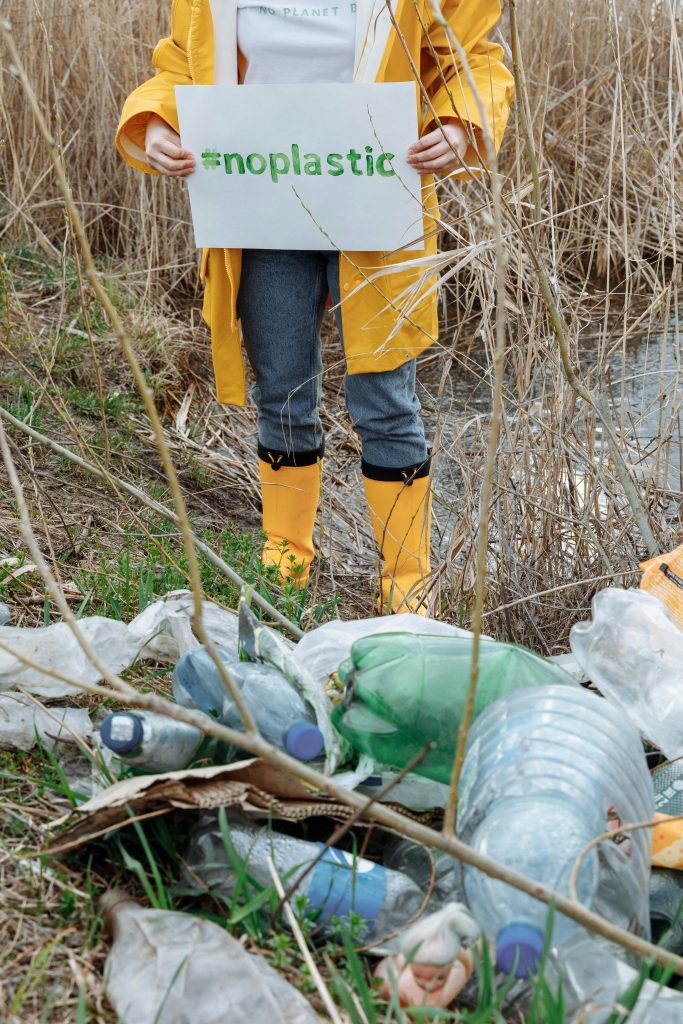
Try to reduce your consumption of single-use products like paper towels, plastic water bottles, and paper bags. A plastic water bottle can take up to 1,000 years to decompose in a landfill. There are plenty of options for reusable alternatives for these items. Just switching to a reusable glass water bottle can make a huge impact!

Wear Sustainable Clothing

To live a zero-waste lifestyle, take a look at your closet. Aim for quality of fabrics in organic materials like cotton and linen. Also, be aware of the companies that produce your clothing. Fast fashion brands like Shein are not environmentally friendly. In 2023, Shein emitted 16.7 million metric tons of carbon dioxide, which is more than four coal power plants emit in a year. The company also uses toxic chemicals during production. Shopping for sustainable brands and buying secondhand can all help the huge problem that the fashion industry poses.

Make Your Own Cleaning Products

Making your own cleaning products isn’t difficult and is much greener and better for you as well. Baking soda, vinegar, lemon juice, and essential oils all have anti-bacterial properties. Making your own cleaning products is also a very cost-effective solution.

Reconsider Your Transportation

While public transportation, biking, or walking are the most sustainable ways to get around. There are things you can do to make your car greener. Just changing your car’s air filter can have a significant impact. Of course, you can also consider an electric car or hybrid for your next purchase to fit into your zero-waste lifestyle.

Committing to a Zero Waste Lifestyle

Don’t let perfection stop you from making better decisions. Committing to a zero-waste lifestyle takes time. Every small change you make though is helping you and the environment. How do you make choices that are more sustainable?

Read More


Creative Ideas for Dealing with Unwanted Gifts

Receiving unwanted gifts
Image Source: Pexels

After the holidays, you probably have a pile of gifts from family and friends that are left to sort through. While you can be thankful for the thoughtfulness, the gift itself might be something you already have, isn’t your taste, or is the wrong size. The situation can be trickier if you don’t have a gift receipt and aren’t comfortable asking for one. So, what are your options for unwanted gifts? Here we’ll discuss some solutions.

1. Return It

returning unwanted gifts
Image Source: Pexels

Did you know that 17% of all holiday purchases will be returned this year? That’s an estimated $860 billion. Not only is this a huge problem for retailers, but a major inconvenience for shoppers too. No one wants to stand in those long lines in stores or at the post office.

Some stores will allow you to return an item without a receipt if you give them your license. Usually, you’ll receive store credit for the current selling price. Return windows are usually extended for the holiday season depending on the store.

2. Sell The Item

There are several options to sell your unwanted gifts. Marketplaces like Poshmark, eBay, and Mercari are easy to list on. You can also send in your items to places like The Real Real, for luxury items, Thredup, or Trashie. These resale sites usually send you a pre-paid label to send in your items along with a clear-out bag. Of course, each company takes a percentage of your sales.

3. Donate It

donating items
Image Source: Pexels

Sometimes it’s not even about receiving money for the item or exchanging it. Sometimes you just want the clutter of unwanted presents out of the house. As we prepare for tax season, donating your unwanted gifts is a good idea and can benefit someone else in need. Some organizations like the Salvation Army, Habitat for Humanity, and Goodwill offer free pickup in select areas.

4. Regift It

While some people consider this a faux pas, re-gifting an item to someone who would enjoy it more is the perfect solution. It’s not cheap, it’s just creative. Regifting is also much more sustainable and keeps unwanted items out of landfills. There are some etiquette rules to follow though if you choose to regift.

5. Recycle It

Maybe your new sweater from Grandma isn’t something you would wear but you can repurpose it. If you’re handy with a sewing kit, maybe you make alterations yourself or transform it into something entirely different like a pillow cover or quilt. With a little imagination, your unwanted gifts can become something completely unique and transformed.

6. Initiate New Traditions Next Year

If you’re struggling with unwanted gifts, maybe it’s time for you and your family or friends to start new traditions. My family this year did a Secret Santa where we each had one family member to buy for. The spending limit we set helped us all save money too. We each submitted a wish list of things we might need and then your Secret Santa bought presents for you. This was a great way to cut down on unwanted gifts and save us all some time.

Managing Unwanted Gifts

Sometimes we overgive just to say that we bought someone a present. While the sentiment is there, it often leads to overconsumption, holiday debt, and unwanted gifts. Get creative with repurposing unwanted gifts, and make a plan to avoid the situation next holiday season.

Read More

50+ and Unmarried: 9 Ways to Still Find Your Soulmate Regardless of Age

Finding your soulmate after 50
Image Source: Pexels

Are you over 50 and struggling to find your soulmate? Dating over 50 can be challenging since the dating world has changed significantly. However, you are worthy of love regardless of your age. With these nine tips, you’ll have the tools you need to find your soulmate.

1. Use Dating Apps

Finding your soulmate sign up for dating apps
Image Source: Pexels

The times have changed when it comes to dating. People are not meeting organically nearly as much as they are online. Finding love through dating apps can be frustrating because you only get a few pictures and sentences to go off of in someone’s profile. But it widens your pool of potential dates significantly. If you’re not on the dating apps, you may be doing yourself a disservice.

2. Make Time for Love

Just like you prioritize other areas of your life, making time for finding love is essential. For example, take 30 minutes every day to go on dating apps and respond to messages. Maybe you can sign up for singles events like speed dating. The point is that finding your soulmate might not just happen without putting in the work.

3. Get Set Up by Friends and Family

No one knows you better than your family and friends. Asking them to set you up with someone can be a good way to find your soulmate. However, you may have to widen your network of family and friends to get set up with the right person. If you’re only going on two dates a year set up by family and friends, that just isn’t enough. If you’re serious about finding your soulmate, you should try to go on a date once a week.

4. Get to Know The Dating Lingo

Do you know what ghosting is or love bombing? If it’s been a while since you’ve been out in the dating world, get familiar with dating lingo. It will help you feel more confident moving forward.

5. Brush Up on Dating Etiquette

Do you need a dating etiquette refresher? If you struggle on dates, maybe reach out to a dating coach for tips. Coaches can help you with your online dating profile, develop confidence, stop self-sabotaging, and find the one. If you want to find your soulmate, a coach could help put your best foot forward.

6. Put Yourself Out There

Put yourself out there in social situations to find your soulmate
Image Source: Pexels

If you want to meet people who could be your soulmate, make sure that you are putting yourself in situations to do so. You probably won’t meet your soulmate organically if you prefer to sit on your couch instead of going out. You can join a club, go out to a bar, or find meetups for singles in your area.

7. Have an Open Mind

While having an extensive list of desires in a partner can be helpful, make sure that you aren’t dismissing potential matches too early. For example, if you don’t have a stellar first date, could you give the person another chance on a second date? This doesn’t mean that you have to settle, but you should go into each encounter with an open mind.

8. Stop Overthinking

Dating should be fun. Don’t overthink the process. Be honest and open with your potential matches and most importantly be yourself. If you find yourself anxious about dating, don’t be afraid to practice. Think about things about yourself you’d like to share or questions you’d like to ask your date. Practicing may help you open up and show more of your personality on the actual date.

9. Leave The Past in The Past

Don’t bring past baggage into your dating life. Also, don’t talk about past relationships on your date. This is a fresh start so be open to the experience. If you live in the past, you’ll have a hard time finding your soulmate.

Finding Your Soulmate After 50

Navigating the dating world after 50 can be challenging, but don’t give up hope. Everyone deserves love and to find their soulmate. Just because you might be considered “past your prime” doesn’t mean that your special someone isn’t out there somewhere. Hopefully, these nine tips will get you started on your journey toward love.

Read More

Smart Strategies for Preparing for the New Year and Saving More

Preparing for the New Year
Image Source: Pexels

Often preparing for the New Year is an opportunity to look back on our finances and evaluate how we can improve moving forward. Smart choices don’t just apply to spending; tools like https://timecatchapp.com are free and can help you save on your time by working more efficiently. Saving doesn’t always have to mean cutting back on expenditures or making January a no-spend month. Instead, you can make smarter choices to grow your investments and maximize your savings without feeling the need to cut back on the things you enjoy. If you are doing a deep dive into your finances, here are some smart strategies to help you prepare for the New Year and save more in 2025.

1. Maximize Retirement Contributions

preparing for the new year maximizing retirement savings
Image Source: Pexels

It’s easy not to think about retirement in our 20s and 30s, but as retirement age draws closer do you have enough saved? In the New Year, take a look at retirement calculators to see if you are contributing enough to retirement savings. Especially, if your employer matches your contributions, it may be a smart money-saving strategy to max out your contributions this year.

2. Maximize Your Credit Card Rewards

Are your credit cards working for you? With rewards cards, you can save on purchases you are already making. According to Bankrate, the average return on credit card points is around 2.1% per dollar spent which adds up to roughly $210 per year if you spend $10,000 annually on your card. While this might not seem like a lot it’s money you wouldn’t have before.

3. Time Your Purchases

Purchasing a new car at the right time to save money
Image Source: Pexels

If you are planning on making big purchases this year, make sure to time them accordingly so that you get the best deal. For example, if you’re buying furniture the best time to buy is around a holiday weekend such as President’s Day, Memorial Day, or Labor Day. The same is true for buying a car.

4. Increase Your Savings Slowly

If your goal is to save more this year, there are ways to do so realistically. You can prepare for the New Year by putting a savings strategy in place. To save $10,000 this year try the $27.40 rule. Every day if you put $27.40 into your savings account, by the end of the year you’ll have $10,000 put away. Doesn’t this sound doable? Breaking down savings goals into more manageable chunks will help you stay on track.

5. Reevaluate Your Insurance Policies

Plan for the New Year and negotiate your home insurance premium
Image Source: Pexels

Are you paying too much for insurance? The New Year is a great time to try and negotiate lower premiums for home and auto insurance if you didn’t file any claims last year. In addition, take a look at what you spent on health insurance. Did you meet your deductibles and how much did you spend on visits, medication, procedures, etc.? You may be able to adjust your policy to save you money next year.

6. Try The 30-Day Rule

While you don’t necessarily need to cut back on spending to save more, many people find the 30-day rule helpful with impulsive spending. The idea is that if you are tempted to make a large purchase, wait 30 days to make the decision. In that time period, you can continue to do research and hunt for the best price.

Prepare for The New Year

Take this opportunity to review your finances from last year and find ways to save as you prepare for the New Year. It doesn’t take much to make minor adjustments that could have a big impact on your financial health in 2025. How do you find smart ways to save? Let us know in the comments.

Read More

What Happens if The FDIC is Abolished? Ways to Protect Your Money

Protecting your money if the FDIC closes
Image Source: Pexels

The Trump Transition Team’s newly formed Department of Government Efficiency (DOGE) is looking for ways to cut government spending. Recently in the news, DOGE officials in President-Elect Donald Trump’s circle have talked about abolishing the FDIC. Reuters reported that such a plan would probably not gain congressional backing and would require a lot of heavy lifting. Still, the idea of eliminating the FDIC is raising some concerns. So, if the FDIC were abolished what would this mean for Americans? Here we will discuss the unintended implications of such a decision.

What is The FDIC?

The Federal Deposit Insurance Corporation was created during the Great Depression to restore trust in the banking industry. Its purpose is to supervise and examine financial institutions as well as resolve failed banks. When you deposit money into a bank you can do so with confidence thanks to FDIC insurance. Deposits are insured up to $250,000 even if a bank fails. The FDIC was pivotal in 2008 during the Great Financial Crisis, ensuring that there wasn’t another Great Depression. It also was essential earlier this year when several Silicon Valley banks failed.

The FDIC is an independent agency not funded by Congress. Instead, it operates on income derived by insurance premiums required by FDIC insured banks, and the interest on the required investment of the premiums in U.S. Government securities. It also can borrow money from the Treasury Department if needed.

What Are the Consequences?

Case of money consequences of abolishing the FDIC
Image Source: Pexels

Experts agree, that one of the most dangerous consequences of abolishing the FDIC is that it could cause a run on banks, similar to what happened during the Great Depression. While the banking industry does have a complicated framework of regulators, many agree that the FDIC is the gold standard.

What Can Americans Do?

Invest in gold
Image Source: Pexels

If the FDIC were to be abolished, there are several actions that Americans can take to protect their money. While it isn’t wise to withdraw money from bank accounts, there are alternative options to consider to diversify your portfolio.

1. Invest in Gold

Gold is a very popular investment made by investors looking to diversify risks. Gold can be physically held in the form of coins or jewelry or indirectly through mutual funds, exchange-traded funds, gold derivatives, or gold-mining stocks. Of course, gold is still subject to market volatility as prices tend to fluctuate. One positive of investing in gold is that it offers a hedge against inflation. Traditionally, investing in gold didn’t garner high returns, but in recent years its value has seen a significant spike.

2. Open a Swiss Bank Account

It is possible to open a Swiss Bank Account from the US. There is strict scrutiny when verifying your identity, however. Minimum deposit amounts also vary by bank, but some are as low as $10,000. Swiss Bank Accounts are known for their low level of risk and increased privacy.

4. Invest in Money Market Funds

According to Investopedia, a money market fund is a kind of mutual fund that invests in highly liquid, near-term instruments. These can include cash, cash equivalent securities, or high-credit-rating, debt-based securities with a short-term maturity, such as U.S. Treasuries. Due to their high liquidity, they are very low-level risk and are insured by the Securities Investor Protection Corporation (SIPC) versus money market accounts which are FDIC insured.

Preparing for an FDIC Closure

Ultimately, it is unlikely that the FDIC will be closed. Even if this doesn’t become a reality, it is always a good idea to lower the risk of your investments and protect your money. In the long run these alternative options to a bank account will grow your money faster as well. How do you diversify your investments?

Read More

How to Plan Holiday Activities Without Wrecking Your Wallet

Affordable holiday activities
Image Source: Pexels

The holidays can be magical, but they can also be expensive. You might want to try to fit in a bunch of different activities into the last few weeks of the year. However, you don’t want to blow your budget. Here are eight activities you can plan that are free or low-cost to get yourself in the Christmas spirit.

1. Decorate Gingerbread Houses

Holiday activities decorate gingerbread houses
Image Source: Pexels

Decorating gingerbread houses can be an affordable holiday activity to do with family and friends. Many sets go on sale as the holiday draws nearer. You can also find sets under $20 on Amazon, at Target, Walgreens, or Walmart. This can be a fun creative activity that you can use for holiday decorations or centerpieces as well.

2. Pictures with Santa

There are many locations where pictures with Santa are free. Sometimes you only have to pay for pictures that you buy. Check out your local mall, Bass Pro Shop, or library for events with Santa. You don’t necessarily have to have children to get in on the fun.

3. Drive Around and See Neighborhood Lights

Another free holiday activity is driving around to see your neighborhood’s Christmas decorations. There’s no need to pay high admission costs for light displays. Some communities list where the best light displays are, so check out local message boards, Facebook groups, or social media influencers in your area. To make this activity even more magical, pack thermoses of hot chocolate and cookies for the ride.

4. Go Ice Skating

Holiday activities ice skating
Image Source: Pexels

The best kind of ice skating is on a nearby lake or pond. Take safety precautions first before skating on the ice though. Some ice skating rinks are more affordable than others. Keep an eye out for open skates that are low-cost.

5. Watch Christmas Movies

Why not host a holiday movie-watching marathon? Classics like Elf, The Polar Express, The Grinch, and National Lampoon’s Christmas Vacation are always a hit. You can incorporate delicious holiday snacks as well to make this holiday activity extra special. Christmas pajamas can make the whole experience that much more cozy.

6. Attend a Parade or Tree Lighting

Does your community have an annual tree lighting or parade? These free holiday activities are sure to get you in the Christmas mood. Many towns also have holiday strolls to help you finish all your holiday shopping. There are usually things like carolers, cookie decorating, and hot chocolate too.

7. Volunteer

One of the best holiday activities is to help those in need as a family. From local soup kitchens to toy drives, there are many organizations that need extra help over the holidays. One of my personal favorite activities during the holidays is helping out a local senior center where they host a Christmas brunch.

8. Host a Cookie Swap

Baking Christmas cookies
Image Source: Pexels

Do you love to bake? Get your friends and family together for a cookie swap party. Each person will bring a certain number of cookies for each person participating, packaged however they’d like. They’ll include the recipe for the cookies they made as well. You’ll also make a dozen to share at the party itself. So, if you decide on a half dozen for each person and there were 10 participants you would make 60 cookies to give out and 12 for the get-together.

Celebrate The Season with Holiday Activities

Just because you’re trying to stick to a budget, doesn’t mean that you can’t partake in exciting holiday activities. By thinking outside-the-box you and your family can have a holiday season full of cheer. What are some of your favorite holiday activities?

Read More

10 Common Myths About Marriage, Shattered by Relationship Experts

Common Marriage Myths Debunked
Image Source: Pexels

There are many widely accepted beliefs about marriage. Some of these marriage myths are very far from the truth like, “Marriage should always be easy.” Anyone who is married can attest to the fact that this is simply not the case! These common beliefs about marriage have become normalized in our society to the point where if your marriage doesn’t fit the mold, you might feel like something is wrong in your relationship. Here are 10 common marriage myths and what experts have to say about their validity.

1. Romantic Love Can’t Last

romantic love
Image Source: Pexels

Many of us believe that romantic love fades after years of being married. You feel a deep connection to your partner, but not the same butterflies as when you first met. Well, for many couples this just isn’t true. According to expert, Helen Fisher, PHD, when she and her colleague studied couples that had been married for years, many of their brains showed the same activity when they looked at a picture of their spouse that young lovers do. Her findings even disproved other experts who believe that intense romantic love only lasts 18 months to three years.

2. My Spouse Should Instinctively Know What I Need

Just because you and your spouse know each other well doesn’t mean that you are mind readers. Without clear communication of your wants and needs, sometimes spouses just don’t know how to make you happy or satisfy your desires. There’s no telepathy in marriage, making this a common marriage myth.

3. You Should Always Forgive Your Spouse’s Behavior

This myth is a little outdated in its thinking. Many believed that a marriage should be saved above all else and forgiveness should always be practiced. Now, it seems to be more widely accepted that sometimes marriages fail or there are things that you can’t forgive your spouse for. There is no guilt or shame in that. The same is true for the saying, “Never go to bed angry.” Sometimes a conflict can’t be resolved right away and forgiveness takes time. It’s important to validate your emotions and not jump to forgiveness if you’re not ready.

4. I Can “Train” My Husband

The whole idea that a man needs to be trained to do things like take care of the house or the kids is a myth. As expert James Tobin, PHD explains, the maternalizing dynamic in romantic relationships is detrimental. Women often take on the role of being the nurturer in the relationship, sometimes taking on the parental role. Husbands don’t need to be trained, and wives don’t need to treat husbands like children.

5. Marriage Is a 50/50 Partnership

While the idea of having a 50/50 partnership in marriage sounds ideal, it’s not practical day-to-day. Sometimes one partner has to pick up the slack be it with taking care of the kids or financially supporting the family. Especially if there are unexpected circumstances like a sudden illness, more of the responsibility may fall on one partner. This doesn’t mean that you have to resent your partner for not pulling their weight. Instead, it’s much healthier to understand that partnership doesn’t always look 50/50, sometimes it’s 60/40, and so on. This will fluctuate however because no stage of life is permanent.

6. Only Couples with Serious Issues Go to Therapy

Marriage myth about therapy
Image Source: Pexels

Maybe blame this myth on the TV industry, because it seems like every couple who is in therapy is either on the brink of divorce or someone has cheated. This doesn’t have to be the case in a healthy marriage. A marriage counselor can help you work through communication issues, family stressors, and so much more. According to experts, therapy can benefit couples at every stage of their relationship, not just when they are experiencing challenges.

7. Conflict Should Be Avoided

Marriage myths conflict should always be avoided
Image Source: Pexels

it’s a marriage myth to think that all conflict should be avoided. In a marriage, conflict is inevitable but it also might be healthy. According to Elizabeth Dorrance Hall Ph.D., conflict signals that a change might need to be made in the relationship. It also signals that you are living your lives interdependently. So maybe instead of thinking of conflict as a negative, it can be reframed as a way to push the relationship forward in a positive way.

8. You Will Always Feel Close to Your Spouse

Sometimes you won’t feel connected to your spouse. Sometimes a busy schedule gets in the way. Maybe you only see each other for a few hours a day after work. You might not connect over dinner or watching TV. That’s perfectly okay and healthy. Closeness will fluctuate in your marriage, and that’s not a reflection on the strength of your marriage as a whole.

9. Happy Married Couples Do Everything Together

Happy couples do everything together
Image Source: Pexels

No, you don’t have to do everything with your spouse! This is a common marriage myth. A healthy amount of alone time is pivotal in a marriage. Especially if you are an introvert, sometimes if you recharge your batteries you can show up better for your partner. It’s important to maintain your sense of self even in a marriage. So, doing some things independently is healthy.

10. You Should Tell Each Other Everything

It’s a common marriage myth that married couples share everything. This is not to say that you should keep secrets in a marriage, but there can still be privacy in a marriage. While sharing is key to intimacy, there can still be boundaries put in place about what you do and don’t share with your partner. This can actually be very healthy for your marriage.

Debunking Marriage Myths

Every marriage is different, so don’t let marriage myths bring you down. If you are happy in your marriage one size doesn’t need to fit all. It’s important to not carry these unrealistic expectations into your relationship, but instead, understand what works for you and your spouse.

Read More

5 Groundbreaking Medical Advancements Transforming Healthcare

Healthcare Advancements in 2024
Image Source: Pexels

In 2024, several groundbreaking discoveries are transforming patient care and improving the health of many. With new medication discoveries, gene editing, and the help of robotics and AI, the field has undergone significant improvements, all benefiting patients. Here are five medical advancements that you should take note of.

1. New Schizophrenia Drug Approved by The FDA

A new drug for Schizophrenia treatment is improving the well-being of patients. According to the Treatment Advocacy Center, approximately 2.8 million adults in the United States aged 18 or older are affected by Schizophrenia. About 40% of individuals with the condition are untreated. The new drug, Cobenfy was approved by the FDA in September and provides promising results for the future of Schizophrenia care. Instead of blocking Dopamine, like many other drugs of its kind, Cobenfy targets muscarinic receptors in the brain, which may indirectly impact dopamine. This results in fewer side effects that often plague Schizophrenia patients, often resulting in a stoppage of medications. In clinical trials, Cobenfy showed a 50% reduction in side effects.

2. Surgical Robotics

According to the DIHMER School of Epidemiology and Public Health, “Robotic surgery, also known as robot-assisted surgery, refers to a minimally invasive surgical technique where specialized robotic systems are employed to assist surgeons in performing procedures with unparalleled precision and control.”  Engineers are exploring how to use micro-robotics to make surgeries even less invasive, more efficient, and have better outcomes for patients. For example, The Vanderbilt Institute for Surgery and Engineering is conducting a clinical trial of a magnetic, flexible endoscope that will provide a safer alternative for colonoscopies. It is also predicted that AI will be incorporated into robotic surgeries to assist with machine learning and real-time decision-making.

3. New Non-Opioid Painkiller

LSU Health in New Orleans has developed a non-addictive and non-toxic painkiller that could transform pain management. According to Dr. Hernan Bazan, CEO and co-founder of South Rampart Pharma, pain conditions affect up to 27% of adults worldwide, including more than 51 million adults in the United States. Hopefully, the drug will provide a safe alternative to care that will reduce addiction and overdoses. The FDA has given the new drug Fast Track designation since so much is at stake for so many individuals.

4. Gene-Edited Pig Kidneys

Healthcare advancements in kidney transplants
Image Source: Pexels

You may have heard about several kidney transplants of gene-edited pig kidneys. So far, these transplants have been unsuccessful. Just recently, NYU Langone Health performed a gene-edited pig kidney transplant on one of the healthiest recipients to date. Towana Looney donated a kidney to her mother in 1999 and developed kidney failure several years ago. Because of increased antibodies in her blood, she has been unable to find a match from a kidney donor. The gene-edited pig kidney has given her a new lease on life, and her success could transform transplant procedures for hundreds of thousands of Americans who need transplants every year.

5. Blood Test Biomarkers for Alzheimer’s Disease

Brain scan
Image Source: Pexels

An accurate diagnosis of Alzheimer’s disease requires a sample of cerebrospinal fluid or a PET scan. These tests can’t be done in an office setting with your doctor and require additional testing. To make diagnosing Alzheimer’s Disease easier, researchers are studying markers in blood tests that can help with earlier detection and treatment. This can improve outcomes for many patients.

Healthcare Developments Shaping The Future

As technology continues to advance, the healthcare field is reaping the benefits. In the next ten years, we can expect AI and robotics to continue to transform patient care. Experts also predict bioprinting to revolutionize organ transplantation. Gene editing could eradicate disease and virtual healthcare could become the norm. Ultimately, all of these advancements will lead to increased health and longevity that we all will benefit from.

Read More

 

You cannot copy content of this page