Couples Finance App: Why Financial Date Nights and Finelo Go Hand-in-Hand

Let’ be honest: date nights are no longer just meant just dinner and a movie. Modern couples are discovering something revolutionary: turning financial literacy for couples into quality time together. Instead of avoiding money conversations, smart couples are making personal finance learning a shared adventure—and it’s bringing them closer than ever.

Of course, money conversations can sometimes trigger anxiety, but addressing these feelings together can foster trust and strengthen the relationship.

While turning financial literacy into quality time is valuable, maintaining personal space and boundaries is also important for healthy financial dynamics in relationships.


Why Learning About Money Together Matters for Your Financial Life

When you’re building a life with someone or even thinking about moving in together, getting on the same page about money is key. Couples who don’t discuss their finances openly often fall into patterns that create conflict later. One person might feel guilty about spending, while the other feels stressed about saving. This disconnect can damage even the strongest relationships.

The reality is that personal finance affects every aspect of your partnership. From deciding who pays the bills to planning major purchases like a housemoney decisions matter. When both partners have solid financial knowledge and their non-neogtiables, you can make these choices together with confidence.

Research shows that couples who actively learn about investingbudgeting, and financial planning together are more likely to achieve their shared financial goals. They’re also less likely to experience money-related stress that can lead to marriage problems or even divorce.

How a Finance App Can Transform Your Financial Life

Unlike traditional personal finance apps that focus on individual users, Finelo recognizes that money management works best when couples approach it as a team. The platform turns financial literacy for users into an engaging experience that feels more like playing a game than studying.

With Finelo, you can compete on the leaderboards, seeing who can complete more lessons or achieve better scores on financial quizzes.

The key feature that makes Finelo stand out is its bite-sized lessons. Perfect for busy couples, each session takes just 5-15 minutes. Finelo also offers structured courses that cover a wide range of financial topics, from the basics to advanced strategies, making it easy to build financial literacy together. The app’s teaching methods are designed to make complex financial concepts accessible and engaging for couples, so you can confidently learn and apply new skills. You don’t need to wait for a free weekend to discuss your finances—you can learn together during coffee breaks or while winding down in the evening.

Make Your Next Date Night Count

In an every-busy world, finding time to discuss important topics like finances can be challenging. But with Finelo, you’re not just having another serious money conversation—you’re enjoying quality time together while building crucial financial skills.

Finelo transforms what used to be stressful financial discussions into fun, engaging activities. You might spend one evening learning about different investment strategies, then challenge each other to identify good stock picks the next week. With Finelo, couples can also set and track saving goals together, making it easier to plan for shared dreams. The app helps you coordinate paying for shared expenses, ensuring both partners are involved and transparent about financial responsibilities. It’s a bit like having a financial advisor and game night rolled into one.

Ready to turn your next date night into a wealth-building adventure? Download Finelo today and discover how financial literacy for couples can strengthen both your bank account and your relationship. 

Digital growth for entrepreneurs: telecommunications solutions for your startup

Are you at the helm of a startup or small business? Then you know how important reliable communication is. In a world where customers and partners expect you to be reachable at all times, the right telecommunications infrastructure can make the difference between success and failure. Yet many entrepreneurs struggle to find affordable and scalable solutions to match their growth ambitions.

The changing telecommunications market for small businesses

The telecommunications market has undergone a revolution in recent years. Whereas small businesses used to rely on expensive, rigid contracts with large telecom providers, today’s market offers much more flexibility. This democratisation of telecom services has opened new doors for startups and small entrepreneurs.

One of the most interesting developments is the rise of Mobile Virtual Network Operators (MVNOs). These are telecom providers that do not own their own network infrastructure, but buy capacity from existing networks and resell it on their own terms. This model has opened up the market and offers entrepreneurs new opportunities.

Advantages of white label telecom solutions

For ambitious entrepreneurs looking to expand their service offering, mvno white label solutions offer an interesting opportunity. This approach allows you to offer telecom services under your own brand name, without the huge investments involved in setting up your own network.

The benefits are manifold:

  • Brand strengthening: Offer telecom services under your own brand
  • New revenue streams: Generate additional revenue alongside your core business
  • Customer loyalty: keep customers within your own ecosystem of services
  • Lower start-up costs: Avoid large infrastructure investments
  • Fast market launch: Launch new services in weeks rather than years

For startups in sectors such as retail, e-commerce or services, this can be a strategic move to deepen customer relationships while tapping into new revenue sources.

International business: the importance of reliable connectivity

When your company grows and gains international ambitions, connectivity issues become more complex. Different countries have different regulations, technical standards and market dynamics. Without the right expertise, international expansion can quickly get bogged down in a quagmire of technical and administrative challenges.

This is where global connectivity solutions come in. These specialised services offer an integrated approach for companies looking to operate internationally, with solutions that transcend national borders.

A Dutch e-commerce company expanding into Germany and France implemented such solutions and saw not only an improvement in customer satisfaction, but also a 22% cost saving on their international communication expenses. The key to their success: one integrated platform for all countries instead of separate solutions per market.

Implementation strategies for startups

Implementing new telecom solutions need not be complicated if you follow a structured approach:

Start with a clear inventory of your current and future needs. How many users do you need to support? Which functionalities are essential? What growth plans do you have for the coming years?

Next, choose a partner that can not only provide the technical solutions, but also understands what startups need. Flexibility in contract terms and scalability are important considerations here.

Test new solutions on a small scale first before rolling them out company-wide. This limits risks and gives your team a chance to become familiar with the new systems.

Pay attention to hidden costs such as integration with existing systems, employee training and any hardware upgrades required. These items are often overlooked in initial cost calculations.

The digital horizon: opportunities for forward-thinking entrepreneurs

The telecommunications market continues to innovate with technologies such as 5G, Internet of Things (IoT) and integrated communication platforms. For startups, these developments offer opportunities to be at the forefront of customer experience and operational efficiency.

Companies that invest in flexible, future-proof communication infrastructure now will build a competitive advantage that will be difficult for competitors to catch up with. In particular, solutions that can effortlessly grow and adapt to changing business needs will prove their worth.

By thinking strategically about your telecommunications needs and choosing partners who have both technical expertise and an understanding of the challenges of startups, you lay a solid foundation for sustainable growth in an increasingly connected business world.

How Soft2Bet Built Steady Income Around the Clock (and What Couples Can Learn)

In less than ten years, Soft2Bet has grown from a small startup into a multi-market business that earns money every hour of the day without a single physical storefront.

That kind of growth comes from building systems that can expand efficiently, keep customers engaged for years, and generate income from multiple sources.

Right now, we’ll explore how Soft2Bet built a business that works around the clock, why dependable repeat income keeps it running strong, and how you and your partner can borrow the same playbook to set up income streams that grow quietly in the background while you make the most of your time together.

How They Keep Growing Without Adding Big Costs

Scalability is at the heart of Soft2Bet’s success.

Operating entirely online allows the company to serve thousands of customers with minimal added expense. With more than 16 licenses in regulated markets, it can enter and operate legally in multiple countries without rebuilding infrastructure for each one.

Growth is also driven by proprietary technology, including MEGA (Motivational Engineering Gaming Application), a platform that delivers personalized challenges and rewards. Owning this tech means lower reliance on third parties and faster launches for new brands or features.

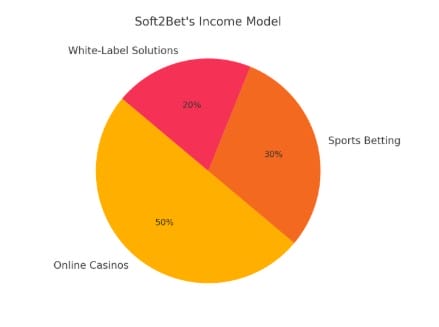
Soft2Bet earns revenue from three main areas:

  • Online Casinos: Hundreds of games available to players anywhere, anytime
  • Sports Betting: Year-round events that keep interest high
  • White-Label Solutions: Fully built gaming platforms that other businesses can brand and operate

Soft2Bet’s primary revenue sources

For couples building a side income, the takeaway is clear: invest early in tools and permissions that let you grow without a big jump in ongoing costs.

Why Repeat Customers Are Soft2Bet’s Biggest Strength

Steady, predictable income makes it easier to plan ahead.

Soft2Bet focuses on keeping customers for the long term instead of only chasing new ones. This approach often costs less and leads to more reliable results.

They do it through:

  • Gamification: Challenges, achievements, and leaderboards that make customers want to return.
  • Loyalty Programs: Rewards and perks for regular customers.
  • Personalized Offers: Promotions based on individual preferences.

These efforts are reinforced by branding and storytelling. The Soft2Bet anniversary film captures the company’s rise from a small team to a global player with its own technology, multiple licenses, and a portfolio of iGaming brands. It also reflects CEO Uri Poliavich’s belief that growth and social impact can work together, highlighting the Yael Foundation’s support for education in Jewish communities worldwide.

How Soft2Bet Gets More Value from Each Customer

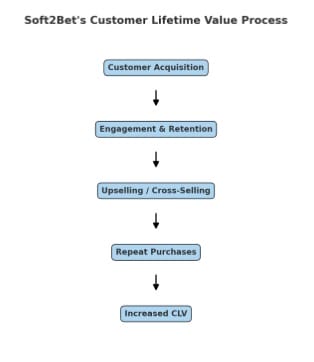
Customer Lifetime Value (CLV) measures how much a customer spends with a business over time. Raising CLV means you earn more from the customers you already have.

Soft2Bet’s Customer Lifetime Value process

Soft2Bet does this by:

  • Cross-Selling: Encouraging customers to try other brands in its network.

  • Multi-Brand Ecosystem: Offering variety so customers stay within the company.
  • Localized Experiences: Customizing platforms for different regions to increase loyalty.

For couples running a small business, this is a reminder that long-term relationships with customers often matter more than one-time sales.

Simple Takeaways for Couples Who Want Passive Income

Whether you are growing a side hustle, building a small business, or managing investments together, these lessons can help:

  • Pick something that can grow easily: Digital products, subscriptions, or online services are good examples.
  • Keep the customers you have: It is usually cheaper than replacing them.
  • Have more than one income source: It adds stability.
  • Make your offers relevant: Use customer feedback or data to tailor them.
  • Automate what you can: Let systems keep things running when you are busy or away.

Extra income can give couples more choices, whether that means traveling more, boosting investments, or simply having more free time together.

Why Soft2Bet’s Approach Matters for Couples

Soft2Bet shows that steady income comes from planning, not luck. Scalability, multiple income sources, and strong customer relationships have helped the company grow into a business that runs smoothly in many markets at once.

Couples can use the same principles to reach their own financial goals faster. With the right setup, your income can keep working for you, giving you more freedom to enjoy the life you are building together.


InvestirHub.com Sees Rapid Growth as Traders Join Daily

In a highly competitive market filled with trading platforms vying for investor attention, InvestirHub is steadily emerging as a trusted destination for retail traders, thanks to its user-centric design, dependable execution, and expanding service offering.

Over the past year, InvestirHub has seen consistent growth in its client base, with a noticeable uptick in activity among both beginner traders and seasoned investors looking for a smoother, smarter experience. According to recent internal data, the platform now supports tens of thousands of active users globally, with signups increasing month-over-month throughout 2025.

“It’s a Trading platform that doesn’t try to overwhelm—it simplifies without dumbing down,” said Emma Delaney, a portfolio strategist and early user of InvestirHub. “It’s fast, clean, and gives you what you need to trade efficiently.”

 What’s Driving the Growth? A Service That Works

At the core of InvestirHub’s appeal is its reliability and ease of use. Whether users are trading crypto, stocks, forex, or commodities, the experience is consistently intuitive and seamless. Trades are executed in milliseconds, real-time data is delivered without delays, and there are no hidden fees or commissions on major instruments.

Customer support is another area where InvestirHub continues to impress. The platform offers 24/5 assistance via live chat, phone, and email, with multilingual support available across regions. Most client issues are reportedly resolved within minutes—a rare achievement in an industry where wait times are often the norm.

In addition, InvestirHub regularly updates its tools based on community feedback. From charting enhancements to signal improvements and UI upgrades, the platform is showing that it listens to its users.

 Simple for Beginners, Powerful for Pros

InvestirHub was designed with accessibility in mind, but beneath its simplicity lies robust functionality. New traders are guided through the platform via a straightforward onboarding process, while experienced users benefit from live market signals, detailed technical indicators, and high-speed trade execution.

Its clean interface—on both mobile and desktop—makes it easy to trade anywhere, anytime, which is particularly valuable to users who manage trades around full-time work schedules or travel.

“As someone who started small, I felt like the platform grew with me,” shared Nicolas Jansen, a frequent user of InvestirHub. “It never felt overwhelming, and now that I’m trading daily, I still don’t feel like I’ve outgrown it.”

Final Thoughts

In a time when traders are looking for platforms that balance speed, transparency, and support, InvestirHub seems to have found the formula. Its rising reputation, expanding user base, and commitment to service make it a serious contender in the online trading landscape.

For investors seeking a reliable and modern place to trade, InvestirHub is proving that great service and growth can go hand in hand.

Why Your Budget Keeps Failing (and How Smart Tools Can Fix It)

Introduction

You set a budget. You’re confident. Then, a few weeks later, you’re off track, frustrated, and unsure where it all went wrong. Sound familiar?

You’re not alone—many people find that even the best intentions around budgeting can unravel quickly. It’s not about laziness or a lack of willpower. Often, it comes down to how you’re planning, tracking, and managing your money. The good news? The way out doesn’t require you to become a financial wizard. You just need the right approach—and some smarter tools to back you up.

Let’s break down why budgets so often fail and how tech-savvy solutions can help get things back on track.

Why Budgets Fail (Even When You Try Really Hard)

1. Poor Planning

At the root of every failed budget is often a flawed starting point. People tend to overestimate their discipline or underestimate their expenses.

  • Forgetting irregular expenses (like annual subscriptions or gifts)
  • Failing to factor in realistic spending patterns
  • Not adjusting for lifestyle changes (new job, new city, etc.)

It’s like trying to cook with a recipe missing half the ingredients. You can follow it step-by-step, but the result won’t taste right.

2. Lack of Tracking

Creating a budget is only the first step. If you’re not consistently tracking where your money is going, that plan is just a wish list.

A study from St. Andrews and Texas A&M showed that consistent budget enforcement significantly reduced spending—even six months later. But here’s the kicker: most people don’t stick with it because tracking manually is a pain.

When people don’t track their spending, they’re more likely to drift into so-called “spare-category” spending—those impulse purchases that feel harmless but add up fast.

3. Unrealistic Goals

Big goals are exciting. But unrealistic ones? They’re demotivating. Trying to cut your monthly expenses in half or save $1,000 a month on a tight income will only lead to burnout.

Budgeting needs to be flexible and forgiving. When your goals are too rigid, a small misstep feels like a total failure. That mindset is what causes people to quit altogether.

4. Weak Self-Control (It’s Human!)

Budgeting doesn’t just involve numbers—it involves psychology. And according to research published in the Journal of Economic Psychology, people who developed self-control strategies spent 23% less on non-essentials.

They also reported a 35% drop in monthly overspending. That’s not minor. It’s behavioral change, backed by data.

5. Low Financial Literacy

Another under-the-radar culprit? Financial literacy. If you’re not fully comfortable with how money flows in your life—investments, taxes, interest rates—you’re operating in the dark.

A study involving 449 Chinese university students found that mental budgeting and self-control significantly predicted financial well-being. The more confident people were in managing their money mentally, the better their outcomes.

How Smart Tools Can Make Budgeting Stick

So, where do digital tools come in?

The key lies in automation, visibility, and personalized insights. Smart tools take the pressure off by making budgeting less about willpower and more about systems.

Here’s how:

1. Real-Time Tracking

Apps like Mint, YNAB (You Need A Budget), and Monarch Money pull in data from your bank accounts and credit cards to track spending in real time. This cuts down on the friction of manual tracking and shows you exactly where your money is going.

  • You can set alerts for overspending.
  • Categorize transactions easily.
  • Spot patterns in minutes, not months.

Some users even set up rules—like automatically tagging fast food purchases as “guilt-triggers” to slow their spending.

2. Smarter Planning

Smart tools help break budgets down into bite-sized, goal-oriented plans.

Let’s say you want to save for a vacation. Tools like Goodbudget or PocketGuard let you create specific budget categories and funding plans.

They help you:

  • Account for irregular expenses
  • Set priorities (rent vs. entertainment)
  • Adjust based on past trends

Planning stops being theoretical—and starts being personal.

3. Personalized Self-Control Strategies

Budgeting apps are evolving. Some now incorporate behavioral nudges, like reminders, guilt-prompting visuals, or even locked savings vaults that require you to confirm before dipping in.

Remember that 35% drop in overspending among people who used real-time rules? These features are the app version of those.

You can even set up “no-spend” challenges and get friendly nudges when you’re about to exceed limits.

4. More Accurate Insights

Ever get to the end of the month and wonder where your money went? Smart budgeting tools solve that. They use your actual data—not averages or assumptions.

They can also:

  • Show trends month over month
  • Forecast your future balances
  • Offer suggestions to rebalance your budget

No more guesswork.

5. AI-Powered Advice

Some newer apps are experimenting with AI integrations that analyze spending and offer personalized advice—like a money coach in your pocket.

This feature helps you:

  • Understand where you’re overspending
  • Learn from your habits
  • Get suggestions without judgment

They’re not magic. But they’re helpful, especially when motivation dips.

Recommended Apps and Alternatives

There’s no one-size-fits-all budget app. But here are a few standouts depending on what you need:

Budgeting Beginners:

  • Mint – Free and easy to use. Great for those just starting.
  • Goodbudget – Envelope system in digital form. Great for visual thinkers.

For Serious Planners:

  • YNAB – Built around giving every dollar a job. Great for detail-oriented users.
  • Monarch Money – Highly visual with strong long-term planning tools.

Business Users:

If you’re running a small business or side hustle, you may want something more robust. Explore QuickBooks alternative options that offer smart budgeting along with accounting, invoicing, and CRM integration.

These tools go beyond personal finance and help entrepreneurs manage budgets across multiple revenue streams.

The Market for Smart Budgeting Tools Is Booming

The growth of budgeting tools isn’t just hype. The numbers prove it:

  • The smart budgeting app market is expected to grow from $1.21B in 2024 to $6.6B by 2034 (Market.us).
  • North America alone accounts for 36.4% of the market.
  • Expense tracker apps are projected to grow from $5.25B in 2025 to $14.32B by 2034, with a CAGR of 11.77% (Market Research Future).

Why? Because people are finally realizing that budgeting is easier (and more effective) with help.

Conclusion: You Don’t Need a Bigger Paycheck—Just a Better System

Budgeting isn’t about being perfect. It’s about being prepared.

Your budget probably failed before because:

  • It wasn’t built on real data.
  • It wasn’t tracked consistently.
  • It wasn’t supported by behavior-friendly tools.

But now, you’ve got smarter options. Digital tools help you plan better, track effortlessly, and stay motivated. They’re not a magic wand—but they do make budgeting more doable.

So, next time your budget starts slipping, don’t blame yourself. Upgrade your system.

The fix is just a few clicks away.


Your Stress-Free Guide to Visiting Europe with Ease

Why Europe Is the Ultimate Destination

Europe continues to captivate travelers with its diverse cultures, languages, cuisines, and historic landmarks—all packed into a relatively small geographic area. From the sun-soaked beaches of the Mediterranean to the snow-capped peaks of the Alps, the continent offers something for every type of traveler. Whether you’re dreaming of art in Paris, pasta in Rome, or the northern lights in Iceland, Europe delivers adventure and charm in equal measure.

But planning a trip to Europe can be overwhelming without the right structure. Flights, train routes, accommodations, documents, and even local etiquette can add complexity to your plans. This guide will break it all down to help you navigate Europe with confidence and ease.

Preparing for Your European Adventure

Step 1 – Research and Set a Realistic Itinerary

Europe may look small on a map, but trying to squeeze in too many cities in one trip can lead to burnout. Instead of hopping from country to country every two days, focus on a specific region. For example:

  • Southern Europe: Spain, Italy, Portugal
  • Central Europe: Germany, Austria, Switzerland
  • Eastern Europe: Hungary, Czech Republic, Poland
  • Northern Europe: Denmark, Sweden, Norway, Finland

Choose three to five destinations that are close to each other and rich in experiences. Look for train routes or short flights that make moving between them efficient.

Step 2 – Check Travel Documents and Entry Requirements

If you’re traveling from outside the EU, make sure your passport is valid for at least six months beyond your return date. Depending on your nationality, you may need a visa or an ETIAS (starting in 2025) to enter the Schengen Zone.

Also, check for any travel restrictions or vaccination requirements, especially in light of changing global health policies.

Step 3 – Book Flights and Accommodations Early

To avoid last-minute expenses and limited options, book flights and accommodations as early as possible. Use flight comparison tools to track the best fares and consider flying into less busy airports where possible.

When it comes to lodging, think beyond hotels. Europe has a wide selection of hostels, boutique guesthouses, and short-term apartment rentals. This variety makes it easier to find options that suit your travel style and budget.

Navigating Europe with Ease

Trains, Planes, and Automobiles

One of the best things about Europe is how easy it is to travel from city to city. High-speed trains connect major hubs like Paris, Amsterdam, and Berlin, often more efficiently than flying. For more remote destinations, regional trains or low-cost carriers are great options.

If you prefer the freedom to explore on your own terms, consider renting a car. This is especially useful for countryside destinations like Provence in France, Tuscany in Italy, or the Ring of Kerry in Ireland. Just be sure to familiarize yourself with local road rules and consider an International Driving Permit if required.

City Transport Tips

In most European cities, public transportation is excellent. Trams, metros, buses, and even bike rentals are common. Purchase day passes or transport cards to save money if you’re planning to explore extensively.

Apps like Google Maps, Citymapper, and Rome2Rio can help you plan your routes and get real-time updates on transit schedules.

Where to Go: Popular and Hidden European Gems

Top Classic Destinations

Some cities never go out of style, especially for first-time visitors. These include:

  • Paris, France – The Eiffel Tower, the Louvre, and riverside strolls along the Seine.
  • Rome, Italy – Ancient ruins like the Colosseum and Vatican City treasures.
  • Barcelona, Spain – Gaudí’s whimsical architecture and Mediterranean vibes.
  • Amsterdam, Netherlands – Canal cruises and world-class art museums.
  • London, UK – A mix of royal landmarks and modern culture.

Lesser-Known But Incredible Spots

For travelers looking to avoid crowds or see something different:

  • Ljubljana, Slovenia – A charming capital with green spaces and café culture.
  • Porto, Portugal – Known for its wine and colorful riverside district.
  • Tallinn, Estonia – A fairy-tale medieval city with tech-forward energy.
  • Ghent, Belgium – More relaxed than Brussels with beautiful architecture.

Gdansk, Poland – A coastal city rich in maritime history and amber markets.

Cultural Tips for a Smoother Experience

Photo by Chris Lawton on Unsplash

Learn a Few Key Phrases

While English is widely spoken in tourist areas, locals appreciate when visitors learn a few words in their native language. Simple greetings like “hello,” “thank you,” and “excuse me” can go a long way in establishing goodwill.

Respect Local Customs

Dress codes, tipping etiquette, dining hours, and even quiet hours may vary across countries. In southern Europe, for example, late dinners are common, while in Scandinavia, people may eat as early as 5:30 PM.

Read up on local practices before you go. This helps you avoid awkward situations and shows respect for the culture.

Safety and Scams

Europe is generally safe for travelers, but petty theft like pickpocketing can happen in crowded areas. Use anti-theft bags, keep your wallet in front pockets, and stay aware in busy places like train stations and tourist sites.

Be cautious of common scams such as fake petitions, ring-dropping tricks, or overly friendly strangers offering “free” items.

Smart Packing Strategies for European Travel

Think Versatility and Comfort

Europe’s weather can vary greatly, even within the same country. Layers are your best friend. Bring a rain jacket, a comfortable pair of walking shoes, and clothes that mix and match easily.

Use packing cubes to stay organized, and make room for essentials like:

  • A universal power adapter
  • Portable phone charger
  • Lightweight daypack
  • Copies of important documents

Don’t Overpack

Most budget airlines and trains have strict luggage size restrictions. Stick to a carry-on when possible to avoid baggage fees and save time at the airport.

And remember: laundry services or laundromats are easy to find in most cities. Packing for a week—even on a longer trip—is often enough.

Money, Budgeting, and Costs in Europe

Currency and Payments

Most European countries use the euro, but some like the UK, Switzerland, and Poland use their own currencies. Make sure your cards work internationally and inform your bank of your travel plans.

Contactless payment is common across Europe, and mobile wallets like Apple Pay or Google Pay are widely accepted in major cities.

How Much to Budget

Travel costs vary, but here’s a rough estimate per day per person:

  • Budget: $50–$100 (hostels, street food, budget trains)
  • Mid-range: $100–$250 (hotels, casual dining, intercity trains)
  • Luxury: $300+ (4–5 star hotels, fine dining, private tours)
Photo by Chris Lawton on Unsplash

Book in advance for better prices and look for combo passes for attractions and transport.

Don’t Forget These Travel Essentials

Europe is full of opportunities for spontaneous road trips, festivals, and outdoor adventures. While you don’t need to plan every second, having the right items can make the difference between a smooth journey and one filled with avoidable hiccups.

For example, a compact travel kit of road trip essentials—which might include a GPS app, a car charger, snacks, a map, sunglasses, and local SIM card—can make driving across European highways more enjoyable and stress-free.

Is Orthodontic Treatment Worth the Debt? Here’s How to Decide

Orthodontic treatment—whether it’s traditional braces or clear aligners—can be a major investment. With costs often ranging between $3,000 and $7,000 (or more), many people and families face a tough decision: Is it really worth going into debt to straighten your teeth?

If you’re struggling to make the choice, you’re not alone. The financial burden is real—but so are the long-term benefits. This post will walk you through what to consider before taking on debt for orthodontic care, and how to make the smartest decision for your health and your wallet.

1. Understand the Full Picture of Orthodontic Costs

Orthodontic treatment varies widely in price based on factors like:

  • Type of treatment (metal braces, ceramic braces, Invisalign, etc.)

  • Length of treatment

  • Geographic location

  • Complexity of the case

  • Orthodontist’s experience

What many people don’t realize is that the sticker price isn’t always what you’ll actually pay. Insurance, flexible payment plans, and health savings accounts (HSAs) can significantly reduce your out-of-pocket costs. Before deciding whether to go into debt, make sure you know:

  • What your dental or orthodontic insurance covers (many cover up to 50%)

  • Whether the provider offers no- or low-interest payment plans

  • If your employer offers an HSA or FSA you can use tax-free dollars from

This information can help you avoid high-interest loans or unnecessary credit card debt.

  1. Think Long-Term: Health and Financial Benefits

Orthodontic treatment isn’t just about aesthetics—it has real health benefits. Misaligned teeth can cause or worsen:

  • Jaw pain or TMJ disorders

  • Difficulty chewing

  • Speech problems

  • Increased risk of tooth decay and gum disease

Correcting these issues early can prevent costly dental and medical procedures later on. In fact, investing in orthodontics now might save you money in the long run.

For example, avoiding periodontal disease or tooth loss in your 40s or 50s can prevent thousands in restorative dental work. So, ask yourself: Is the debt you’re considering now less than the potential cost of inaction?

3. Consider the Emotional and Social Impact

It’s easy to think of orthodontics as a “cosmetic” treatment, but for many, it’s a huge boost to self-esteem. Whether it’s a teenager navigating the challenges of adolescence or an adult aiming to feel more confident in professional settings, a healthy smile can have ripple effects that go far beyond your wallet.

Some studies suggest that people with straight teeth are perceived as more successful, trustworthy, and confident. If orthodontics helps you (or your child) feel more comfortable speaking, smiling, or interviewing for jobs, the long-term emotional and financial benefits could very well justify the short-term debt.

4. Don’t Let High-Interest Debt Derail Your Finances

That said, not all debt is created equal. Taking on orthodontic debt doesn’t have to mean maxing out credit cards or signing up for high-interest loans.

Here are a few smarter ways to finance treatment:

  • Ask for an in-office payment plan: Many orthodontists offer 0% interest financing if you pay over time.

  • Use a health savings account (HSA) or flexible spending account (FSA) to pay with pre-tax dollars.

  • Look into third-party financing options like CareCredit, but read the fine print—some plans come with deferred interest that can balloon if you miss a payment.

  • Save up and delay: If your case isn’t urgent, consider setting aside money monthly and starting treatment when you’ve saved a portion upfront.

Remember: taking on debt for orthodontics is not inherently bad—but taking on high-interest, unmanageable debt is.

  1. Prioritize Your Financial Wellness, Too

Before saying “yes” to orthodontic treatment and potential debt, ask yourself:

  • Will this debt keep me from covering necessities like rent or food?

  • Do I already have significant high-interest debt (e.g., credit cards)?

  • Do I have an emergency fund in place?

  • Can I realistically afford the monthly payments?

If the answer to these questions makes you uneasy, it may be worth delaying or seeking more affordable options (such as a local dental school offering reduced-cost care).

6. Alternative and Lower-Cost Options

If traditional orthodontics seem out of reach financially, explore alternatives:

  • Dental schools: Many dental programs offer supervised treatment at lower costs.

  • Limited orthodontics: Some patients only need minor corrections that take 6–12 months instead of 24.

  • At-home aligner companies (e.g., SmileDirectClub, Byte): These can be cheaper but come with risks and may not be suitable for more complex cases. Always consult a licensed orthodontist first.

Bottom Line: Is It Worth the Debt?

In many cases, yes—orthodontic treatment can be worth the debt, but only if:

  • You understand the true cost and financing options

  • The debt is manageable and doesn’t derail other financial priorities

  • The long-term health, confidence, or social benefits justify the cost

  • You’ve explored cost-saving alternatives first

If you’re considering braces or aligners for yourself or your child, don’t just look at the price tag—look at the value. A confident smile and improved oral health can last a lifetime, while the debt can be short-term—if managed wisely.

Final Tip: Ask the Right Questions at Your Consultation

Before you commit to anything, ask your orthodontist:

  • What financing options do you offer?

  • What is the total cost including follow-up visits and retainers?

  • Are there any discounts for paying upfront or in cash?

  • What’s the most affordable treatment option for my case?

Being informed empowers you to make the best choice for your smile—and your wallet.

Is Starting a Blog Still a Viable Way to Earn Money in 2025?

Blogging remains an income option in 2025, but success requires more effort, planning, and patience than in earlier years. Income figures, the number of active blogs, and the methods for making money from blogging keep changing each year. Here’s a factual look at how blogging works as a source of income now.

Comparing Blogger Earnings in 2025

Recent data from July 2025 shows wide differences in what bloggers earn. About 45% of bloggers make less than $100 each month, 33% make nothing at all, and only 21% earn between $100 and $1,000. Larger, more established blogs perform better, but there are not as many at that level:

  • Beginner blogs with up to 10,000 monthly visitors usually earn $100 to $1,000
  • Blogs with 10,000 to 50,000 visitors earn $1,000 to $5,000
  • Established blogs with over 50,000 monthly visitors reach $5,000 to $20,000 or more
  • Large authority blogs can make $200,000 to $1 million per month

Income is closely tied to traffic. Blogs with over 250,000 visitors per month frequently earn at least $6,250 each month. Those with only about 10,000 visitors usually make $250 each month.

How Much Content Is Needed?

It now takes more work to reach income goals. In 2025, a blog needs more than 300 published posts to make about $1,000 each month. In 2023, many hit this mark after writing 50 to 99 posts. By 2024, this number rose to over 100, and by 2025, blogs often need 300 or more posts. Bloggers with over 1,000 published posts average $7,982 a month, down from $11,579 in 2024. These numbers show that a new or small blog will likely see slow growth before reaching the higher earnings of the more established blogs.

Reader Growth and Audience Size

Over 409 million people read over 20 billion blog pages every month. About 77% of internet users in the United States read blogs, so the habit remains strong. Many people keep starting blogs, but the number of new readers and audience growth has slowed compared to the large increases seen years ago. This is partly due to people spending more time on social media, using short-form content, and reading newsletters.

Top Niches by Income and Audience

Some blog topics perform better than others. Food blogs lead in both income and audience, with a median income of $9,169 per month and the biggest share of high-traffic blogs (over 50,000 visits a month at 42.8%). Other strong categories include:

  • Lifestyle (13.3% of high-traffic blogs)
  • Travel (10%)
  • Online business, which is often the most profitable niche
  • Personal finance, which is nearly as strong

Data shows that about a third of all bloggers try to make money from their sites. Around 10% make over $10,000 each year. A very small number, about 0.6%, make over $1 million. Most who try to monetize make less than $100 per month.

Monetization Strategies: What Works Now?

Bloggers use many different ways to earn income. Google AdSense is still common, but more professional bloggers now rely on higher-value methods. Among those earning $7,500 to $25,000 per month, only a third of their income comes from ads, and nearly half is from affiliate marketing. The most successful bloggers (earning $2,000 or more each month) often use ad management services such as Mediavine or Adthrive, with 72% of them using these tools for better results.

In 2025, many blogs make more money from direct sales, such as selling digital products, courses, or consulting services. This has become more reliable and profitable than ads or affiliate income, especially in business, personal development, and education topics. Top earners also build large email lists and offer special online groups or training.

Infrastructure Choices Behind Successful Blogs

Many blogs with high traffic and stable income use high-performance platforms such as premium website builders, established content management systems, and managed hosting services. For example, food bloggers with over 50,000 visitors often invest in professional themes, enhanced security, and reliable plugins. Some opt for managed options like powerful wordpress hosting, while others choose scalable cloud servers or website builders like Squarespace and Wix, depending on their technical skills and budget.

Choosing proper infrastructure supports faster page loads and easier site management. These tools help reduce downtime, maintain high SEO performance, and handle increases in visitor numbers, which is often seen in growing and authority blogs.

Post Volume and Quality

In 2025, very few bloggers are able to reach high monthly earnings with only a few posts. To reach $1,000 per month, a blog usually needs over 300 posts. Writers who publish long-form content, posts with at least 1,500 words, see the most organic search traffic. Thorough guides, tutorials, and in-depth product comparisons rank better in search engines and attract more links and shares. Even so, only a small number of blogs publish this type of content often. This means that both quantity and quality are important.

Regional Income Differences

Blogger pay varies by location. Bloggers in the United States and Western Europe make more on average than those in other regions. These higher earnings are due to larger ad budgets and easier access to payment methods.

Top Earners: What Sets Them Apart?

A small share of bloggers reach a high income. These blogs:

  • Focus on content-rich, high-interest niches: food, business, finance, lifestyle, travel
  • Are updated often, sometimes posting several times per week
  • Make use of advanced tools and AI
  • Invest in paid help, such as freelance writers, editors, and technical support
  • Use more than ads, selling products, courses, and personal services

Top-earning bloggers often spend much more money on their business. According to reports, high-income bloggers pay up to 3.6 times more for content and tools than others. 

Is Blogging Still a Good Money-Making Option?

Blogging in 2025 offers a path to income, but the route takes time and hard work. Most people who start a blog earn little or nothing. Profitable sites usually have hundreds of posts, steady traffic, and use several sources of revenue, not just ads. Food, online business, personal finance, lifestyle, and travel are among the best categories for earning and audience size. Success in 2025 depends on picking the right niche, writing useful and long-form posts, using new tools, and trying more than one earning method.


Do Small Landlords Really Need Property Management Software?

In the ever changing world of property management you might wonder if property management software is necessary for your small rental property baselane. You’re a small landlord and you have a lot on your plate: from communicating with your tenants to addressing requests for repairs all the while making sure your bottom line is in the green. While we’re in a modern age where technology transformation is evident across various sectors property management software is on the cusp of making light work of these duties and to make them more efficient and bring more oversight. Yet is it really a necessity for smaller portfolios, or more of an indulgence? This post explores the pros and cons to give you the information you need to decide if adding this tool to your business strategy is the right move.

Understanding the Role of Property Management Software for Small Landlords

Streamlining Day to Day Operations

It’s often a tightrope to success for small landlords who run rental properties. The property management software for small landlords is an integral part of streamlining these daily operations. By automating elements such as rent collection, maintenance requests or tenant interaction, such platforms save time. This sort of efficiency allows landlords to focus on other important projects, such as upgrading their buildings, and caring for their tenants. With such a software in hand, there will be no manual listing for rent payment and maintenance issues. And with check boxes for automatic reminders and notifications, too, little issues are corrected faster when tenants do get that rent in on time. Not only is this an efficient solution, it also reduces the chance of error, making it the perfect tool for managing any properties.

Enhancing Financial Management and Reporting

The best reason for small landlords to look at property management software for small landlords is probably the strong financial management capabilities. Tools such as baselane provide full solutions for keeping track of your money, generating financial reports and tax management. This degree of financial scrutiny is invaluable and provides a transparent window into how financially healthy the property portfolio is. With simple data and analytics, landlords can understand how to adjust rent, what they need to invest and also how to budget. When all of your financial details are in one place, taxes are much easier to file and the likelihood of errors and audits decreases.

Improving Tenant Relations

Successful property management begins by having good tenants. This openness also builds trust and more satisfied management with tenants, which in turn increases the life of the lease new business and the length of tenant stays. In the end, that sort of strategic spend on property management software could change the way small time landlords manage their properties with enhanced efficiency financial savvy and tenant relations at the fore. platforms that provide a portal for tenants where they can view their leases, make requests and communicate with their landlords.

 Key Features to Look for in Property Management Software

Comprehensive Financial Management

You, as a small landlord, want property management software that has powerful financial management features. Seek rent collection, financial reports, and expense tracking that are automated. This way, you can ensure you know at all times what your cash flow and profitability is offing you. This is the kind of thing a software solution for small landlords, such as baselane, is perfect for it cuts the administration time and minimizes the risk of human error.

Efficient Communication Tools

Active communication is the heart of landlord tenant relations. Try to find property management software that includes internal messaging features or message portals that will help to make communicating with your tenants a little bit easier. This feature should provide you with the power to send quick updates, reminders, and congratulatory announcements seamlessly and thereby, keep everyone in the loop and maintain good terms of relationship between you and your tenants.

Maintenance Management

Quick and efficient management of maintenance requests is as important for pleasing a client as it is to the good condition of the property. Select software that allows renters to submit requests easily and for you to track them as they become in progress. Such a functionality should allow you to schedule and monitor work orders to ensure that problems are addressed in a timely manner.

Scalability and Customization

You will want software to be able to grow with your portfolio. Seek products that scale and can be customized to fit the bill as your needs change. This means your software will grow with you and the last thing you will need is to start over from scratch as your property portfolio grows.Choosing property management software for small landlords with these important functions can also increase the effectiveness with which you run your rental business, resulting in greater satisfaction among tenants and financially.

Benefits of Using Baseline for Small Landlords

Simplified Financial Management

For small landlords, accounting can get challenging when you have multiple properties to handle and as a landlord, you can get caught up in doing this, this, and this. baselane gives one simplified platform that brings everything personal finance related into one dashboard. This makes it convenient for landlords to monitor income, expenses, and profitability.Using the software for rent collections eliminates the need to do everything manually. By automating these processes, baselane allows landlords to make sound financial decisions without the complexity of keeping the books the old way.

Enhanced Tenant Communication

Landlords and Tenants need to learn to understand each other if they are to have a good relationship.baselane has aspects that ease the friction of engagement. Its service lets landlords push notices, reminders and updates directly to tenants using the platform so that no information gets lost. The solution also features automated rent renewals and maintenance requests, enhancing the overall tenant experience. A true paralegal doesn’t just help to fight off problem tenants, it can help to keep the good ones by adding professionalism and a sense of urgency to your management strategy.

Data-Driven Insights

Comprehensive information can be a crucial edge for small landlords in a competitive rental market.The property management SaaS software as a servic for small landlords provided by Baseline delivers analytics and KPIs to drive performance for your properties. Landlords can identify ways they can do better by monitoring trends and metrics, and then they can turn the dials on rent to maximize ROI. It’s these nuggets that give landlords the actionable information they need to make intelligent decisions that will drive the value of their property up and boost tenant satisfaction.

Security and Compliance

Both local compliance and safeguarding data are top of mind for landlords. Baseline solves these problems through strong security and compliance primitives. It focuses on keeping sensitive information safe, while making ensuring compliance with various laws easy. By Baseline, landlords will have complete peace of mind to manage their properties with confidence with the security protection and protection against liabilities. This peace of mind enables landlords to grow their rental business with the least effort.

Common Challenges Faced by Small Landlords Without Software

Inefficient Financial Management

For independent landlords, operating the finance without the help of a property management software is not a simple task. The manual monitoring of rental income, expenses and other financial activities results in loss making and inefficiency. When you’re dealing with spreadsheets and receipts its simple to forget the little details that matter such as overdue payments or deductible expenses. This unorganized way might cause financial losses and discrepancies. Ideally user friendly property management software for small landlords such as Baseline automates all of this and clearly records the ins and outs with precision.

Tenant Communication and Support

Speaking with renters is another specific arena where small landlords often get into trouble. Landlords may find it challenging to manage maintenance requests and communications without one centralized system. This may result in delayed response as well as tenant dissatisfaction which in turn may impact tenant retention rates. 10 Improve communication Adopting property management software can improve the way in which landlords communicate as they can set a reminder for a follow up conversation to ensure any issue a tenant may have is met. This leads to very good tenant relationships and happier tenants.

Legal and Compliance Issues

That can be a nightmare when you don’t have a tool to help you keep current with a lot of the laws and regulations in the environment. And the rules as well as what individual properties need to do to comply, appear to change every few months making it feel daunting, especially if you manage many properties. Petite landlord property management software also includes tools that look like the current legal requirements and send reminders regarding things you need to do such as inspections or lease renewal. This proactive strategy keeps landlords from fines and legal issues, and gives them the opportunity to concentrate on expanding their property business.Ultimately, although it appears possible to deal with properties without software tailor made for the task, its plain to see just how useful a platform like Baselane can be. It doesn’t just solve problems that are typical; it also raises the bar on effectiveness and efficiency.

Making the Decision: Is Property Management Software Right for You?

Weighing the Pros and Cons

For the small landlord, investing in property management software can make all the difference. On the one hand, such software provides efficiency by streamlining operations that would otherwise be tied up in time consuming administrative responsibilities. Whether it’s automated rent collection, tenant communication or maintenance requests these help to make the management process easier too. On the flip side, property management software costs may feel expensive, particularly if you manage only a handful of units.But the big picture is worth it. Such software can eliminate human errors, keep you in compliance with local laws and regulations and even help you gather great analytics. These products typically offer options that support tracking what’s going out and coming in, and can enable you to make decisions based on data that can actually help your bottom line.

Assessing Your Specific Needs

Your personal needs Consider your personal needs before you decide. Another question is: How many properties do you manage? and How sophisticated are your existing processes? If you’re feeling buried in paperwork or in the weeds when it comes to tenant communication, solutions such as Baseline provide all in one platforms for the small landlord.What’s more, small landlord property management software typically offers customization that can grow alongside your portfolio. This scalability, and the accompanying reduced total cost of ownership, will not just pay off your investment today it will continue delivering value as your business grows.

Conclusion: Making an Informed Choice

Not all rental owners may ultimately desire to use property management software, after all. Consider the immediate gratification and long term savings. Look through the different options and complement of support that companies like Baseline can offer in order to find the right fit for you. Choosing the best software for you can help you be more efficient, handle more properties successfully and raise your return on investment.

Conclusion

In conclusion, even as a mom and pop landlord, using property management software can change your business.Yes, setting it up is a bit of an investment, but efficiency and tidy drawers are priceless! This technology frees up your time to focus on growing your business, orchestrating plays in the leasing space to maximize value and tending to your tenants. At the end of the day, you are not just dealing with another tool you are dealing with learning how to take advantage of a strategic partner to help you cut through the ambiguity of real estate management. With the market expanding in the direction of technology, embracing this technology can allow for continued success and growth.

How Social Security and Required Minimum Distributions Impact Your Retirement Plan

Planning for retirement is something everyone needs to do at some point in their life. Contrary to popular belief, it involves more than just saving money and hoping for the best. You need to consider other things, like when and how to use your income sources wisely. 

Every solid retirement strategy includes Social Security and required minimum distributions (RMDs). Understanding how these work together can help you avoid tax surprises and keep your retirement plan on track. In this article, we will talk about what Social Security and Required Minimum Distributions are, their relationship, and what strategies can help you secure your future. 

What Is Social Security?

Social Security is a government program that provides a monthly income after retirement. Your Social Security & required minimum distributions depend on your earnings history and the age at which you start collecting. Here are some key characteristics of social security:

  • You can start receiving payments as early as age 62
  • Waiting until full retirement age (usually 66 or 67) gives you a larger monthly amount.
  • If you wait until age 70, your benefit increases even more.

What Are Required Minimum Distributions (RMDs)?

RMDs refer to the minimum amount you must withdraw from retirement accounts. This applies to you once you reach a certain age. Here’s what you should know:

  • RMDs apply to traditional IRAs, 401(k)s, and other tax-deferred accounts.
  • For most people, RMDs start at age 73 (as of 2024).
  • You have to withdraw a set amount each year. In most cases, this depends on your age and account balance.
  • If you don’t take your RMDs, you may face a penalty. This is 25% of the amount you should have withdrawn. 

How They Affect Each Other

While Social Security and RMDs are separate, they do have an impact on each other. This particularly rings true for taxes. Here are some things to be mindful of: 

  • Taxable income: RMDs count as income. It can push you into a higher tax bracket. When this happens, more of your Social Security benefits get taxed. 
  • Medicare premiums: Higher income may also raise your Medicare premiums. RMDs could trigger these increases. 
  • Timing matters: If you delay Social Security but must start RMDs, you might see a sudden spike in taxable income. It’s wise to plan for these things in advance to prevent this. 

Smart Strategies to Consider for Retirement 

In general, Social Security offers a stable source of income. Unfortunately, it’s rarely enough to cover all your expenses. That is where savings and other retirement accounts come in. Thankfully, there are several steps you can take to reduce the impact of RMDs and make better use of Social Security. Here are a few: 

  • Withdraw earlier: Taking money from retirement accounts before RMDs begin can help evenly spread your income. It is a solid way to avoid sharp increases later.
  • Roth conversions: Converting a traditional IRA to a Roth IRA before RMD age can reduce future RMDs. This can lower your taxable income.
  • Plan with a professional: It’s okay to be confused about how retirement works. If you’re unsure about navigating your RMDS, talk to a professional. A financial advisor can help you time your Social Security benefits and RMDs for the best tax outcome.

Endnote

Your retirement plan should include more than just saving money. You also need to know how to put it to work. Social Security and RMDs are key parts of this puzzle. They can help you maintain a steady income, lower your taxes, and protect your long-term finances. By planning early, researching, and teaming up with a professional financial advisor, you can secure your future and peace of mind. 

You cannot copy content of this page