December 31st… It’s time for a New Year’s Resolution

It’s December 31, and it’s time to make another New Year’s Resolution. Think back to your resolution last year. Did you achieve your New Year’s Resolutions? Did you make a New Year’s Resolution? Now, it’s a year later from the last time we all made a new years resolution, did you stick to your resolution and achieve your goal?

Wikipedia defines a new year’s resolution as “a commitment that an individual makes to a project or the reforming of a habit, often a lifestyle change that is generally interpreted as advantageous.”

The most common New Year’s resolutions involve personal finance and personal health. People set New Year’s resolutions in hopes of achieving a goal.  I personally think that people should set goals anytime during the year that they want to work towards something, and make a change in their life.  People set New Year’s Resolutions in the hopes of paying down debt, stop smoking, and commit to working out more during the week.

Do you set New Year’s resolutions? If you do, did you achieve your last few years goal? Life is about goals and we should all be working towards something. Otherwise what are we doing every day?

Here are some financial posts from around the web about New Year’s resolutions:


Brooklyn Bitches on a Budget Welcomed 2010 with a list of New Year’s resolutions that included how to survive life in New York City, and making being poor look good.  Brooklyn Bitches post a lot of info on how to save money on everyday projects such as DIY home renovations, delicious recipes, and great places around New York to get great deals at cheap prices.

Fabulously Broke discusses her financial goals for 2011 which include learning Mandarin on a budget, and also planning (and saving for) a fabulous month long trip to Asia.

Financial Samurai reviews 2010 with his market predictions and his own personal goals.

What is your New Year’s Resolution?

(Photo by Dichohecho)

DINKS Reality: Do you keep financial secrets?

financial secrets, financial advice, money secrets

Till Debt Do Us Part is a half hour show that features money management guru Gail Vaz-Oxlade.  She tries to show all types of couples how to better manage their money and try to get out of debt.  Gail Vaz-Oxlade gives couples financial advice towards a total money makeover and tries to make up for a lifetime of money mistakes.

Gail Vaz-Oxlade helps couples in financial crisis who are at risk of losing their house, are being hounded by bill collectors, and who need to re-evaluate their financial priorities.

A recent episode of Till Debt Do Us Part featured a family who had two children and $73,000 of debt, which they accumulated in 5 years.  Regardless of the risk of losing their home and their massive amount of debt, the wife still chooses to spend $600 a month on her animal rescue…and her husband had no idea. The husband’s brother rents out a basement apartment in their home for $320 per month.  The wife thought that the husband’s brother was only paying $150 per month.

The couple keeps financial secrets from each other.  They spent $73,000 in 5 years and they have nothing to show for it.  Gail Vaz-Oxlade noticed that the couple doesn’t have a lot of stuff in their house, so she asked them “where is the money going?”

The couple didn’t have an answer for Gail.  Their reply was “We don’t watch our money.” They had no idea of how much money they make, and how much money they spend. Income vs. expenses is the basis of every single successful financial plan.  After Gail’s financial evaluation she told the family that they are not repaying enough of their debt every month; this should be their financial priority. The family is overspending by $2300 every month, which means they are accumulating an additional $2300 of debt each month and not paying it off.  If the family keeps living as they are, they will be $500,000 in debt within the next 5 years.

Gail quickly put the family onto a financial plan to get them back on the right track.  She said that the 3 major financial fix ups for this family would be to manage their income and expenses, focus on debt repayment, and stop keeping financial secrets from each other.

Here are some other financial tips from financial guru Gail Vaz-Oxlade:

Interest rates are killer and can crush a debt repayment budget. No one should pay 18% for a car loan and 22% interest for unsecured credit cards.

It is important to watch our bank account to avoid additional fees. NSF fees and ATM fees from other financial institutions can rack up additional monthly costs.

Gail Vaz-Oxlade feels that the average family should spend 35% of their after tax income on housing which includes a mortgage payment, property taxes, and heating costs.  We should be spending 15% of our after tax income on transportation which includes our lease, gas, and insurance.

Clothing, eating out, and entertainment expenses are extra costs that we don’t necessarily need to have. They should be the first thing to be cut out in a personal financial re-assessment.

We must make changes. We can’t expect things to be different if we don’t make any changes.

Focus on one major financial priority at a time.  Goals are easier to achieve if all of our focus is on one thing.

Sometimes a solid budget and a good financial plan aren’t enough. We may need to earn more income in order to pay for all of our monthly expenses.

Photo by Quazie

We can’t predict our future, but we can make a plan

financial plans, financial advice, financial tips

As 2010 winds down and we all roll into 2011 it’s time to make changes to less desirable aspects of our lives, and to set our new goals for the New Year.  Is your New Year’s resolution related to personal finance?  Do you want to get your finances back on track? Is your new year’s resolution to save more of your monthly income? Or is your new year’s resolution to give more to charity or start a charitable cause?

Regardless of your financial goal, here are some helpful tips to start loving and appreciating our financial lives.  It’s almost a new year, and that means it’s time to get our Finances in Order and Make a Financial Plan, or revise our current Financial Plan.

The basis of any good financial plan is to make a realistic budget. Managing our Income and our Expenses controls all of our other financial goals since our budget controls our money and disposable income at the end of each month.  If we don’t effectively manage our cash inflow over our out flow of monthly expenses we will never be able to achieve any of our other financial goals.  I strongly believe that if our cash inflow and budget are on point, we can achieve any other financial goal that we set out.

Almost every financial plan and financial planner encourages us to create an emergency fund.  I agree that it is important to have an emergency fund because we can never predict the future, and we need to be prepared for the unexpected.  However, our budget and cash flow may not allow this extra saving. Having an emergency fund is a smart part of a financial plan, but it is not a financial necessity. In times of an emergency it is ok to use credit and accumulate debt for emergency purposes. A financial emergency (in my opinion) includes death and all costs associated with it such as emergency travel arrangements. A financial emergency is not buying something just because it is on sale.

Credit can be our friend if we manage our debt wisely.  I can’t stress enough that we shouldn’t use credit as a personal loan for money that we don’t have to spend. Use credit as an alternate payment method, as oppose to paying cash or our debit card.  Don’t use a credit card to pay for something that we can’t afford, or that we don’t have the money to pay for.  Use small credit, such as a line of credit or a credit card, as a stepping stone to bigger and better things. Use a credit card to build a good credit score. This will allow us to be approved for a car loan or a mortgage in the future. Also you can check out for affordable personal loan rates in Singapore and work on your credit score.

Planning for Retirement is an important part of any financial plan. We definitely don’t want to be working forever.  We are working now, and saving now, to enjoy the fruits of our labour later in life.  I hope to retire at 55 and enjoy the last 25-35 years of my life.  Don’t let anyone tell us how much we need to save for retirement; we should save what we can afford.  This goes back to our financial plan basic of having a good budget.  Of course retirement goals are great, and we may want to have $2.5 million dollars in the bank at retirement. But isn’t retiring a financial goal in itself?

Insurance is a crucial part of any solid financial plan. Some people don’t have insurance because they choose to save.  However, I personally don’t think that savings are an alternative to insurance. Personal savings and insurance are complementary aspects of a solid financial plan. Insurance protects us for the unexpected.  Our homes, our cars, our health, and our lives need to be insured to protect us in the case of an emergency.

There are two non financial aspects of a financial plan that are very important, but are sometimes over looked.  We need to protect our identity.  This includes monitoring our credit bureau, along with our bank accounts and credit card statements to make sure all of our transactions are legit.  We should be careful and cautious to whom we provide our credit card information.

We need to keep informed about our finances.  We shouldn’t enter into any agreements or sign any papers if we don’t 100% fully understand what we are getting into.  Whether we are at our financial institution, with our mortgage broker or with our investment banker, remember that it is ok to ask questions.  After all, it is our financial future.

(Photo by Army Arch)

Money Lessons Learned from Merrill Lynch

money lessons, money talk, money advice

This past week MSNBC published an article about the former major financial institution Merrill Lynch titled How Merrill Lynch bankers helped blow up their firm”. It is never good business for our economy when a major financial institution falls from the top of the stock market into the financial black hole.  When companies shut down, employees lose their jobs and investors lose their money.

Merrill Lynch tried to pull themself out of a financial crisis by paying investors to buy into their new securities. These new securities were offered by a newly created division of the major financial institution.  Some people may call it a bonus, but some other people may call it bribery. Bribery, as we know, is definitely an illegal act in both the financial and business worlds.

The major financial institution was paying out money to investors even if their securities were not making any money.  Merrill Lynch’s stock prices once dominated the stock market, but they fell to be worth only pennies.  The company was eventually bought by the Bank of America.

Here are some Money Lessons that we can learn from Merrill Lynch:

Don’t spend money that we don’t have. This is the number one money lesson that we all need to learn.  Hopefully we learned it young.  If we don’t have the money now to pay for something, we probably won’t have the money later.  There will always be a next deal to make, and another offer to buy. Debt will be the financial downfall of every good financial decision.

Don’t repay debt with other debts. This is not helping anything because our debt is not being repaid, it is just being moved around.  This is the downfall of credit card balance transfers.  A balance transfer can offer a temporary lower interest rate for our credit card debt.  However, this is not a long term solution since our debt is not being repaid.  The long term solution is to pay off our debt. A lower interest rate will help us repay our debt faster, but we need to have a plan.

People will do anything for money.  As a financial services employee, I can confirm that banks are an ocean with hungry sharks, I mean employees, swimming around inside Everyone wants to make their next quarterly bonus, and most people will do anything to earn it, even if that includes hurting their clients and coworkers.

We all need to have some financial integrity. Did I really put financial and integrity in the same sentence? That doesn’t sound right! As a Personal Financial Planner and I always try to do what I feel is in my client’s best interest.  However, every now and then a little dollar sign devil pops onto my left shoulder and whispers something else in my ear.  I never give into temptation because my job stability over the next 30 years is more important to me than my next quarterly bonus.

“Creative Accounting” is not profitable. Numbers don’t lie, but people do.  Behind every number there is an accountant who crunched those numbers.  If a situation is less than profitable, we should make a plan to make it better. We should definitely not lie about it.  Eventually, the truth will come out.

Being a DINK: Maybe I am just a Coward!

I know that we have discussed this before but after the last post where we discussed the cost of having children I started to think…Is my choice to not have children a smart financial decision, a selfish choice, or am I just flat out being a total commitment coward?

With the recent break up of my entire family because of my step mother’s violent actions, I haven’t spoke to my father or my sister since October.  For the first time in my entire life I will be spending the holidays without my family.  My recent family break up has me reflecting on my choice not to have a family of my own.

I am thinking that it may be time to start my own family, but something is stopping me (other than the fact that I am not married to my boyfriend Nick). I don’t know why I am afraid to have kids. Maybe it is because my parents’ divorce totally split up our family, and it changed my relationship with my parents and my sister forever.  Maybe it is because when parents divorce and new families merge together new (forced) family members do not always get along.  Maybe it is because that I would never want my kids to resent me like I currently resent my Dad.  I have never been more confused, angry, or sad in my entire life. I would not want my child to feel this way. Or maybe, just maybe, it is because I am a total commitment coward.

Several other reasons such as massive time consumption, extreme financial costs, and the life time commitment of having a child also scare me, actually they completely terrify me.  I am honestly starting to question if my decision not to have kids is a smart decision or a cowardly choice.

Am I really so selfish that I can’t make time for another person in my life? Am I really so self centered that I cannot make room for another human being?  I would like to think the answer is no, but it appears to be the honest truth for the time being.

I am also afraid that I will fail. What happens if I commit to having a child and then I cannot live up to my financial obligation?  There are so many unwanted and under privileged children in the world, I definitely don’t want my child to be one of them.

(Photo By Faithful Chant)

Banks, Service Fees, and Saving Money

saving money, financial institution, financial transactions

Happy Holidays DINKS! As you know, I work for a financial institution and therefore I don’t pay any monthly bank fees or service charges for my transactions.  It was only recently that I have become very grateful for the amount of money that I am saving every month by not paying monthly bank fees.

I know that many DINKS (and all people) are upset at how much money they are paying for monthly bank fees and service charges. Some people feel that our bank should want our business as clients; therefore we shouldn’t be charged monthly bank fees to have a bank account.  Banks make money by collecting interest on our credit cards, personal loans, and mortgages; they shouldn’t also charge us a monthly fee to have our bank account.

Today we are going to share some tips and tricks from around the web on how to save money on our monthly bank fees and service charges.

  • Financial Edge by Investopedia.com tells us about “6 Banking Fees You Can Avoid.”  We found this post on Fabulously Broke.
  • Green Panda Tree House warns us “Don’t Get Fooled by Banks” as they discuss teaser specials that banks use to attract clients by enticing us with short term offers.
  • Frugal Dad tells us that it is just as important to earn money on our savings accounts as it is to save on our monthly bank account fees in his post “Where to Find the Best Interest Rates on Savings.

(Photo By WWarby)

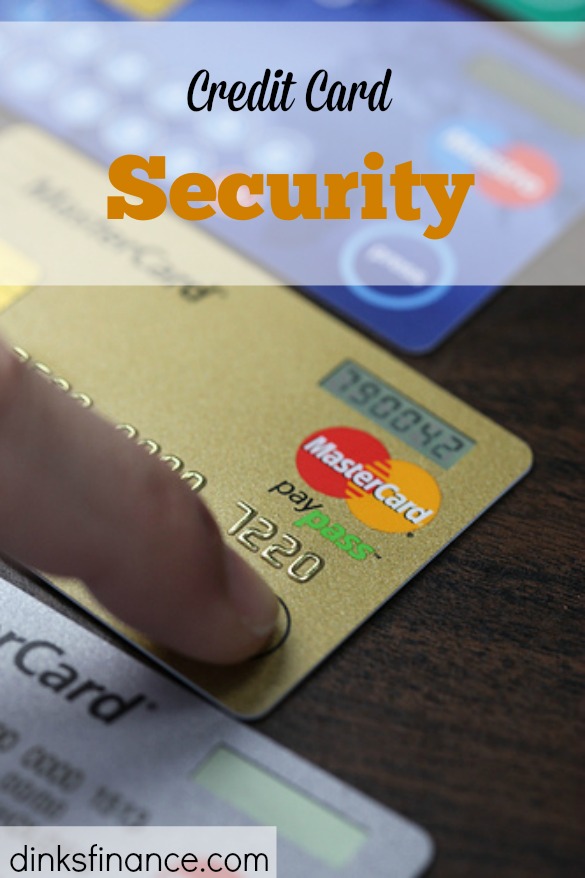
Credit Card Security

credit card security, credit card tips, credit card advice

It’s the busiest shopping time of the year…the holidays.  Some of us may be using cash to pay for our purchases to make sure that we stick to our budget, but most of us will be using our credit cards for our holiday purchases.

Tips on how to Prevent Credit Card Fraud during the Holidays

During the holidays it is a good idea to verify all of our previous day’s transactions online every morning.  This will ensure that we keep a close eye on our daily transactions, and therefore we can detect and prevent credit card fraud early.

Before we sign our credit card receipt in the stores, it is very important to make sure that the transaction amount displayed on the keypad matches the real amount of our transaction. It is a very busy shopping time of the year, and sales people are trying to process all of our transactions as quickly as possible, this can lead to simple errors.  With long waiting lines and overworked sales people $50.02 could easily end up being $500.20.

What to do if our card is Lost or Stolen

If your credit card is lost or stolen we should contact our financial institution as soon as possible.  Our financial institution will verify all recent transactions with us to make sure that there has been no fraud on our credit card.  It is very important to have all information regarding our credit card when we call to report our credit card lost or stolen, otherwise the financial institution may think that we are the fraudster.

It would be very helpful if we could find a recent statement or if we could log into our account online so that we will have all information regarding our credit card.  Our financial institution could ask us any number of identification questions such as the credit limit on our credit card, our last transaction amounts, as well as the last payment made to our credit card.

What to do if our credit card has Fraud

If there are fraudulent transactions on our credit card, we should contact our financial institution as soon as possible.  All reportedly fraudulent transactions on our credit card will be credited to our account.  After a fraud investigation, if the transactions are determined not to be fraudulent they will be added back onto our credit card.

Having fraud on our credit card can be a huge inconvenience.  Our financial institution will send us a new credit card, with a new credit card number and a new expiration date.  It is our responsibility to contact all merchants that charge our credit card for monthly payments, and provide them with our new credit card information.

As soon as we report our credit card lost or stolen the credit card is instantly cancelled.  This means that we may be without a credit card until our new credit card arrives in the mail.  Of course it may be inconvenient, but it is a lot better than thousands of dollars in credit card fraud.

(Photo by declan)

Ways that We Waste our Money

wasting money, ways we waste money, money talk

MSN discusses ways that we waste money on a daily basis.  The article titled “Ten Ways that (We) Waste (Our) Money” shows us how we can save up to $2,389.55 per year.  There are several things that we can do with an extra $2389 per year such as taking an extra vacation, renovating a room in our home, or splurging on something such as a new television, designer handbag, or stereo system.

Here are some ways that MSN says we can save over two thousand dollars every year.  I, for one, would love to save an extra $2389 per year.

Stop playing the lottery.  Think about how much money you and your spouse spend on buying raffle tickets at work, playing the weekly lottery, or betting on sports games.  If we took all of this money and put it into a high interest savings account we would have a lot more money at the end of the year than we would by playing the lottery.

Using other Bank’s ATMs.  I would never pay an extra $2 to $5 to use another banks ATM.  I would walk 10 blocks…in the rain, before I paid $5 in service fees to withdraw $20.

Leaving appliances plugged in.  I can’t relate to this extra cost because I live in an apartment.  However, but leaving appliances plugged in is bad for the environment so I support this point.

Pumping premium gas. I sold my car in September and I am thankful that I don’t spend an extra $40 biweekly to fill up (or sometimes not fill up depending on the current price) my car.  In the 3 years that I owned my car, I never pumped Premium gas into my Honda Civic.  However, I know that some luxury cars require Premium gas.

Paying for a gym membership.  I don’t agree with this point because a gym membership can have several benefits, other than health.  However, we can workout at home or outside in our neighbourhood to save money.  Lulu Lemon offers free fitness classes once or twice a week.

Not bundling your telecom services. Don’t even get me started on the cost of my monthly satellite, home phone, and high speed internet bill.  My telecom services are bundled and I still think that I pay way too much every month…especially with the NFL Sunday ticket sports package.

Continuing to smoke.  Smoking is a totally ridiculous and expensive habit.  That’s all I have to say…totally ridiculous and unnecessarily expensive.

Paying for credit Cards.  I completely agree with this point. We should never pay an annual fee to have a credit card.  There are several great credit cards on the market that do not have an annual fee. Shop around and find the best credit card.

Drinking bottled water.  Although I agree with this point for environmental reasons, I don’t agree with it for budget reasons.  I drink a lot of Crystal Light and it works best when I shake it up into my water bottle.

Splurging on Car Washes. Once again, I completely agree. When I had my Honda Civic there were times that I was paying $9 every week to wash my car.

Do you agree with MSN Money’s Ten Ways Canadians Waste Their Money?

(Photo by Seattle Municipal Archives)

Our Money Counts… Holiday Finance 101

holiday finances, holiday expenses tips, spending during holidays

As I was surfing the next last week on various websites of different financial institutions, I stumbled across this website.  Your Money Counts.com is a public website from HSBC that discusses personal finances for the young adult.

The four categories on YourMoneyCounts.com are Money, Credit, Goals, and Planning.  They are currently featuring an article titled “Holiday Finances 101” which discusses simple and basic tips to keep our finances from dropping into the red during the holiday season.

YourMoneyCounts.com advises us to first and foremost Have a Plan. In a nutshell this step advises us to make a list and check it twice.  The list of expenses or a budget plan is the first step when planning our personal finances.  A plan determines how much we have to spend which is the basis of every budget.

Before you head out to go shopping, or before you plan a personal budget, it is important to know what we have to purchase or who we need to buy gifts for.  Making a list and checking it twice makes sure that we stay within our planned budget while shopping during the holidays.

Last week I was out on Friday evening December 17 (8 days before Christmas) and I couldn’t help but notice the lack of people out shopping in stores.  I thought that the lack of Christmas shoppers on December 17 could be for one of three reasons…Maybe people have already completed their holiday shopping. If we start early and scatter our purchases we won’t be forced to spend so much money at the last minute. The second reason could be that people just don’t have the money this year to spend on Christmas gifts.  Or, shoppers are avoiding the hassle of shopping in the snow, and they have decided to make all of their holiday purchases online.

Your Money Counts.com advises us to Practice Safe Shopping in the article Holiday Finance 101. I agree that shopping online is definitely hassle free.  We can order all of our gifts online and have them delivered right to our door…or anybody’s door for that matter. If we choose to shop online during the holidays, it is important to make sure that we use secure websites.  We also need to ensure that we use a secure payment method such as PayPal or Interac Online, for our Canadian DINKS.

If you are like me, you enjoy the entire ambiance of holiday shopping.  I will go outside and face the cold to make all of my holiday purchases.  I can bare the cold as long as I have a Starbucks Hot Chocolate in my hand.  If you do go out and do your holiday shopping “in person” please make sure that your wallet and your credit cards are safe.

Our wallets should be safely tucked away in a purse that zips up.  Male DINKS please don’t leave your wallet in your back pocket…you are asking for trouble. As an alternative, we can keep our wallet in the inside pocket of our jacket.  Do not only bring your credit card with you while shopping during the holidays.  It is easier to lose just a credit card, than it is to lose our whole wallet or purse.

Are You Rich?

wealth, money talk, financial talk

What does being rich mean to you? Does it mean having a lot of money or does it mean having more money than someone else?

MSN recently published an article titled “How Much Does it take to be Rich?” and it made me think…am I rich? If I compare myself to other entrepreneurs such as the owner of the Coca Cola Corporation and the creator of Microsoft then No, I am obviously not rich. However, if I compare to myself to some of my family members or my friends then yes, I am definitely rich.

What is being rich anyways? MSN seems to think that the old stereotype of having a million dollars to be rich is now passé. Maybe being rich means having more money than someone else. Maybe it means having enough money to make us financially stable and personally happy. Maybe being rich means being able to pay our bills on time, and also being able to buy everything and anything else we want.

I have to think to myself…is being rich graded on a curve?

After reading this article I definitely think the answer is YES.  Being rich is an individual opinion that may or may not be based on the amount of money that other people have.  If we are going to compare our riches to someone else, who should that person be? Can I compare myself to other entrepreneurs outside of my field such as the owner of BET? No, because we don’t have the same goals, the same field of work or anything else in common…except for our love of music.  Can I compare myself to other people my age such as Paris Hilton and Kim Kardashian? No, because I actually work for my money. These are two girls who have branded their name based on excessive partying and sex tapes.  I personally don’t care to do either…Despite my opinionated personality, I’m actually a pretty boring person.

What amount of money would you consider being rich?

For some of us it may still the “norm” of one million dollars.  For others a billion dollars may be the ideal amount of money to be considered rich. Our goals have to be realistic. We can’t just throw out a random number and hope to achieve it without a plan. Being rich and the amount of money it takes to become rich is definitely a personal choice that is based on our individual situations. I may love to have a million dollars, while some readers may already have it.  Some people may love to have a $250,000 annual income, while others may give up all of their savings to live on $250,000 a year.

Photo By Covila

You cannot copy content of this page