Work Union. Live Better.

work union, employee benefits, employee coverage

As DINKs our job categories range from personal finance, to educational institutions, and the technology sector.  One topic we have never discussed in detail is our possible association with unions.  I would like to take this opportunity to emphasize the importance of a union to our wages, our professional growth, as well as our job security.

As an employee in the financial services industry I do not have the luxury of being protected by a union.  My friend Tricia who is a former financial services employee now works as an admissions officer for a local college.  She is experiencing the benefits of a union and recently attended her first union meeting.

She was fascinated and impressed with the commitment by her union executive. A union executive is a group of people who are elected by the entire unionized workforce to represent them collectively with the company management. Coming from the cut throat world of finance, it is hard for Tricia to comprehend how the union executive put in an extended amount of time and effort on behalf of numerous employees whom they have never met.

According to Johnny, a former union president for a worldwide cereal manufacturer, the main purpose of a union is to establish and maintain workers’ rights and benefits in a consistent manner. A union also works with management in assuring fair and consistent implementation and utilization of the rules that ensure workers’ rights and benefits. Without sounding too patriotic a Union is an association by the people, and for the people to protect workers’ rights, job security, wages, and overall work environment.

I am the product of a union family.  My Dad was an active (and card carrying) member of his union for over 25 years.  I was marching in protests before I was selling Girl Guide cookies. I am always impressed by a union’s ability to bring people together. I will never forget the cold December day when I was deliberately absent from high school in protest of teachers job cuts. As I marched through my city alongside my Dad, I was impressed to see that almost every union in my town had representation. Alcohol and beer unions were marching alongside grain millers, spice producers, and auto manufacturers in support of protecting teacher’s jobs.

Very often I find that Unions get a bad reputation which I feel is unfair and unjust. My experience is that people who are anti union are either uneducated on the topic or afraid of their power. Johnny is a recently retired union president, who now offers his services as a labour relations consultant.  Johnny has negotiated several Collective Agreements for workers during his time as a union president; it is all because he believes in the institution of a union.  Equality for all people is something that our ancestors fought hard for over many years.  If people are all treated equally, shouldn’t all workers receive the same equal treatment?

It is the union’s responsibility to negotiate a Collective Agreement on behalf of their employees. A collective agreement is an official document that outlines working conditions such as workers rights, rules for health and safety, employee wages, medical dental and health benefits, as well as dignity fairness and respect in the workplace.  Once the union executive accepts a Collective Agreement they present it to their union members, who are the workers of a company, who then vote to accept or deny the Collective Agreement.

A union gives workers a voice. It gives us a voice about our working conditions that may otherwise be silenced in a union-less working environment.  Once a Collective Agreement is accepted by the entire union membership it is the union’s job to ensure that the working conditions are followed and respected by all parties fairly and equally.
Trust Me. I’m an Engineer.

profession stereotype, stereotyping people, profession definition

This past week I saw a guy walking down the street wearing a black t-shirt that said “Trust Me, I’m an Engineer” in white block letters.  As he walked by me, I thought to myself…Do our Professions Define Us?

In the bank world, the answer is yes.  There is a banking package for many professional designations. At my bank we have a special banking package for dentists, engineers, doctors, and even medical students.  What type of monthly banking package do you have? Was it specifically designed for your profession?

If a student comes in to our branch with proof that they are in medical school we offer them a VIP banking package, a Platinum VISA card, and up to $150,000 on a personal Line of Credit…To a Student!  We offer this package to medical students in order to establish a good relationship with them in the beginning of their studies; in hopes that they will deposit hundreds of thousands of dollars with us during their career.  In the meantime while they are in school, we collect interest on their VISA card and personal Line of Credit.

What does your profession say about you? If you are an Engineer or a Doctor does this mean that your profession provides a certain status?  Sometimes this is true.  When we make travel plans very often we are asked the name of our employer to determine if we are eligible for corporate discounts.  I receive 10% off my train tickets thanks to my financial institution employer.

Many fitness chains also offer gym memberships at a discounted rate to employees of certain companies or members of professional designations.  Have you ever dropped your professional title or the name of your employer to get a discount?  I receive my gym membership at a discount because I am a member of the Order of Financial Planners.  I am not sure if my financial institution made a deal with the fitness chain because they want their employees to be “presentable”, or if the fitness chain contacted my financial institution to help reach an otherwise untapped market.

I love getting discounts, especially at the gym because my membership costs almost $500 per year.  After all…DINKS (and young professionals) do have a certain image to uphold.  When is the last time you used your education title, alumni association, employer, or professional designation, to benefit in the bank world?

When we apply for credit, the name of our employer, as well as our length of employment is very important information because it shows stability.  In the eyes of financial institutions, professionals are less likely to default on their payments than other types of professions.  When in fact, people who are self employed such as doctors, independent financial advisors, and accountants, may be more likely to default on a loan since they do not have a guaranteed income flow.

(Photo By Obadiah)

How Secure Is Your Credit Card?

credit card security, credit card tips, credit card advice

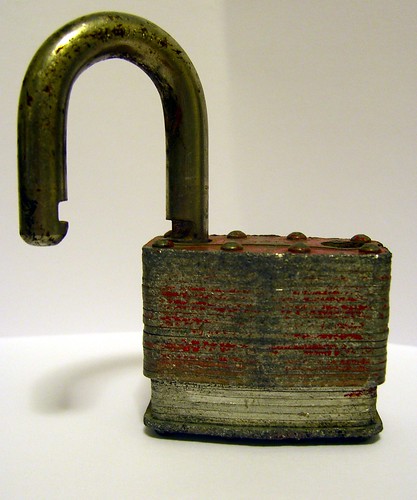
rusty lockIf you open your wallet you will probably see a MasterCard, a VISA and maybe an American Express, along with 2-3 department store credit cards.  The average American has 6.5 cards in their wallet which includes both credit cards as well as retail store cards.  What’s in your wallet?
If they haven’t already, your credit cards will soon be making the switch to the new Chip and Pin Technology.  When I was first advised of this new technology by my financial institution I thought…If this new Chip and Pin Technology is designed to enhance credit card security, does that mean my credit cards are currently unsafe?

I have learned that the answer to this question is No.  Many of us have at least one credit card, and I for one, am pleased about the new Chip and Pin Security enhancements.  In the United States, revolving debt currently totals $735.3 billion, and the average person has more than $8000 in credit card debt.  As time goes on technology evolves and the new Chip and Pin technology merely enhances our credit cards security.

Do you remember the old school credit card machines? You know, the machine that required salesclerks  to manually enter a paper transaction slip with the card; and then slide the machine from left to right to make an impression on the carbon copy of the transaction slip.  As I grew up in the 1980’s, I have a vivid memory of this old credit card machine.

From this old school machine we evolved to the magnetic strip, which is current day credit card technology.  The future of credit card security is the New Chip and Pin Technology.  It is the credit card equivalent of the music evolution from records to cassette tapes to CDs to mp3s.  Embrace the new Chip and Pin technology for your credit cards.

Here are some quick facts about debt in the United States as well as the new Chip and Pin Technology:

About 43% of American families spend more than they earn each year.

The New Chip Technology allows cardholders to insert their card into a point of sale terminal and enter a pin, as opposed to swiping the card and signing a credit card transaction slip.  This is supposed to be more secure because a signature can be forged, whereas a pin is a secret identification number.

The New Pin Technology is for people on the go.  We can wave or pass our VISA or MasterCard at the point of sale terminal and be on our way.  This new payment method is called VISA Wave or MasterCard PayPass. Although this sounds like a virtual playground for fraud, it is actually very secure.  Our spending habits (both locations and amounts) are tracked and monitored by our financial institutions.  As soon as there is a purchase outside of our normal spending patterns, our card is flagged and we should receive a call from our Credit Card Company to verify the transactions.

Although there is no official maximum transaction amount that can be approved via MasterCard Paypass or VISA Wave; Vendors usually allow a maximum of $50 to $75.  Any amount over the maximum will require a PIN to be entered.

If you want to know how your debt compares to the national average please visit MSN Money and take the test.

(Photo By WalknBoston)

I’m Engaged! The (Financial) Journey Ahead Of Us

couples advice, financial journey of couples, couples talk

After three years of dating I decided it was the right time for to ask my girlfriend the question I have been waiting to ask for a long time: Will you marry me? And the answer, of course, was YES!

While we are definitely enjoying our new relationship status, inevitably we are looking towards the future and slowly but surely planning. If you know me, you know that I’m always trying to plan ahead and this is no different. I’ve already thought about some of the financial challenges we will face before I popped the question. We are prepared to tackle them together.

While some DINKs surely got engaged when they had been in the work force a few years, I’m sure there are an equal number who got engaged while they were in school and can probably relate to a lot of these challenges we will face (and overcome) in our marriage:

1) DEBT: Combined we have quite a bit of student debt. My fiance will go to grad school within the first couple years so her loans will be on hold for the time being. Either way we will eventually have to pay down this giant debt (though I think it was well worth the investment). We don’t really have any other debt at this point besides this, but there is a possibility around the time of the wedding next summer that we will be so low on cash that we have to go into a little debt just to get through that time in our lives (see #3).

2) Uncertainty: It’s a pretty difficult time to be graduating from college. I will be done in December and my fiance will finish in the Spring. Uncertainty about jobs, income, and the economy will be surrounding us. I think we will survive because we both are willing to work very hard to make ends meet. I used to be concerned about finding the “right” full time job, and there is a good chance I will get that job with the income and benefits I desire, but I am also ready to do what I have to do if that does not work out.

3) Wedding:
The wedding won’t be cheap; there is a reason many claim that many people call the wedding industry “recession-proof.” We won’t be receiving significant (take that to mean what you want) help from either side of our family. While we will get some aid, we will need to save up whatever money we can so that we don’t have to take out too much debt to pay for the wedding. Preferably we would take out no debt but there is a good chance that won’t be realistic for us.

So we begin our (financial) journey together. I definitely credit my early exposure to finance blogs as a reason why I feel prepared to take on some of the challenges ahead of us. We hope you read some of our updates along the way and give us your advice!

More Money. Better Benefits.

employment benefits, better benefit plans, employment benefits

As fall approaches the fiscal year of many companies is coming to an end. For some of us, this means that we have to elect our new employee benefits.  If you are renewing your employer benefits, or if you are making original choices with a new employer, here is some helpful information regarding Employer Benefit Options.

Employer Benefits such as insurance, health and dental plans, savings plans, and pension plans are all important aspects of our Employer Benefit Options which, along with our annual salary, make up our Total Rewards Package.

Popular types of insurance benefits are critical illness, accidental death and dismemberment, travel insurance, as well as life insurance. Basic life insurance, which is generally one times the value of our annual salary, is often paid by our employer.  We may have the option to purchase additional life insurance at our own cost; it is better to buy life insurance through our employer because the annual premiums are discounted.

Travel Accident Insurance, Accidental Death or Dismemberment Insurance, and Critical Illness Insurance all offer a one-time lump sum payout in addition to any regular life insurance coverage.  Life insurance is not included in the value of a person’s estate because the benefits are paid (tax free) directly to the beneficiaries.

Health Insurance Plans offer Medical and Dental benefits to employees, their spouse, and their dependents. Usually we have a choice of 3 to 4 options which all include different levels of coverage such as 50%, 70%, or 90%.  Each option has a specific cost which is deducted from the amount of credits (benefit money) offered by our employer. If our plan options cost more than our credits the difference is deducted from our pay check throughout the year.  This is great because we are not required to make a lump sum payment.  The coverage that I have at the bank for Nick and I costs less than my available credits.  Therefore, the balance is deposited into my Health Savings Account.

Savings Plans are a great way to promote “Forced Savings”. Forced Savings means that we never see the money and therefore we never miss it.  The deductions are made from our gross salary which is a non-taxable benefit.  Employer Savings Plans offer both a registered and non registered option.  If you work for a publicly traded company this type of plan is often called Employee Share Ownership Plan (or something similar) and offers stock options to employees usually at discounted prices.

For every dollar we contribute from our pay check our employer also matches a percentage which is usually 2:1. This is how it is at my bank.  I contribute 8% of my gross salary, and my employer contributes 4% on my behalf.  It is important to note that if you choose a registered option in this savings plan only your personal contributions are tax deductible. You will not receive any credit for the employer contributions on your behalf.

Pension Plans are an important part of our Total Rewards Package because we are all working towards retirement. In Canada, we have 2 types of pension plans. Defined Benefit Pension Plans are based on Employer Contributions; Employee contributions are optional. The employee does not choose the investment options in a Defined Benefit Pension Plan.  The monthly pension benefit at retirement is guaranteed.  The Defined Benefit Pension Plan is the best option if you plan to remain with your same employer for a long time until retirement.

Defined Contribution Pension Plan is exactly the opposite of the Defined Benefit Plan.  With a Defined Contribution Pension Plan the employee has total control of the investment options, and the only known aspect is the contribution amount.  Both an employee and an employer contribute to this type of Pension Plan.  I contribute 2% of my annual salary, and my employer contributes 6% on my behalf.

How beneficial are your employee benefits?

(Photo By Sfxeric)

Banking Solutions for Travellers

traveller tips, banking for travellers, traveller banking tips

plane in sunset

Summer is now over, and this means that our summer vacations are also over. We want to hear about your summer adventures DINKS. Where Did You Go? How Much Did You Spend? And most importantly…How did you spend your money?

In 2010, the days of travelling with Amex travellers cheques are over.  We now have so many different travel banking solutions available for our travels to South America, Europe, Asia, and Africa.

When you travelled this summer did you use your credit or debit card?

Credit Cards are a widely accepted payment method.  We can use our credit cards almost anywhere in the world, and they come equipped with several different insurance options and services for travellers.  Depending on the type of credit card we own, we may have additional travel benefits such as insurance in case of flight delay or cancellation, as well as lost luggage insurance, and in some cases medical insurance.  VISA and MasterCard also offer a wide range of travel assistance services such as lost and stolen card services, emergency cash advances, as well as 24 hour customer service.

Both the VISA and MasterCard websites also offer travelling tips for cardholders, as well as security precautions.  Whenever a cardholder is planning to travel it is best to contact your financial institution prior to departure, and advise them of your travel dates along with your contact information abroad.  This ensures that your credit card will not be flagged by the security department due to spending outside of your normal pattern/habits and geographic location.

MasterCard is accepted anywhere in the world where we see the Cirrus Symbol and VISA is accepted anywhere with the PLUS system symbol.  Locations include branches of foreign banks, ABMs (Automated Banking Machines), and POS (Point of Sale) Terminals.  For a list of locations where MasterCard and VISA are accepted please visit their websites.  To find foreign branches of your financial institution, please visit your financial institutions homepage.

Our friend Jay went to Poland.  Where did you travel this summer?

Of course convenience comes with a price. We can use our credit cards and debit cards abroad; however we will be charged a foreign transaction fee.  This can range from a flat debit card fee of $5 per transaction or it could be a percentage of the total transaction amount such as 2.5%. Transaction fees and Foreign Exchange rates are based on the VISA or MasterCard exchange rate on the day of the transaction.  To avoid any surprises, it is best to inquire about these fees at your financial institution prior to your departure date.

Debit cards are also a widely accepted form of payment for purchases and cash advances worldwide.  Our debit cards can be used wherever we see the Interac or PLUS system symbol.   It is very important that we choose a 4 digit personal identification number (PIN) for our debit cards when travelling abroad.  Many ABMs (Automated Banking Machines) and Point of Sale Terminals (POS) in Europe and South America require only a 4 digit pin be used.

(Photo By Kossy)

5 Easy Tips Towards a Good Credit Score

good credit score tips, credit score tips, tips for a good credit score

eyeball credit card statement

Have you ever wondered what factors make up a great credit score? Have you ever ordered your own credit report?  If not, then I suggest you do.  It is always a good idea to review your credit report 1-2 times a year.  This makes your information is correct and up to date, as well as to prevent fraud.

Here are Five Easy Tips to Build and Maintain a Great Credit Score:

1. Make Payments On Time: This is the most important factor when determining our credit score.  Every month we must make our payments by the due date.  Keep in mind that it could our financial institution up to 3 business days to receive and process an online payment.  Whether we pay the minimum required payment or we pay a little bit more doesn’t affect our credit score.  As long as the minimum payment is made on time our score will remain in good standing.

2. Don’t Carry a Balance:  The balance on our credit card is equally as important as making our payments on time. Our credit score is also determined by the amount of open credit and credit card balances owing.  Therefore, someone with a low credit score could be making their payments on time, but they continuously carry high balances on their credit cards.  Generally, our balances owing should be less than half of our credit limit. Therefore if your credit card limit is $10,000 you shouldn’t carry a balance of more than $5000.

3. Keep a Lower Credit Limit: Sometimes people think that our worthiness is determined by our credit limits.  If we have a $10,000 credit limit we feel that we have a higher standing with our financial institution.  However, this is not true.  Large limits are usually unnecessary, except for business credit cards.  A higher credit limit can actually hurt us in the long run.  We may be tempted to spend money on our credit card that we can’t afford to pay off if we have a high credit limit.  Credit cards are borrowed money, it’s not free. Remember when you swipe that card it is at a fee of 19.99% on your purchases.  I keep a limit on my credit cards that equals one month’s salary.  This way even if I do max out my credit cards I know that I will be able to pay them back very soon.

4. Close Unused Credit Cards: Don’t keep credit cards that you don’t use.  If you keep one unused credit card “for a rainy day”, it is better to use the card at least once a month.  Unused Credit Cards are not beneficial in any way.  If we don’t use our credit cards then the credit card company has nothing to report on our credit bureau.  Therefore, no payment history is established.  A lot of people think that their credit score will be very high if they have a credit card but don’t use it.  This is a huge credit myth.  The card must be used and payments must be made on time.

When we apply for new credit our approval is based on our ability to repay.  The new company will see that we have a credit card with an available limit.  They factor in a monthly payment of 3% of the total credit limit, not the current balance.  This is why unused credit cards are harmful to our credit score.

5. Don’t Apply Too Much: Do not switch credit card companies every month for an introductory interest rate.  Every time we apply for credit there is an inquiry on our credit bureau.  Too many inquiries on our bureau negatively affects our credit score.  Even though we may be transferring the same balance between credit cards, each inquiry hurts our credit score. (In Canada) A person is allowed up to 5 inquiries each year without affecting our credit bureaus too negatively.  Inquiries within 90 days of each other can also negatively affect our credit score.

(Photo By JasonRogers)

I Am a Balanced Investor

balanced investor, investor tips, investor advice

libra stampAs you may know from a previous post, I recently changed financial institutions. I had no problem with my previous financial institution but I decided to change everything over to a new institution, including one of my retirement accounts.

To determine if I made a good financial decision I am going to track this retirement account with the new Mutual Funds from my new financial institution.   This retirement account is from a pension plan with my previous employer.  Since I started contributing to this pension plan in 2005 I have made two major changes.  The first change was when I terminated my employment and I transferred the pension plan to my financial institution. The second change is current as I transfer the retirement savings plan from my first institution to the second institution where it is currently held.

I am a Balanced Investor. This means that I prefer to hold a 60/40 asset allocation of investments between growth and fixed income.  I don’t want to take too much risk, but I also do not want too much security.  Because of my age, I should be taking more risk.  However I am a Libra (October 9th), and this balanced investor profile just supports my Libra zodiac sign quality of never being able to make a solid decision.

Since I am 29 years old, and I have at least another 26 years until I retire, I do want some growth (not too much) in my portfolio.  Therefore, I have invested my entire portfolio in Mutual Funds.  I currently have 62.05% of my portfolio invested in Equity Mutual Funds, and 37.95% invested in Income Mutual Funds.  This is a normal 60/40 split between Equity and Income for a Balanced Investor.

Although my portfolio always holds a 60/40 split between fixed income and growth, the majority asset allocation does vary.  From 2005 until late 2007 I had a majority of growth in my portfolio.  However, in early 2008 I switched the majority to secure fixed income investments such as government bonds and large corporate bonds.  Now in the fall of 2010 I am back to a growth majority in my portfolio.  We will continue to watch my retirement savings account with quarterly updates to see how it performs with my new financial institution.

The book value of investment accounts is based on the total dollar amount invested, plus any reinvested distributions such as interest, dividends, and capital gains.  Unfortunately, I do not have the original book value of this account from when the pension plan was held with my previous employer from January 2005-June 2009.  This information is as of July 2009 when I transferred the account from my previous employer to my previous financial institution.

This is the value of my Retirement Savings Plan as of July 1, 2010 with my previous Financial Institution

Investment#of UnitsPrice/UnitMarket ValueBook Value
TD CDN Equity186.855$23.62$4413.52$4389.23
TD CDN Index233.77$17.27$4037.33$4078.91
TD Mortgage41.07$61.29$2517.24$2552.16
TD Real Return Bond168.00$15.77$2649.42$2539.79

Total Market Value: $13,617.51
Total Book Value: $13,560.09

(Photo By ZeeWeez)

What Would You Do With $1000?

spending $1,000, spending money, money expenses

roll of 100 bills

My 30th Birthday is approaching and I have decided to give myself a gift of $1000. So often I feel that material gifts are such a waste of a present. I would rather give money as a gift, and let the person spend it as they wish. Although money cannot be wrapped up with a pretty red bow like a gift, it is a more practical present.  Remember when you got money for your birthday as a kid? It was amazing, and the feeling of spending it is even better.

For my birthday this year, I have decided to be totally careless, and spend money on myself.  I have $1000 to spend, and I need your help.  How should I spend my birthday money? Since we only turn 30 once I decided to go big. Who knows!? Maybe by 40 I will be married with some kids.  Then, I won’t be able to spend $1000 on myself and buy anything I want.

Here are the options that I have considered, and in some cases vetoed:

Go to Vegas Baby. I invited my Dad on a trip to Las Vegas. But, since he took me to Vegas for my 21st birthday, we have both been there, done that.  I love travelling with my Dad.  Las Vegas is a great place to visit because it is fun and there is gambling.  My Dad is the person who taught me to play Craps.

Go on a Shopping Spree. I have also considered acting like a teenager who just got paid from her first babysitting job, and go to the mall.  However, $1000 seems like a lot of money to spend at on a shopping spree.  Although…A little shopping never hurt anybody…right?

Go Directly to the Bank. I thought that I could make the responsible choice, and put the money into my savings account.  But, that idea was quickly overruled by the mischievous money devil on my left shoulder.

Go on a Trip. I also thought that I could take a trip, but who wants to travel in October? My birthday is October 9 which is always the weekend of Canadian Thanksgiving.  For my entire life, no one was ever able to do anything for my birthday because in elementary school we were off for the Thanksgiving holiday, and in college my friends were always writing midterm exams. Now, everyone is preoccupied with family plans for the holidays. I don’t think I will be able to find someone to travel with in October.

How Would You Spend $1000?

(Photo By Amagill)

You cannot copy content of this page